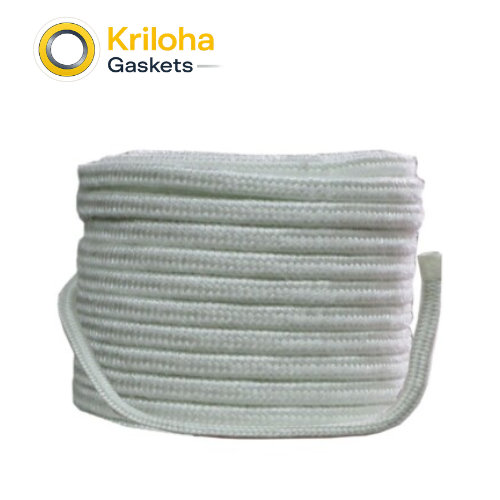
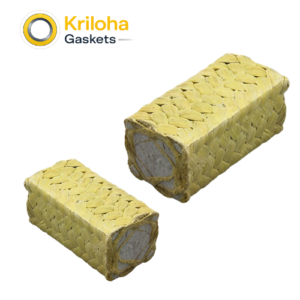
Glass Fiber Packing

Glass Fiber Packing

Core Features

  • High-Purity E-Glass Construction: Braided from continuous-filament, texturized E-Glass fibers. This inorganic mineral base provides excellent thermal resistance and structural integrity without the health risks associated with older asbestos materials.
  • Thermal Endurance: Designed for continuous service at temperatures up to +550°C (1022°F). It remains stable and does not shrink, melt, or support combustion at high heats.
  • Low Thermal Conductivity: Acts as a superior insulator. The texturized fibers trap air within the braid, creating a thermal barrier that protects equipment and reduces energy loss in high-heat systems.
  • Exceptional Chemical Stability: Highly resistant to most industrial chemicals, including oils, solvents, mild acids, and alkalis (pH range 2–12). It is also immune to rot, mildew, and bacterial degradation.
  • High Tensile Strength: Unlike ceramic fibers, glass fiber possesses high mechanical strength, allowing the braid to be pulled tight around large flanges and doors without snapping.
  • Electrical Insulation: Inherently non-conductive, making it an ideal choice for sealing around electrical heating elements or in environments where dielectric properties are required.

At Kriloha Ltd., we understand that “Standard Heat” requires a reliable, cost-effective barrier that won’t degrade over time. In the temperature range between synthetic fibers and extreme-heat ceramics, glass fiber is the undisputed champion of efficiency. The Kriloha Glass Fiber Packing is our engineered answer for “General-Purpose Thermal” containment. As a premier global provider of braided packings, Kriloha Gaskets has mastered the Texturizing-Braid technology required to turn smooth glass filaments into a lofty, compressible sealing barrier.

The engineering of our Glass Fiber series is based on Mineral Resilience. While synthetic yarns (like PTFE) will melt at 300°C, our E-Glass fibers remain structurally sound well past 500°C. At Kriloha, we utilize a specialized “Low-Lint” texturizing process. This ensures that the fibers stay locked within the braid during installation, reducing skin irritation and improving the “sealing bite” against irregular door frames.

Manufacturing this packing at Kriloha involves strict Filament-Diameter Calibration. We ensure the glass filaments are large enough to provide high tensile strength but flexible enough to conform to corners without “kinking.” Whether you are sealing a commercial oven door or an industrial exhaust flange, Kriloha Glass Fiber Packing provides the thermal invincibility and mechanical stamina your facility demands. By choosing Kriloha Ltd., you are investing in a “Safety-First” technology that maximizes your energy efficiency and protects your heavy industrial assets.
Primary Use Cases

  • Industrial Boiler Doors: Providing a resilient, heat-tight seal for inspection hatches and fire doors in commercial heating systems.
  • Oven & Kiln Gaskets: Used extensively in powder coating ovens, drying kilns, and residential wood-burning stoves for perimeter sealing.
  • Exhaust Ducting: Sealing flange joints in medium-temperature exhaust systems and ventilation ducting in marine and industrial plants.
  • Pipe Insulation Wrap: Used as a protective “bandage” or wrap for high-temperature steam pipes to protect personnel and prevent heat dissipation.
  • Tadpole Gasket Core: Often used as the resilient bulb or tail material in custom-fabricated high-temperature tadpole seals.
  •  

FAQs

Can I use Glass Fiber Packing for a rotating pump?

No. Glass fiber is highly abrasive to metal. It is designed almost exclusively for static seals (doors, hatches, flanges) or very slow-moving expansion joints. For pumps, Kriloha recommends our Aramid or PTFE series.

Is this packing safe to handle?

While safer than asbestos, glass fibers can cause temporary skin irritation (itching). Kriloha recommends wearing gloves and long sleeves during installation to minimize contact.

Does it come with any coatings?

Standard Kriloha Glass Fiber is “Dry.” However, we also offer versions with Graphite Impregnation or Vermiculite Coating for enhanced sealing and even higher temperature resistance.

How do I join the ends for a door seal?

For a secure fit, use a simple Butt Joint or a 45-degree Scarf Joint. You can secure the ends with high-temperature adhesive or stainless steel wire to prevent fraying.

How much should I compress the packing?

For a reliable seal on a door or hatch, Kriloha recommends choosing a packing size that allows for 20–25% compression when the door is latched shut.

This is the heading

Lorem ipsum dolor sit amet consectetur adipiscing elit dolor

Request a Quote

Enter your details here

Great! We’ve received your information.

We couldn’t process your submission. Please retry

Scroll to Top

Get a Quote

Great! We’ve received your information.

We couldn’t process your submission. Please retry