O-Rings

O-Rings

Core Features

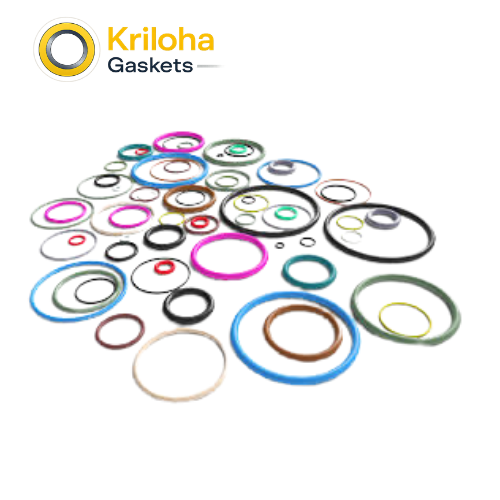
  • Universal Sealing Geometry: Featuring a circular cross-section (“O” shape) designed to be seated in a machined groove and compressed during assembly to create a leak-proof barrier.
  • Bi-Directional Sealing: Capable of sealing against pressure from both internal and external directions, making them the most versatile seal in modern engineering.
  • High-Performance Elastomers: Manufactured from a wide range of polymers including Nitrile (NBR), Viton (FKM), EPDM, Silicone (VMQ), and Perfluoroelastomers (FFKM) to match specific chemical and thermal demands.
  • Precision Molded Tolerances: Produced using high-pressure injection or compression molding to meet strict global standards such as AS 5620, BS 1806, and ISO 3601.
  • Self-Energizing Design: As fluid pressure increases, the O-ring is pushed against the side of the groove, further increasing the sealing force and maintaining integrity under high-pressure spikes.
  • Broad Temperature Range: Depending on the material, Kriloha O-rings can operate from cryogenic levels (-200°C) to extreme heat (+320°C).

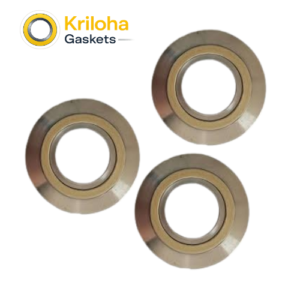
At Kriloha Ltd., we recognize that while the O-ring is a simple geometric shape, its performance is a complex science. A failure in a $1 O-ring can shut down a multi-million dollar refinery. The Kriloha Precision O-Ring is engineered for “Zero-Failure” reliability. As a premier global supplier of industrial seals, Kriloha Gaskets has mastered the material science required to ensure your static and dynamic joints remain hermetically sealed.

The physics of an O-ring is based on Elastic Deformation. When installed, the O-ring is squeezed (usually 10% to 30%) within its gland. This initial squeeze creates the “static” seal. When system pressure is applied, the O-ring behaves like a high-viscosity fluid, transmitting the pressure equally in all directions and “wedging” itself into the gap between the mating surfaces. At Kriloha, we utilize Vacuum Molding technology to ensure our O-rings are free of internal air pockets or “flash” lines that could create a leak path.

Manufacturing these seals at Kriloha involves rigorous batch testing for Compression Set—the ability of the rubber to return to its original shape after being squeezed. We offer O-rings in standard imperial and metric sizes, as well as Encapsulated O-Rings (PTFE jacket over a rubber core) for the ultimate combination of chemical resistance and elasticity. Whether you are sealing a high-pressure hydraulic jack or a delicate laboratory instrument, Kriloha O-Rings provide the mechanical stamina and chemical versatility required for a permanent seal. By choosing Kriloha Ltd., you are investing in a product that balances simplicity with world-class polymer engineering.
Primary Use Cases

  • Hydraulic & Pneumatic Cylinders: Preventing fluid or air bypass in pistons and rod assemblies.
  • Automotive Systems: Essential for fuel injectors, oil filters, cooling systems, and air conditioning compressors.
  • Aerospace & Defense: High-integrity sealing for flight controls, fuel lines, and hydraulic actuators.
  • Chemical Processing: Utilizing FFKM or Viton O-rings for pumps and valves handling aggressive solvents and acids.
  • Food & Pharmaceutical Equipment: Utilizing FDA-compliant Silicone or EPDM for sterile processing environments.
  •  

FAQs

How do I choose the right O-ring material?

    • Nitrile (NBR): Best for general oil, fuel, and hydraulic fluid service.
    • Viton (FKM): Required for high-temperature and aggressive chemical environments.
    • EPDM: Ideal for outdoor weather, steam, and water systems (never use with oil).
    • Silicone: Best for food-grade, medical, and extreme temperature flexibility.What causes “Extrusion” in an O-ring?

Extrusion occurs when the system pressure is too high for the material’s hardness, forcing the O-ring into the clearance gap between parts. To prevent this, Kriloha recommends using a higher durometer (harder) material or adding Backup Rings.

Can I reuse an O-ring?

It is generally not recommended. O-rings take a “permanent set” over time, matching the specific contours of the groove. Once removed, they rarely reseat perfectly.

How do I measure an O-ring for replacement?

You need two dimensions: the Inside Diameter (ID) and the Cross-Section (CS) thickness. Use a caliper for the most accurate measurement.

What is a “Backup Ring” and when do I need one?

A Backup Ring is a hard (often PTFE) ring installed alongside the O-ring. It is used in high-pressure applications (typically above 1500 PSI) to prevent the softer O-ring from extruding into the clearance gap.

This is the heading

Lorem ipsum dolor sit amet consectetur adipiscing elit dolor

Request a Quote

Enter your details here

Great! We’ve received your information.

We couldn’t process your submission. Please retry

Scroll to Top

Get a Quote

Great! We’ve received your information.

We couldn’t process your submission. Please retry