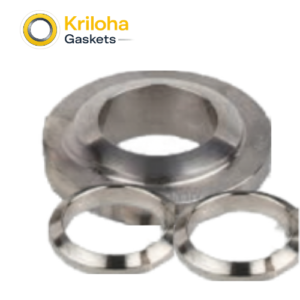
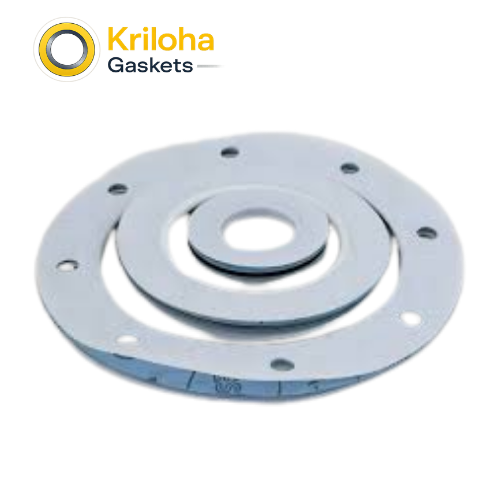
PTFE Envelope Gasket

PTFE Envelope Gasket

Core Features

  • Dual-Component Hybrid Design: Features a chemically inert PTFE outer envelope that shields a functional internal filler (such as Corrugated Metal, Flexible Graphite, or Non-Asbestos Fiber).
  • Universal Chemical Protection: The PTFE shield provides a near-universal barrier against aggressive acids, alkalis, and solvents, preventing the process media from ever touching the internal core.
  • Optimized Seating Stress: By combining the soft “flow” of PTFE with a high-recovery internal core, these gaskets achieve a gas-tight seal at significantly lower bolt loads than solid PTFE gaskets.
  • Anti-Cold-Flow Integrity: The internal metallic or fiber core provides a structural “backbone” that resists the “creep” or “cold flow” common in pure plastic gaskets, ensuring long-term seal stability.
  • Low-Torque Resilience: Specifically engineered for use with fragile flanges (Glass-Lined, Plastic, or FRP) where high bolt torque could cause equipment cracking.
  • Non-Contaminating Surface: The virgin PTFE envelope meets FDA 21 CFR 177.1550 standards, making it ideal for high-purity pharmaceutical and food processing.

At Kriloha Ltd., we understand that “Chemical Resistance” and “Structural Strength” are often at odds. In the world of specialty chemicals, you need the inertness of PTFE, but you also need the mechanical “memory” of a metal gasket. The Kriloha PTFE Envelope Gasket is our solution for this engineering challenge. As a premier global supplier of industrial seals, Kriloha Gaskets has mastered the art of the “Shielded Seal,” protecting your high-performance cores with a fortress of virgin PTFE.

The architecture of an Envelope Gasket is defined by its “Shield.” We utilize a precision-machined or slit PTFE envelope—typically in a “Y-Type” (Slit) for standard piping or a “U-Type” (Milled) for large-diameter reactors. Inside this shield, we place a core tailored to your specific mechanical needs. For example, a Corrugated Stainless Steel core provides the spring-back needed for thermal cycling, while a Flexible Graphite core offers excellent conformability for pitted flanges. This hybrid approach means the PTFE handles the chemistry, while the core handles the physics.

Manufacturing these gaskets at Kriloha requires absolute dimensional control. Because the envelope must fit snugly over the core without “bunching,” we maintain tolerances within +/- 0.2mm. We use only 100% Virgin PTFE for our envelopes to ensure zero porosity. This prevents “wicking,” where chemicals might otherwise seep through the PTFE over time and attack the internal core. By choosing Kriloha Ltd., you are investing in a product that eliminates the compromises of pure plastic seals, providing the chemical invincibility and mechanical stamina your facility demands.
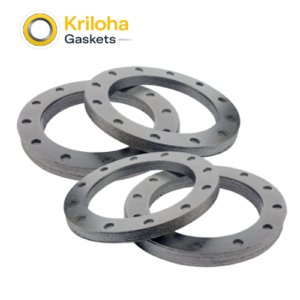
Primary Use Cases

  • Glass-Lined Steel Piping: The industry standard for pharmaceutical reactors and chemical piping where flanges are brittle and chemical aggression is high.
  • Plastic & FRP (Fiber-Reinforced Plastic) Flanges: Providing a robust, metal-reinforced seal that won’t warp or crush lightweight piping systems.
  • High-Purity Chemical Service: Handling concentrated Sulfuric, Nitric, and Hydrochloric acids where zero-leaching is required.
  • Food & Dairy Processing: Ensuring a sterile, easy-to-clean seal that does not absorb flavors or harbor bacteria.
  • Vacuum Distillation Columns: The internal core provides the necessary rigidity to prevent the gasket from collapsing inward under deep vacuum conditions.
  •  

FAQs

What is the difference between a “Slit” (Y) and “Milled” (U) envelope?

A Slit envelope is made by cutting into the edge of a PTFE ring and is more cost-effective for standard piping. A Milled envelope is machined out of a solid block, creating a flat internal bore; this is preferred for high-purity applications as it prevents fluid from “pooling” inside the gasket.

Can I use a PTFE Envelope Gasket on a worn flange?

Yes. By selecting a “Flexible Graphite” filler inside the envelope, the gasket becomes highly conformable, allowing it to seal on older or slightly pitted flanges while maintaining full chemical protection.

What is the maximum temperature for these gaskets?

The gasket is limited by the PTFE envelope, which has a maximum continuous operating temperature of 260°C (500°F).

Why use an envelope instead of a solid PTFE gasket?

Solid PTFE “creeps” (flows) under pressure, which can lead to leaks over time. The internal core in an envelope gasket prevents this flow, providing much better long-term reliability and high-pressure security.

Are these gaskets suitable for vacuum service?

Absolutely. The internal metallic or fiber core provides the necessary rigidity to prevent the PTFE shield from being “sucked” into the pipe during vacuum operations.


This is the heading

Lorem ipsum dolor sit amet consectetur adipiscing elit dolor

Request a Quote

Enter your details here

Great! We’ve received your information.

We couldn’t process your submission. Please retry

Scroll to Top

Get a Quote

Great! We’ve received your information.

We couldn’t process your submission. Please retry