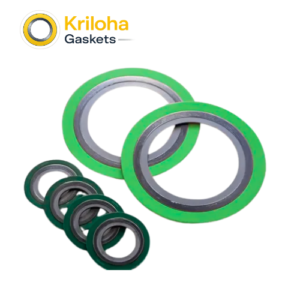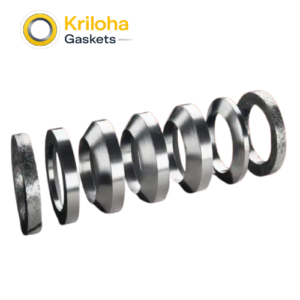
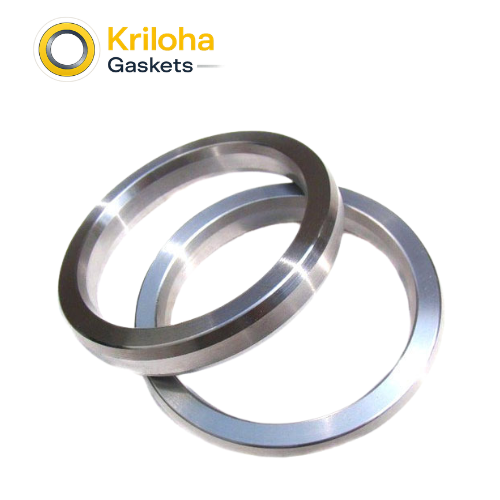
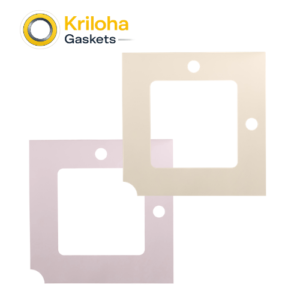
Self-tight Sealing Ring

Self-tight Sealing Ring

Core Features

  • Pressure-Energized Design: Unlike static seals that rely solely on mechanical compression, the self-tight sealing ring utilizes the internal pressure of the process fluid to increase its sealing force against the valve surfaces.

  • Elastic Recovery: Manufactured from high-resilience materials—typically reinforced elastomers or flexible graphite with metallic inserts—that maintain shape and sealing integrity during rapid pressure fluctuations.

  • Wedge-Action Profile: Often features a specialized geometric profile (such as a C-ring or U-cup) that is forced tighter into the sealing seat as system pressure rises, ensuring a “bubble-tight” shutoff.

  • Thermal Stability: Engineered to handle significant thermal expansion and contraction without losing contact with the sealing faces, making it ideal for high-cycle industrial service.

  • Reduced Friction: Designed to provide maximum sealing at the contact point while minimizing the overall surface area in contact with the stem, reducing operating torque and actuator wear.

At Kriloha Ltd., we understand that as system pressures increase, a traditional seal shouldn’t just hold—it should get stronger. Our Self-tight Sealing Rings are our engineered answer for “Dynamic-Containment” and “Pressure-Responsive-Reliability”. As a premier global provider of industrial seals, Kriloha has developed a ring technology that balances mechanical invincibility with the operational agility required for fluctuating load environments.

The engineering of our self-tight series is based on Pressure-Assist Geometry. By utilizing the natural force of the process media, we ensure that the seal’s “lips” or contact points are energized directly against the valve seat or stem. At Kriloha, we verify that our rings maintain a “Live-Loaded” state, preventing the leaks that occur when standard gaskets relax under low-pressure conditions. This creates a “Smart-Seal” barrier that is as effective at 50 PSI as it is at 5000 PSI.

Manufacturing these rings involves strict Profile Consistency Testing. We ensure that the angles and wall thicknesses are precision-machined to facilitate immediate activation the moment pressure is introduced. Whether you are sealing a high-surge transmission line or a critical refinery valve, Kriloha Self-tight Sealing Rings provide the mechanical durability your facility demands. By choosing Kriloha Ltd., you are investing in a “Self-Regulating” technology that secures your highest-value assets against pressure-induced failure.
Primary Use Cases

    • High-Pressure Isolation Valves: Ideal for gate and ball valves in oil and gas pipelines where pressure surges are common.

    • Control Valve Assemblies: Providing a dynamic seal that adapts to varying flow conditions in automated process loops.

    • Steam Headers: Managing high-temperature, high-pressure steam in power generation and district heating systems.

    • Subsea Equipment: Used in deep-sea valves where external and internal pressure differentials require a seal that “activates” based on environment.

FAQ's

Does a “Self-tight” ring still require initial compression?
Yes. A small amount of initial mechanical preload is required to establish a seal at zero or low pressure; the “self-tight” feature then takes over as system pressure increases.

Can these replace standard O-rings?
In many cases, yes. They are often used as upgrades in high-pressure valves where standard O-rings might suffer from “extrusion” or “nibbling”.

What materials are used for these rings?
Depending on the application, Kriloha utilizes high-grade PTFE, FKM (Viton), or specialized metallic-reinforced graphite for extreme temperatures.

Are they bi-directional?
Most self-tight rings are uni-directional, meaning they must be installed with the “open” side facing the pressure source to activate correctly.

How do I know if the ring is correctly energized?
The seal is essentially “automatic.” If installed correctly, a drop in downstream pressure while the valve is closed indicates that the internal pressure is successfully energizing the ring.

This is the heading

Lorem ipsum dolor sit amet consectetur adipiscing elit dolor

Request a Quote

Enter your details here

Great! We’ve received your information.

We couldn’t process your submission. Please retry

Scroll to Top

Get a Quote

Great! We’ve received your information.

We couldn’t process your submission. Please retry