
Needle Valves
Welcome to the Kriloha Gaskets comprehensive guide to Needle Valves. As a cornerstone of our Valve and Fitting Accessories main category, needle valves represent the pinnacle of precise fluid regulation. Whether you are managing high-pressure steam, delicate chemical processing, or intricate laboratory instrumentation, selecting the right needle valve is essential for system integrity and operational safety.
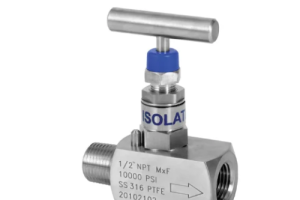
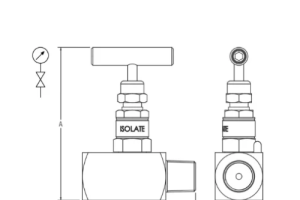
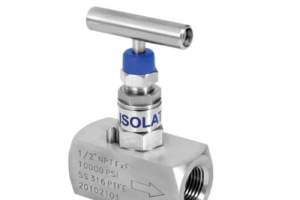
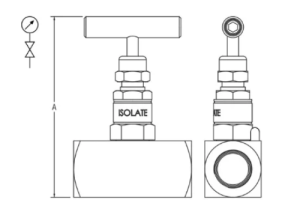
More Catagories
What is a Needle Valve?
A needle valve is a type of manual valve used where continuous throttling is required for regulation of flow. Its name is derived from the sharp-pointed, conical needle-like plunger that fits into a matching seat. This design allows for extremely fine adjustments to the flow of gas or liquid, far exceeding the control capabilities of a standard ball or gate valve.
How it Works
When the handle is turned, the plunger moves up or down. Because of the gradual taper of the needle, a large amount of rotation results in only a tiny change in the flow area. This high-resolution control makes them indispensable for applications where even a minor fluctuation in flow could compromise a process.
Technical Specifications and Materials
At Kriloha Gaskets, we ensure our needle valves meet the rigorous demands of industrial environments. Our selection is engineered to withstand extreme pressures and corrosive media.
Common Material Grades:
Stainless Steel (SS 304/316/316L): The industry standard for corrosion resistance and durability in chemical and offshore environments.
Carbon Steel: Ideal for high-pressure hydraulic and oil-based systems where corrosion is less of a concern.
Brass: Frequently used for water processing, gas handling, and pneumatic systems due to its cost-effectiveness and spark-resistant properties.
Specialty Alloys: For extreme temperatures or highly acidic media, we provide valves in Monel, Inconel, and Hastelloy.
Design Standards:
Our valves are designed in accordance with global standards, including ASME B16.34, ensuring wall thickness and pressure ratings are compliant with international safety protocols.
Types of Needle Valves
To serve the diverse needs of our clients, we categorize needle valves based on their body design and connection types:
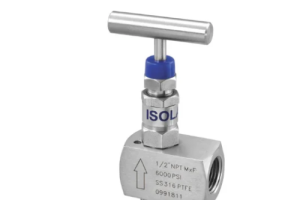
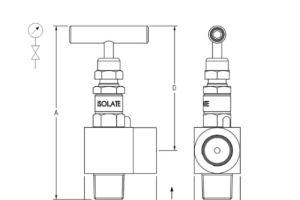
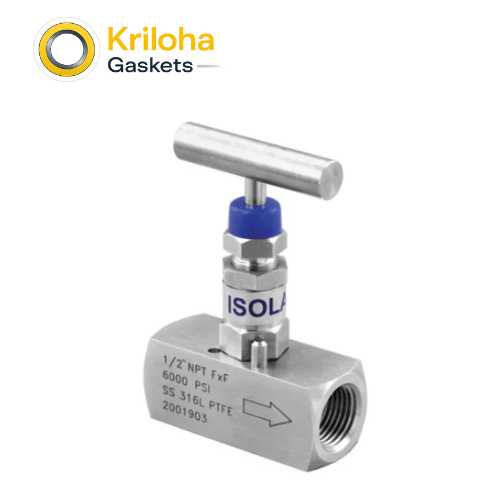
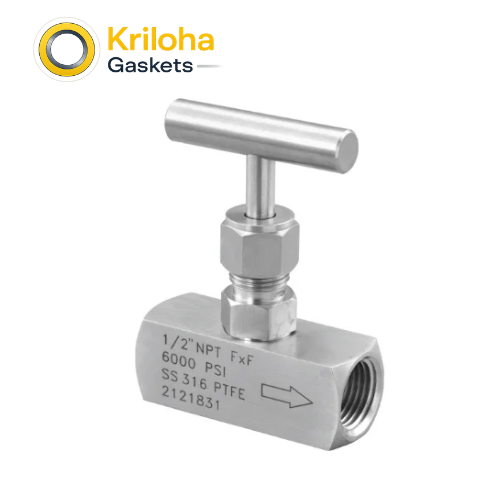
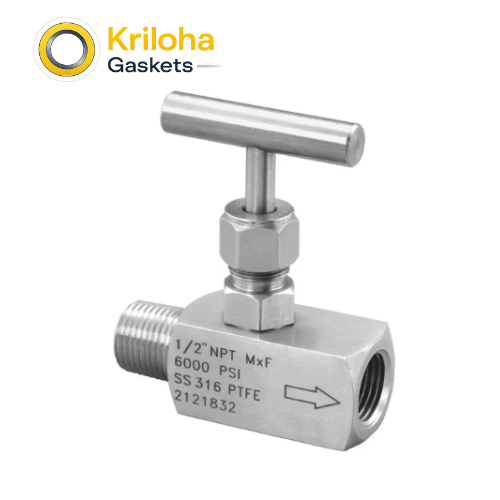
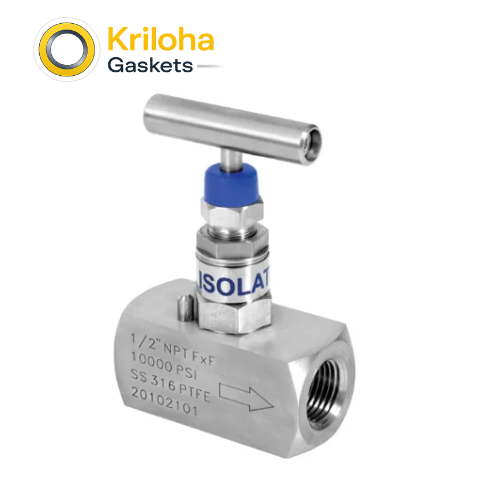
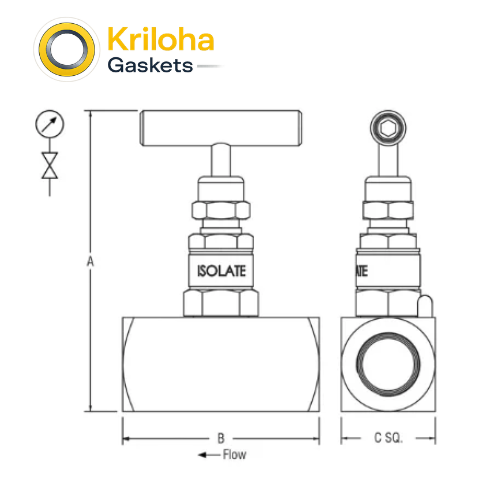
Straight-Way Needle Valves: The most common type, where the inlet and outlet are on the same plane, allowing for linear flow paths.
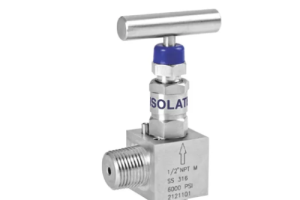
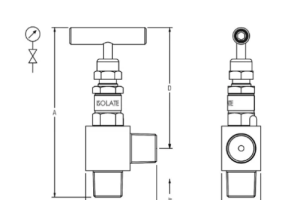
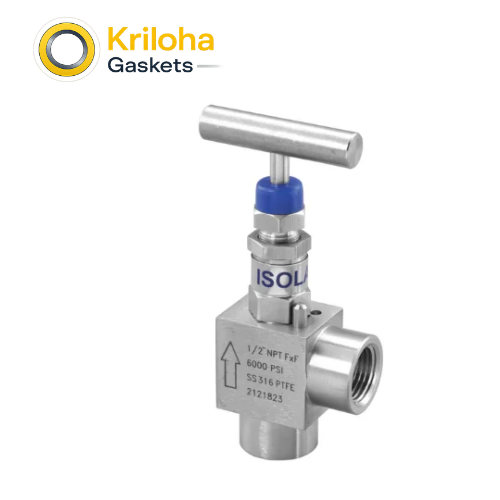
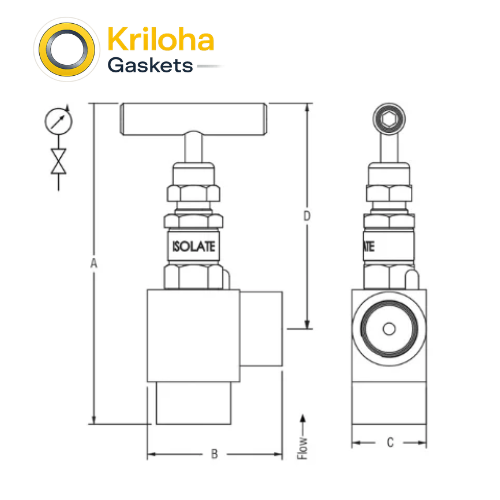
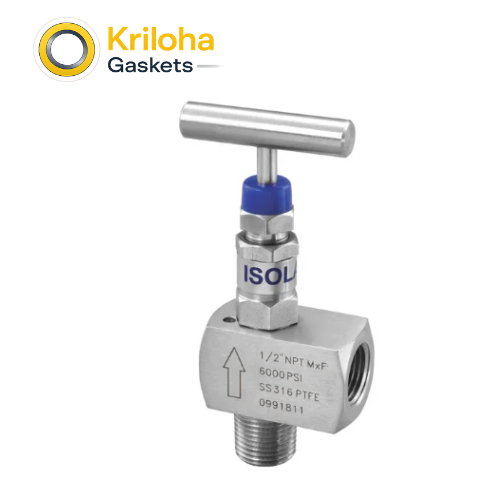
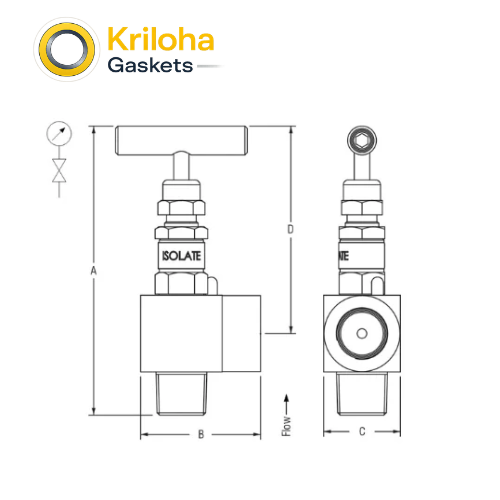
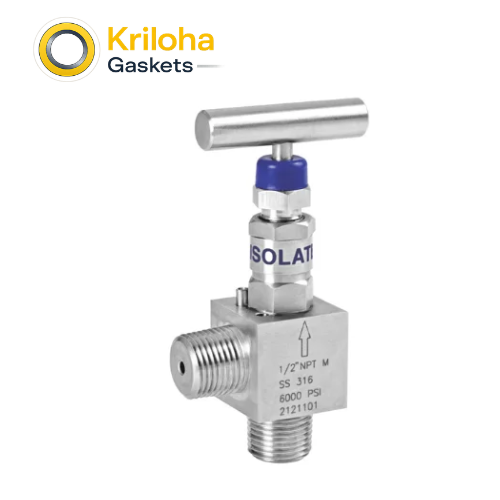
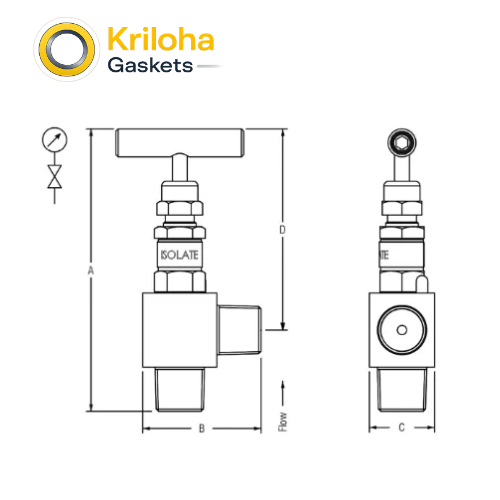
Angle Needle Valves: The inlet and outlet are at a 90-degree angle. These often reduce the need for additional elbow fittings in tight piping layouts.
Multi-Port Needle Valves: Designed with multiple outlets to allow for gauge calibration or the connection of multiple instruments to a single process line.
Panel-Mount Needle Valves: Feature threaded bodies and nuts to be easily integrated into control panels or dashboard systems.
Why Choose Kriloha Gaskets for Your Valve Accessories?
While our name is synonymous with high-quality sealing solutions, our expertise extends to the entire fluid handling system.
Maintenance and Installation Best Practices
To ensure the longevity of your needle valves, follow these professional guidelines:
Directional Flow: Always install the valve according to the flow arrow on the body. Flow should typically enter under the seat to prevent packing pressure when the valve is closed.
Avoid Over-Tightening: Because the needle is finely tapered, excessive force when closing can damage the seat. A “finger-tight” close is often sufficient for a positive seal.
Filtration: Needle valves have small orifices that can easily be clogged by debris. Ensure upstream strainers or filters are in place.
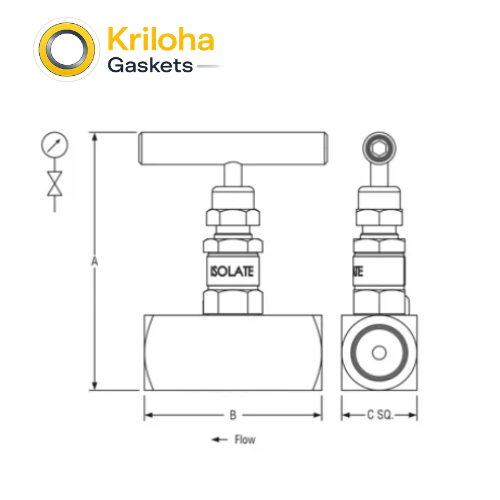
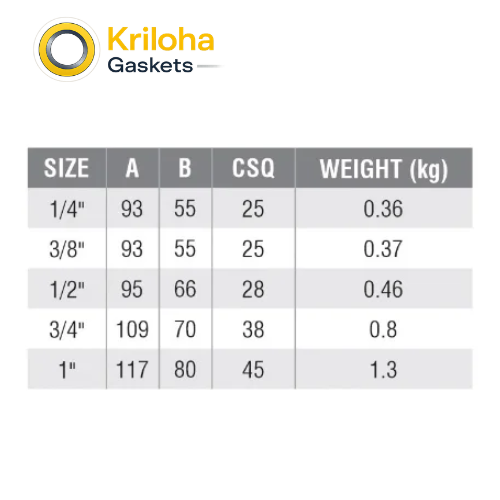
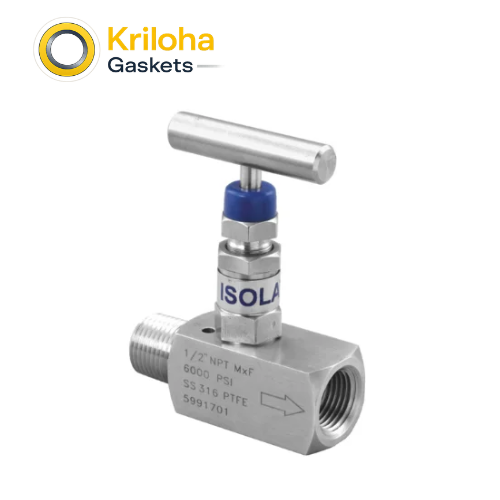
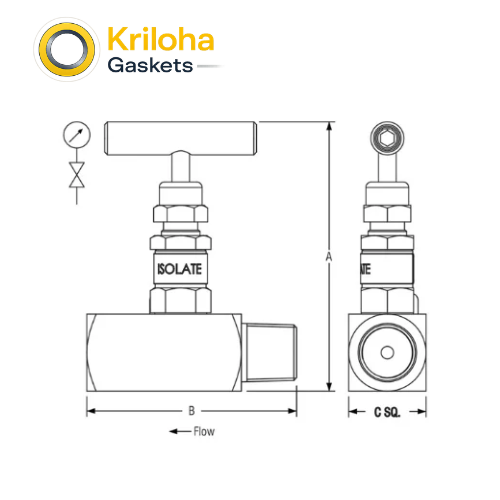
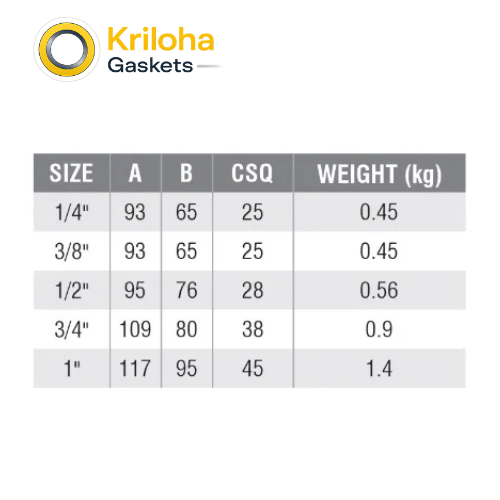
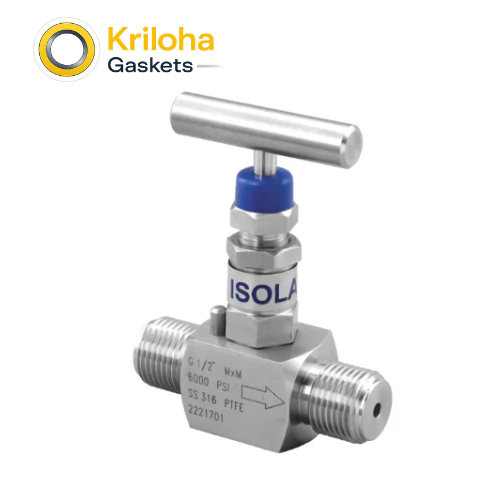
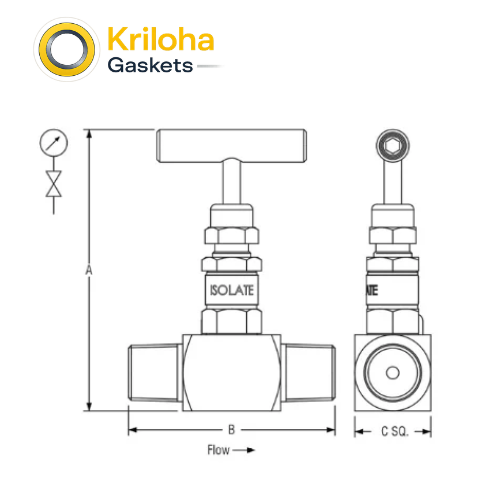
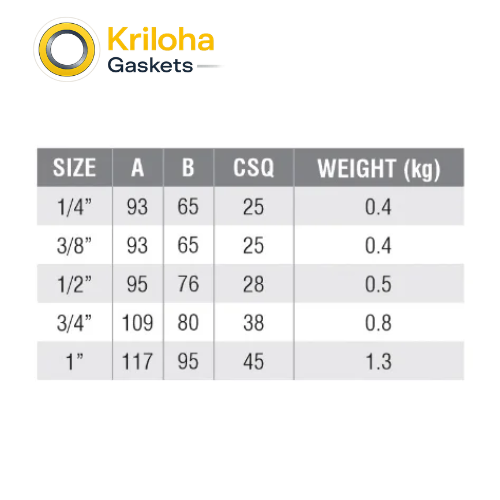
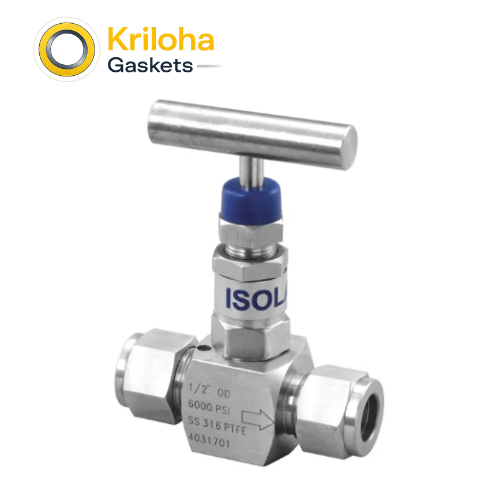
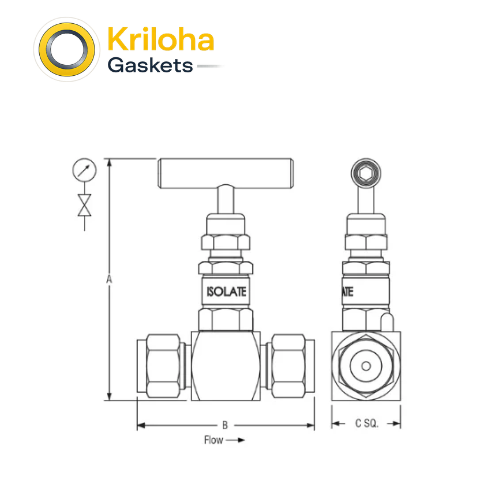
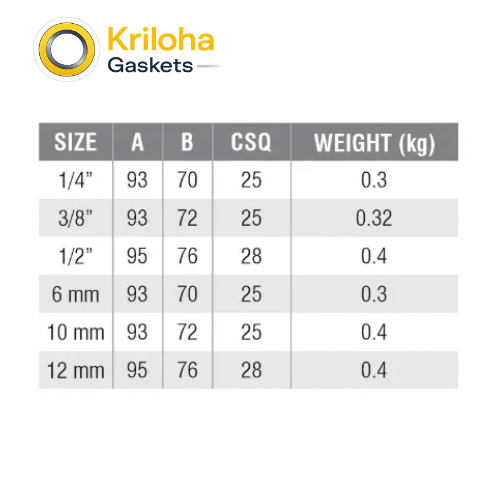
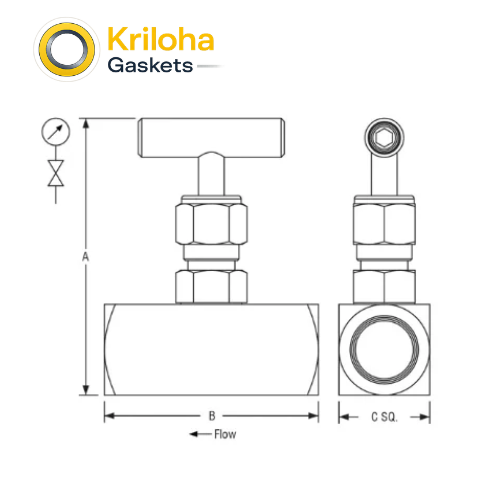
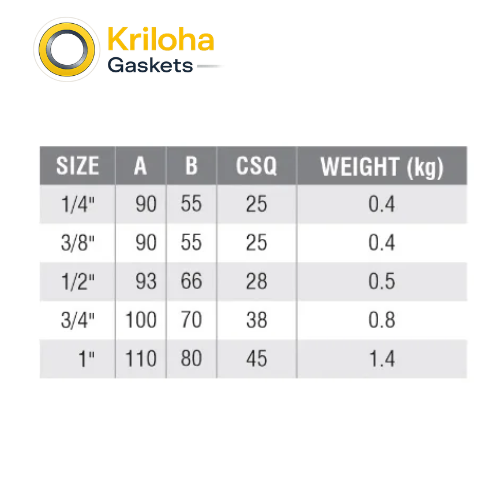
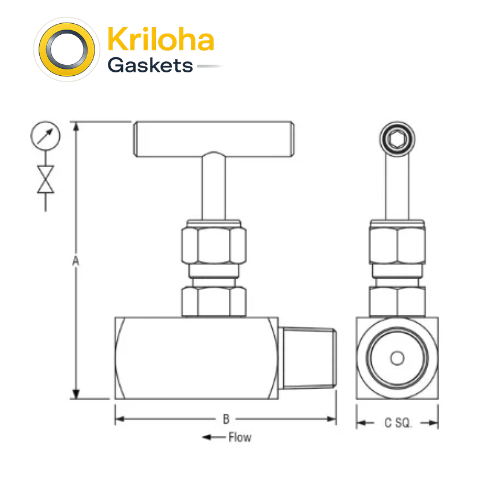
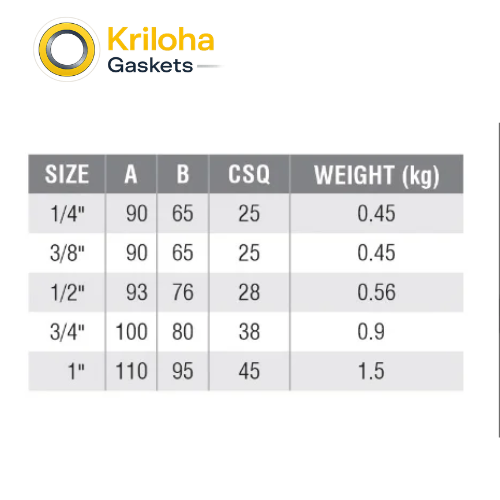
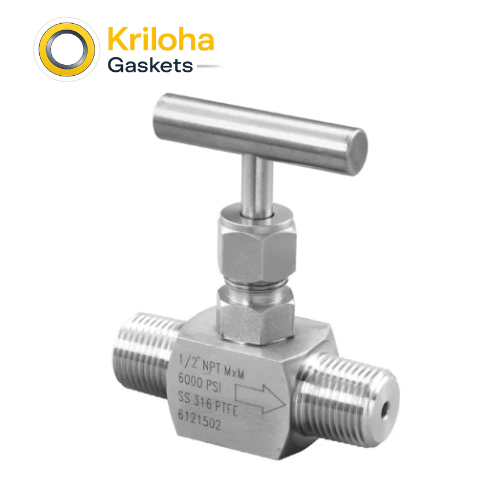
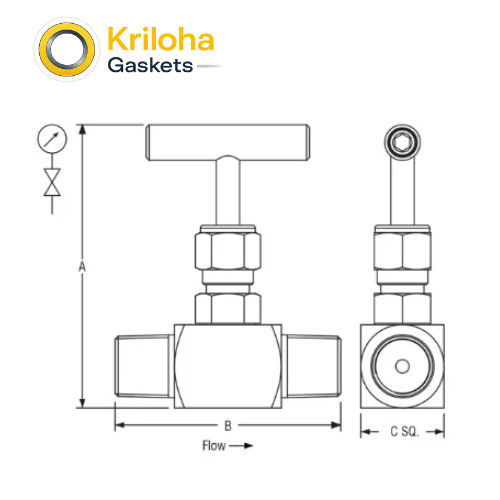
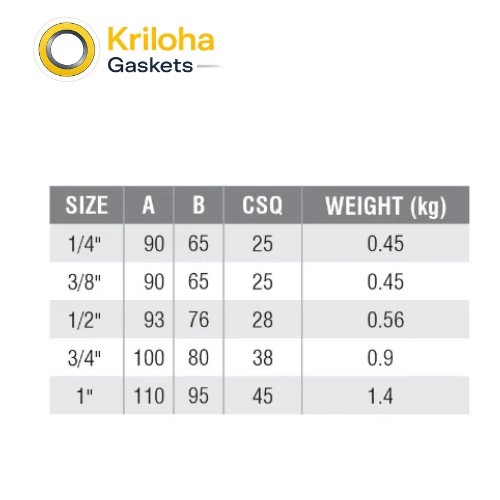
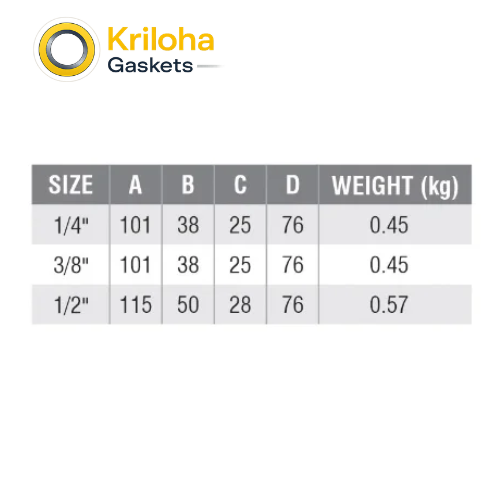
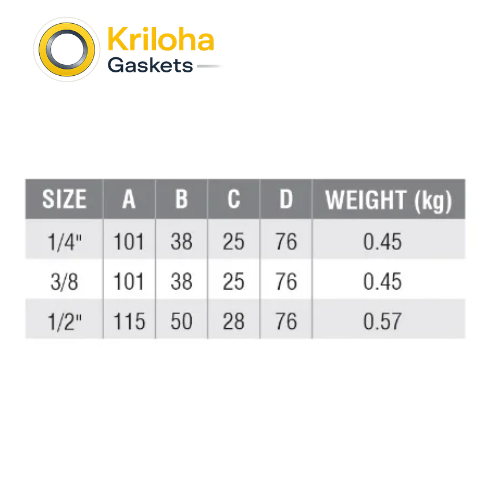
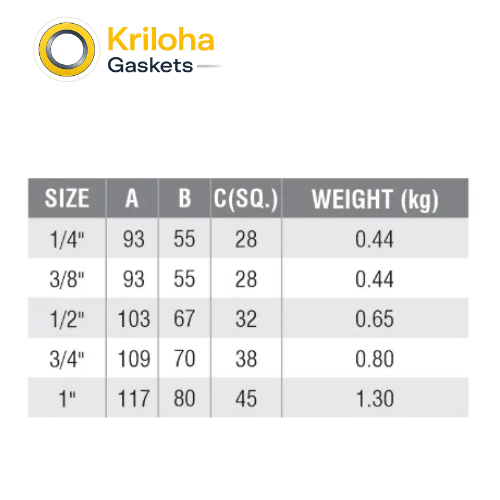
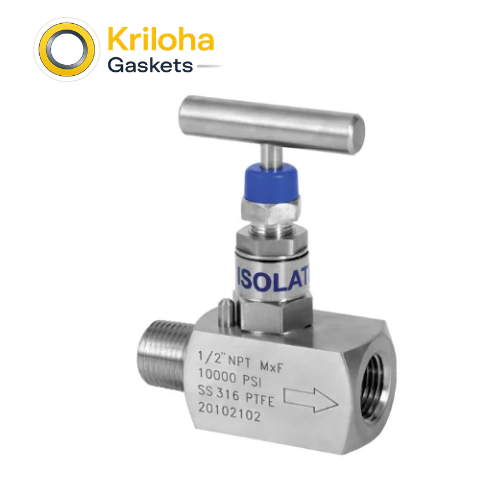
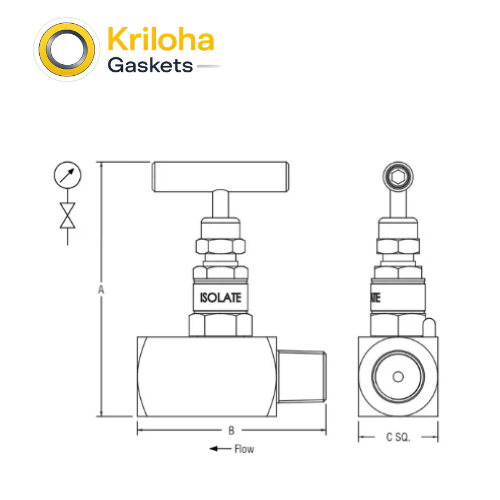
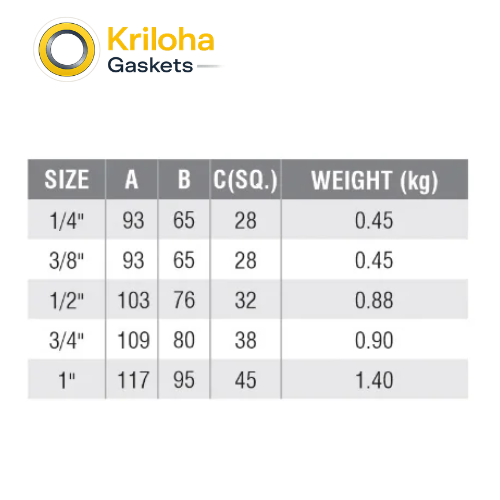
Available Profile Configurations
Suggested Imagery for the Page
To maximize user engagement and SEO, we recommend the following visual assets:
Hero Image: A high-resolution, professional macro shot of a Stainless Steel 316 Needle Valve with a polished finish, set against a clean industrial background.
Technical Diagram: An exploded view or cross-section showing the needle, seat, packing, and stem to help users understand the internal mechanics.
Application Gallery: Images of needle valves installed in a manifold system or connected to industrial pressure gauges.
Material Comparison Infographic: A table or chart visually representing which materials (SS, Brass, Carbon Steel) are best for specific temperatures and media.
Quality Seal: A “Certified Quality” badge or a photo of the valves undergoing pressure testing at the Kriloha facility.
Frequently Asked Questions (FAQ's)
Q: Can needle valves be used for "on/off" service?
A: While they can shut off flow, they are not ideal for quick on/off applications. Their primary purpose is throttling. For rapid shut-off, a ball valve is more appropriate.
Q: What is the typical pressure rating for Kriloha needle valves?
A: Standard models are rated for 3,000 PSI to 6,000 PSI, with high-pressure series available up to 10,000 PSI depending on the material and design.
Q: How do I choose between a hard-seat and a soft-seat needle valve?
A: Hard seats (metal-to-metal) are best for high temperatures and general service. Soft seats (usually Delrin or Peek) provide a more “forgiving” seal and are better for gas service where zero-leakage is critical at lower pressures.
Q: Are these valves suitable for oxygen service?
A: We stock sizes ranging from 1/8″ to 1″ NPT or BSPT, as well as tube-end connections for instrumentation tubing.
Q: What sizes are available in the Valve and Fitting Accessories category?
A: We stock sizes ranging from 1/8″ to 1″ NPT or BSPT, as well as tube-end connections for instrumentation tubing.
Contact Kriloha Ltd. Today
for your valve and fitting parts accessories requirements. Invincible Seals. Agile Solutions.