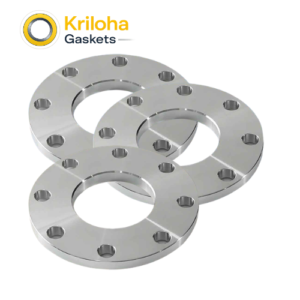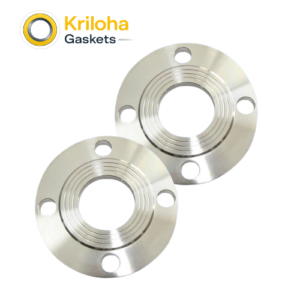
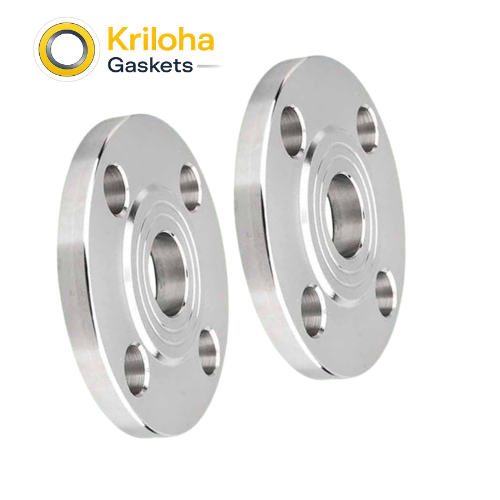
Astm A350 Lf2 8 Inch Pl Flange Ss Flat Face Plate Flange

Astm A350 Lf2 8 Inch Pl Flange Ss Flat Face Plate Flange

Core Features

  • ASTM A350 LF2 Low-Temperature Carbon Steel: Forged from specialized fine-grain carbon steel that has been normalized and fully killed, delivering exceptional notch toughness and fracture resistance in cold-weather and low-temperature process conditions down to -46°C (-50°F).
  • 8-Inch Nominal Pipe Sizing (NPS 8 / DN200): Precision-bored to slide seamlessly over standard 8-inch outer diameter industrial pipelines, facilitating precise field layout alignment.
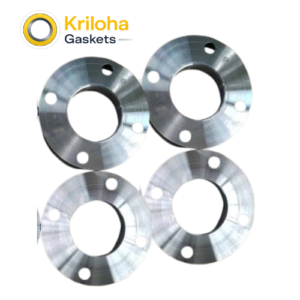
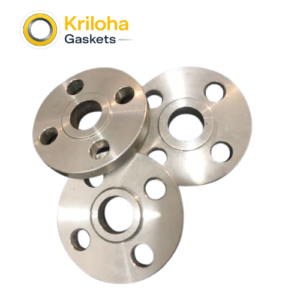
  • Hubless Plate Geometry (PL): Features a space-saving, completely flat profile without a raised neck or hub, allowing it to slip easily over the pipe end for a compact mechanical footprint and highly cost-effective material yield.
  • Flat Face (FF) Surface Configuration: Engineered with a completely flat mating face across the entire diameter. This profile eliminates the risk of casting stress or bending moments, making it mandatory when bolting to flat-faced cast iron valves, pumps, or brittle equipment flanges.
  • Double Fillet Weld Attachment: Attached via both internal and external fillet welds, creating a robust mechanical joint that evenly distributes structural strain along the large-bore pipe wall to resist operational vibrations.

At Kriloha Gaskets & Hardware, we recognize that as operating temperatures drop, the demand for structural material reliability becomes absolute. Our ASTM A350 LF2 8-Inch Flat Face Plate Flanges represent our engineered answer for “Low-Temperature-Fracture-Security” and “Zero-Stress-Flat-Mating.” As a leading manufacturer of high-grade industrial pipeline elements, Kriloha optimizes the LF2 low-carbon structural matrix to deliver maximum structural value in high-load processing networks exposed to harsh environmental cycles.

The engineering of our low-temperature PL program is founded on Normalized Microstructural Uniformity and Application-Specific Thickness. By prioritizing hot-forging over lower-cost casting alternatives, our flanges retain the impact toughness and mechanical modulus required to handle intense bolt-torque demands across the 8-inch bolt circle without flexing or warping. At Kriloha, we precision-machine the Flat Face (FF) surface on advanced multi-axis CNC turning lines, finishing them with micro-grooved phonographic serrations that mechanically lock your sealing gaskets into place to resist blowout under sudden system pressure spikes.

Manufacturing and provisioning these critical flow-control connection pieces involves strict Charpy V-Notch Impact Testing, Ultrasonic Flaw Detection, and Surface Roughness ($R_a$) Calibration. We collaborate directly with your project engineering and facility maintenance teams to supply precise internal bores tailored to standard pipe outer diameters and specific wall-thickness schedules (such as Schedule 40 or Schedule 80 matching). By choosing Kriloha Gaskets & Hardware, you are investing in a “Future-Proof” industrial partnership that prioritizes your system’s lifetime reliability through superior carbon metallurgy and micro-tolerance engineering.
Primary Use Cases

  • Low-Temperature Midstream Pipelines: Reliable connection joints for oil, gas, and natural gas utility lines routing through arctic climates or high-altitude geographies.
  • Refrigeration & Cryogenic Utility Skids: Ideal for industrial chillers, cold-storage fluid piping, and localized gas liquidation systems operating under ambient sub-zero parameters.
  • High-Volume Water & Wastewater Lines: Heavy-duty flat connections for municipal water filtration networks, water treatment headers, and cold-water intake pipelines.
  • Brittle Equipment Mating: Used to bolt large-diameter 8-inch pipelines directly to cast iron pumps, bronze valves, and flat-faced fiberglass or plastic composite vessel interfaces.
  • Modular Industrial Utility Skids: Compact structural flanges used to connect large prefabricated utility piping segments to storage tanks and pumping manifolds.

Frequently Asked Questions (FAQs)

What makes ASTM A350 LF2 material different from standard ASTM A105 carbon steel?

While both are carbon steels, ASTM A350 LF2 is engineered specifically for low-temperature service. It undergoes strict chemical controls and a normalization heat treatment to ensure excellent ductility and impact toughness at sub-zero temperatures (down to -46°C), where standard A105 steel would become brittle and prone to catastrophic stress-cracking.

Why use a “Flat Face” (FF) plate flange instead of a “Raised Face” (RF) flange for an 8-inch line?

Flat Face flanges are explicitly required when mating your pipeline to components made of brittle materials, such as cast iron valves or pumps. If you tighten a Raised Face flange against a cast iron flat face, the concentrated bolt load inside the bolt circle can stress, bend, and crack the expensive cast iron component. A Flat Face-to-Flat Face connection ensures completely uniform bolt load distribution across the entire sealing area.

What specific welding configuration is required to install an 8-inch plate flange?

A plate welding flange requires a standard double fillet weld setup for proper installation: one robust fillet weld around the rear side where the plate meets the outer diameter of the pipe wall, and a secondary fillet weld along the inside bore face where the pipe end sits flush with the flange face.

How is this low-temperature carbon steel flange protected against environmental rust?

Because carbon steel is vulnerable to atmospheric oxidation, our A350 LF2 flanges come standard with a protective surface treatment. This typically includes a light black or yellow anti-rust lacquer, a rust-preventative oil finish, or electro-galvanization depending on your long-term storage and installation environment requirements.

Are Charpy impact test results included in the Material Test Reports (MTRs)?

Yes. At Kriloha Ltd., quality assurance is completely non-negotiable. Every shipment of ASTM A350 LF2 flanges is accompanied by certified Material Test Reports (MTRs) that explicitly outline the chemical composition, tensile strength, heat treatment logs, and mandatory Charpy V-notch impact values to ensure full code traceability.

This is the heading

Lorem ipsum dolor sit amet consectetur adipiscing elit dolor

Request a Quote

Enter your details here

Great! We’ve received your information.

We couldn’t process your submission. Please retry

Scroll to Top

Get a Quote

Great! We’ve received your information.

We couldn’t process your submission. Please retry