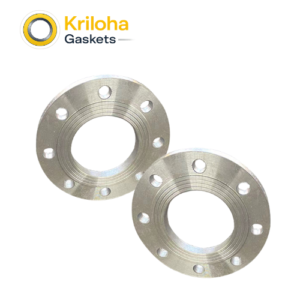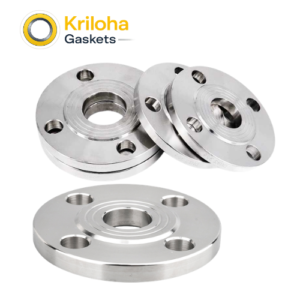
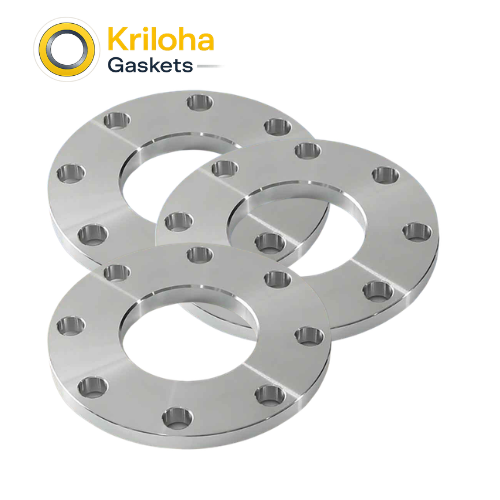
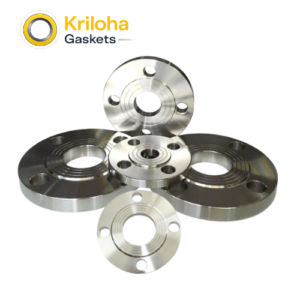
Astm A105 Plate Forged Plate Flange

Astm A105 Plate Forged Plate Flange

Core Features

  • Premium Carbon Steel Metallurgy: Manufactured from high-grade ASTM A105 killed carbon steel, specifically designated for ambient- and higher-temperature service in piping components and pressure systems.
  • Forged Structural Density: Hot-forged to ensure a refined, continuous metal grain flow. This eliminates internal voids, gas pockets, and structural micro-cracks, delivering exceptional impact toughness and burst-pressure thresholds.
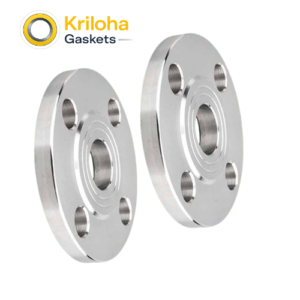
  • Space-Saving Hubless Geometry: Features a completely flat, collarless plate profile that slides directly over the end of the pipe or tube, allowing for high structural efficiency in tight or restricted layouts.
  • Double Fillet Weld Design: Attached via both internal and external fillet welds, creating a highly stable mechanical joint that evenly distributes structural tension and absorbs systemic vibrations.
  • Precision CNC Sealing Face: The flat mating face is precision-turned to achieve parallel joint alignment and uniform gasket compression, preventing fluid bypass or pressure loss over time.

At Kriloha Gaskets & Hardware, we recognize that an industrial pipeline is only as reliable as its bolted connections. Our ASTM A105 Forged Plate Flanges represent our engineered answer for “High-Density-Joint-Security” and “Zero-Flexing-Integrity.” As a premier supplier of high-performance fluid handling and sealing interfaces, Kriloha utilizes controlled forging methods to ensure that our carbon steel plate flanges provide maximum physical resilience under standard industrial pressure loads.

The engineering of our ASTM A105 plate flange program is founded on Metallurgical-Traceability and Structural-Uniformity. By prioritizing hot-forging over lower-cost casting alternatives, the internal metal grains are mechanically compacted to trace the flat contour of the plate. This creates a component that easily resists the high bolt-torque loads required to compress heavy industrial gaskets without warping or bowing. At Kriloha, we precision-machine the flat sealing surfaces on advanced multi-axis CNC turning lines, finishing them with standardized phonographic serrations that mechanically grip your choice of gasket sheets to resist blowout under sudden pressure spikes.

Manufacturing and provisioning these critical flow-control connection pieces involves strict Dimensional Tolerance Checks, Volumetric Material Inspections, and Face Roughness ($R_a$) Calibration. We collaborate directly with your project engineering and facility maintenance teams to supply precise internal bores tailored to standard tube gauges or nominal pipe size (NPS/DN) wall-thickness schedules (such as Schedule 40 or Schedule 80 matching). By choosing Kriloha Gaskets & Hardware, you are investing in a “Future-Proof” industrial partnership that prioritizes your system’s lifetime reliability through superior carbon metallurgy and micro-tolerance engineering.
Primary Use Cases

  • Oil, Gas & Petroleum Utilities: Standard, heavy-duty connection joints for non-corrosive hydrocarbon lines, fuel oil loops, and gas distribution lines.
  • Steam & Condensate Infrastructure: Reliable utility piping for moderate steam pressures and elevated thermal cycles within processing plants and factories.
  • High-Pressure Water Transfer: Ideal for industrial water lines, main plumbing manifolds, and cooling water networks where structural integrity under surge pressures is mandatory.
  • Power Generation Utility Lines: Secondary process piping, air intake channels, and boiler feed system piping within modern power infrastructure.
  • Modular Process Skids: Compact structural flanges used to join prefabricated piping manifolds to flat-faced valves, strainers, and storage tanks.

Frequently Asked Questions (FAQs)

What is the significance of the “ASTM A105” material specification?

ASTM A105 is the standard specification for forged carbon steel piping components. It is the industry standard for non-corrosive, ambient- to high-temperature installations. Unlike stainless steel, it is highly economical but requires a protective outer coating (such as black paint or oil) to prevent atmospheric rusting.

Why use a hubless “Plate Flange” instead of a hubbed Slip-On flange?

Because a plate flange completely lacks a raised hub or collar, it has a flatter, more compact profile and requires less raw material to manufacture. This makes it highly cost-effective and space-efficient for standard industrial networks where the extra structural reinforcement of a hub is not functionally required.

What specific welding configuration is required to install an A105 plate flange?

A plate welding flange requires a double fillet weld setup for proper installation: one robust fillet weld around the rear side where the plate meets the outer diameter of the pipe wall, and a secondary fillet weld along the inside bore face where the pipe end sits flush with the flange face.

Can an ASTM A105 carbon steel flange be bolted to a Stainless Steel flange?

Yes, they can be mechanically bolted together. However, if the fluid inside is conductive, a galvanic corrosion cell could form. To prevent this, it is standard engineering practice to use an Isolating Gasket Kit (IGK), which includes non-conductive washers and sleeves to electrically isolate the two different metals.

Are custom inner bore sizes or specialized face finishes available?

Yes. While we stock standard dimensions matching global pipeline specifications (such as ANSI B16.5 Class 150/300 patterns), our flexible CNC machining paths allow us to custom-bore the inner diameter to match your proprietary tube gauges or unique structural layout constraints without extensive tooling delays. Certified Material Test Reports (MTRs) are provided with every shipment to ensure full traceability.

This is the heading

Lorem ipsum dolor sit amet consectetur adipiscing elit dolor

Request a Quote

Enter your details here

Great! We’ve received your information.

We couldn’t process your submission. Please retry

Scroll to Top

Get a Quote

Great! We’ve received your information.

We couldn’t process your submission. Please retry