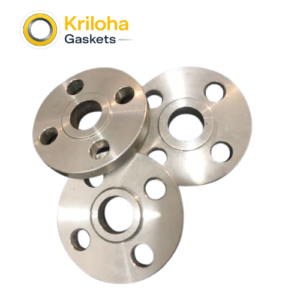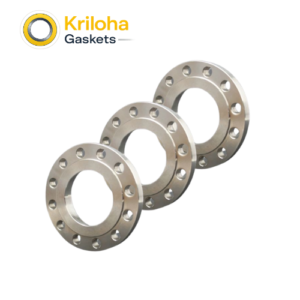
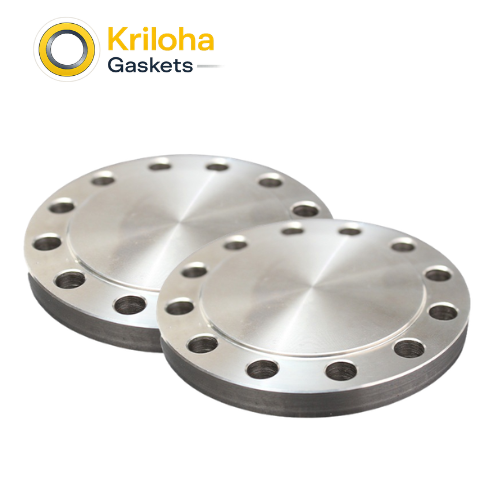
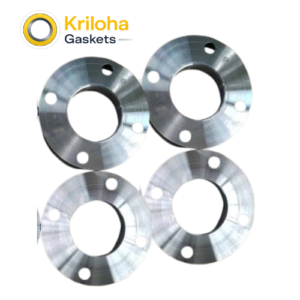
Stainless Flanges 304 316 Blind Flange Slip On Flange Weld Neck Flange

Stainless Flanges 304 316 Blind Flange Slip On Flange Weld Neck Flange

Core Features

  • Comprehensive Configuration Portfolio: Available in three fundamental industrial geometries—Blind (for line termination), Slip-On (for easy alignment and low-pressure welding), and Weld Neck (for high-stress, high-pressure environments).
  • Dual-Grade Metallurgical Excellence: Provisioned in premium Grade 304 for general corrosion resistance and cost efficiency, and Grade 316 (molybdenum-stabilized) for superior defense against chloride pitting and crevice corrosion.
  • Engineered Pressure Ratings: Manufactured to meet strict industrial specifications (including Class 150, 300, 600, and higher), providing robust structural performance across various pressure and temperature ranges.
  • Precise Face Formats: Finished with standardized sealing faces—such as Raised Face (RF) for concentrated gasket loading or Flat Face (FF) for secure mating with cast iron or flat-profile components.
  • Traceable Structural Integrity: Formed from fully verified forged steel stock to ensure uniform grain flow and absolute structural density, eliminating internal voids or weak spots under tension.

At Kriloha Gaskets & Hardware, we recognize that a pipeline is only as reliable as its bolted connections. Our comprehensive program of Stainless Steel Flanges (Blind, Slip-On, and Weld Neck) represents our engineered answer for “System-Boundary-Security” and “Structural-Leak-Defense.” As a premier supplier of high-performance flow control and sealing interfaces, Kriloha ensures that every flange is manufactured with exact geometric precision to fit seamlessly into modern processing networks.

The engineering of our stainless steel flange program is founded on Metallurgical-Purity and Application-Specific Geometry. By providing forged options in both Grade 304 and Grade 316, we ensure your pipeline matches the environmental demands of your facility. Weld Neck flanges feature a tapered hub that transitions stress directly to the pipe, reducing stress concentration at the base of the flange. Slip-On flanges slide directly over the pipe for efficient field layout, while our Blind flanges endure full system pressure loads at pipe terminations. At Kriloha, we verify the absolute flatness and serration profile of every sealing face, delivering “Failure-Resistant” joints that optimize gasket performance and distribute bolt tension uniformly.

Provisioning these critical connection points involves strict Dimensional Compliance, Pressure Testing, and Material Verification. We collaborate directly with your design and procurement teams to supply custom dimensions, specialized wall-thickness schedules (such as Schedule 40 or 80 matching for Weld Necks), and precise face finishes (smooth or spiral serrated). By choosing Kriloha Gaskets & Hardware, you are investing in a “Future-Proof” industrial partnership that maximizes pipeline longevity through advanced material supply and micro-tolerance engineering.
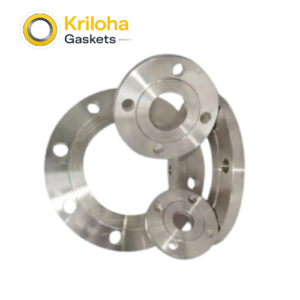
Primary Use Cases by Flange Type

  • Blind Flanges: Used to block off sections of piping, isolate systems, or close open ends of pressure vessels during routine maintenance, inspection, or system expansion.
  • Slip-On Flanges (SO): Ideal for low-pressure, low-vibration utility pipelines, cooling water networks, and air lines where rapid fit-up and cost-effective welding are required.
  • Weld Neck Flanges (WN): Engineered for critical, high-integrity piping systems subjected to severe pressure cycles, extreme temperatures, high velocity, and volatile chemical fluids.

Frequently Asked Questions (FAQs)

When should I choose a Weld Neck flange over a Slip-On flange?

Weld Neck flanges are required for high-pressure, high-temperature, or severe cyclic conditions because their tapered hub connects directly to the pipe wall via a full-penetration butt weld, providing maximum fatigue resistance. Slip-On flanges are preferred for low-pressure applications due to their easier alignment and lower initial installation cost.

What is the purpose of a Blind flange, and can it be altered?

A Blind flange has no bore and is used to completely seal the end of a piping system or vessel. However, they can be ordered with custom threaded or tapped centers to allow for pressure monitoring, chemical injection, or draining without removing the main flange.

What is the standard surface finish on the flange face, and why does it matter?

The most common finish is a Stock Serrated Finish (concentric or spiral grooves). These micro-grooves bite into the gasket material when the bolts are torqued, preventing gasket blowout and ensuring a highly secure, micro-tight seal under pressure.

How do I decide between Grade 304 and Grade 316 stainless steel?

Grade 304 is the industry standard for general corrosion resistance in water, food processing, and atmospheric conditions. Grade 316 contains added molybdenum, making it necessary for harsher environments exposed to marine salt spray, acids, or industrial chemical processing where pitting must be avoided.

Are custom pressure classes or specialized bore schedules available?

Yes. While we supply standard configurations matching industrial dimensions, we can fulfill requirements for non-standard bolt patterns, specialized face dimensions, and custom wall-thickness tolerances to match your proprietary CAD models.

This is the heading

Lorem ipsum dolor sit amet consectetur adipiscing elit dolor

Request a Quote

Enter your details here

Great! We’ve received your information.

We couldn’t process your submission. Please retry

Scroll to Top

Get a Quote

Great! We’ve received your information.

We couldn’t process your submission. Please retry