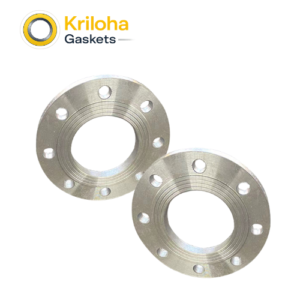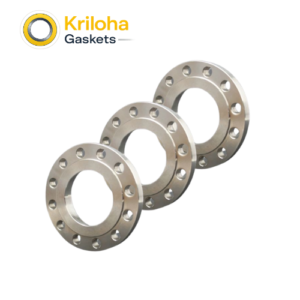
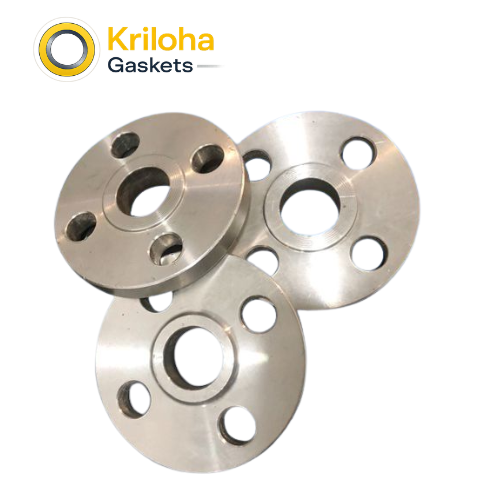
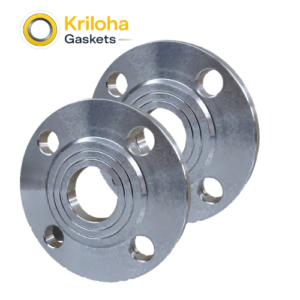
Stainless Steel Asme B16.5, Class 300 Pl Flange

Stainless Steel Asme B16.5, Class 300 Pl Flange

Core Features

  • Class 300 Mid-to-High Pressure Rating: Precision-engineered to handle more demanding industrial pressure parameters than standard Class 150 lines, safely maintaining structural joint integrity up to 720 PSI at ambient temperatures.
  • ASME B16.5 Standard Compliance: Manufactured in strict accordance with the American Society of Mechanical Engineers specifications, ensuring exact dimensional interchangeability with Class 300 valves, fittings, and industrial pressure vessels.
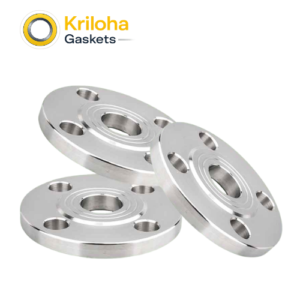
  • Plate Geometry (PL / Flat Face): The flat, hubless design allows the flange to slide over the pipe end for a space-saving profile. This design is highly cost-effective and provides straightforward alignment for double fillet welding.
  • Concentrated Bolt-Load Distribution: Features a robust thickness and heavy bolt-circle layout standard to Class 300 specifications, delivering uniform gasket seating and preventing flange bowing under tension.
  • Premium Alloy Selection (304 / 316): Offered in fully traceable Grade 304 for standard oxidation resistance and Grade 316 for superior defense against localized pitting in highly corrosive or chemical processing systems.

At Kriloha Gaskets & Hardware, we recognize that as operational pressures elevate, the demand for structural precision becomes absolute. Our Stainless Steel ASME B16.5 Class 300 Plate Flanges represent our engineered answer for “High-Load-Joint-Security” and “Zero-Bowing-Integrity.” As a leading manufacturer of high-grade industrial pipeline elements, Kriloha optimizes the plate flange configuration to handle heavy-duty mechanical loads without the bulk or cost of traditional hubbed alternatives.

The engineering of our Class 300 PL program is founded on Metallurgical-Traceability and Geometric-Perfection. Forged and machined from certified stainless steel stock, our plate flanges provide the structural modulus required to withstand high bolt-torque demands. By utilizing automated multi-axis CNC turning lines, we guarantee absolute flatness across the entire sealing face. At Kriloha, we precision-machine specialized serrated configurations directly onto the face, resulting in “Failure-Resistant” joints that mechanically bite into industrial gaskets to resist blowout under sudden pressure spikes.

Provisioning these critical connection interfaces involves strict Dimensional Tolerance Audits, Volumetric Purity Checks, and Surface Finish ($R_a$) Verification. We collaborate directly with your engineering and facility maintenance teams to supply precise configurations—including custom internal bores matched to your specific pipe schedules and premium material grades tailored to your chemical media. By choosing Kriloha Gaskets & Hardware, you are investing in a “Future-Proof” industrial partnership that maximizes your pipeline’s operational envelope through superior metallurgy and micro-tolerance engineering.
Primary Use Cases

  • Medium-Pressure Chemical Processing: Secure connection points for process pipelines handling organic solvents, mild acids, and aggressive chemical reagents.
  • Industrial Steam & Condensate Lines: Utility piping systems exposed to elevated thermal cycles and moderate steam pressures within factories and processing plants.
  • Petroleum & Hydrocarbon Refining: Mid-tier transport piping networks moving oil, fuels, and gas derivatives through refining stages.
  • High-Head Water Pumping Stations: Heavy-duty fluid lines in water distribution, wastewater management, and large industrial filtration networks where pressure surges occur.
  • Process Equipment Manifolds: Compact, high-strength flat interfaces for connecting piping networks to matching flat-faced heat exchangers and strainers.

Frequently Asked Questions (FAQs)

What is the main structural difference between a Class 150 and a Class 300 Plate Flange?

A Class 300 plate flange is significantly thicker, heavier, and utilizes a larger bolt circle with more or larger bolt holes than its Class 150 counterpart. This extra material is mechanically necessary to handle more than double the working pressure rating at ambient temperatures.

Why use a hubless “Plate Flange” instead of a Weld Neck or standard hubbed Slip-On flange for Class 300?

Plate flanges (PL) lack a hub or collar, making them more compact and cost-effective than hubbed alternatives. They are highly favored in space-constrained layouts or budget-conscious systems where the absolute structural reinforcement of a tapered weld-neck hub is not functionally required.

What is the pressure limit for an ASME B16.5 Class 300 flange?

Under standard ambient operating temperatures (around -29°C to 38°C), a Class 300 stainless steel flange possesses a maximum allowable working pressure rating of approximately 720 PSI (approx. 50 bar). This maximum rating scales down as the continuous operating temperature of the system rises.

Can a Class 300 Flat Face (FF) plate flange be safely mated to a Raised Face (RF) component?

It is standard industrial practice to mate like-face to like-face (Flat Face to Flat Face) to guarantee uniform gasket loading. If a flat plate flange must be bolted to a raised face valve or fitting, care must be taken during bolt torquing to avoid uneven stress distributions that could warp or distort the flat flange plate.

Are customized inner diameters or special material test reports available?

At Kriloha Ltd., quality assurance is completely non-negotiable. Every shipment is fully traceable and can be supplied with certified Material Test Reports (MTRs). Furthermore, our flexible CNC machining paths allow us to seamlessly adjust the internal bore diameter to fit non-standard pipe configurations perfectly.

This is the heading

Lorem ipsum dolor sit amet consectetur adipiscing elit dolor

Request a Quote

Enter your details here

Great! We’ve received your information.

We couldn’t process your submission. Please retry

Scroll to Top

Get a Quote

Great! We’ve received your information.

We couldn’t process your submission. Please retry