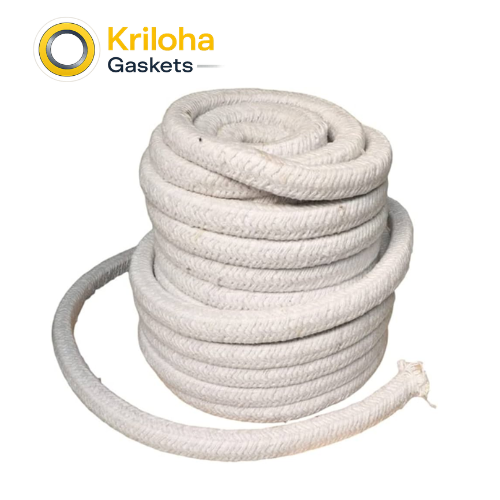
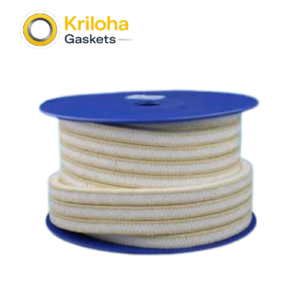
Ceramic Fiber Packing

Ceramic Fiber Packing

Core Features

  • Ultra-High Temperature Stability: Manufactured from high-purity aluminosilicate-based ceramic fibers. It is designed to withstand extreme thermal environments, with a continuous service temperature of up to 1260°C (2300°F).
  • Structural Reinforcement: To maintain tensile strength at glowing heats, the ceramic yarns are typically reinforced with either E-Glass filament (for temperatures up to 650°C) or Stainless Steel wire (for the full 1260°C range).
  • Low Thermal Conductivity: Acts as an exceptional insulator. The “lofty” mineral fiber structure traps air, preventing heat transfer and protecting external hardware or personnel from extreme temperatures.
  • Chemical & Flame Immunity: Inherently non-combustible and fireproof. It offers excellent resistance to most corrosive agents, including molten aluminum, zinc, and various acids and alkalis (pH range 2–12).
  • Thermal Shock Resistance: Unlike rigid refractories, braided ceramic fiber is flexible and resilient, allowing it to withstand rapid heating and cooling cycles without cracking or losing its seal.
  • Low Heat Storage: Absorbs very little heat compared to dense refractory bricks, allowing for faster cooling of industrial kilns and furnaces.

At Kriloha Ltd., we understand that “Heat” isn’t just a variable—it’s a force that can melt standard materials. In environments where even stainless steel begins to soften, you need a mineral-based barrier that remains unchanged. The Kriloha Ceramic Fiber Packing is our engineered answer for “Inorganic Thermal” containment. As a premier global provider of high-temperature seals, Kriloha Gaskets has mastered the Multi-Ply Braiding process required to turn brittle mineral fibers into a flexible industrial textile.

The engineering of our Ceramic series is based on Mineral Integrity. While synthetic fibers (like PTFE or Aramid) will vaporize or carbonize above 300°C, our ceramic fibers remain structurally sound past 1000°C. At Kriloha, we utilize a specialized “Low-Shot” fiber, meaning the yarn contains fewer unfiberized particles, resulting in a softer, more compressible packing that seals tighter against irregular furnace doors.

Manufacturing this packing at Kriloha involves strict Reinforcement Selection. We match the internal wire or glass carrier to your specific temperature profile to ensure the braid doesn’t “slump” or lose its shape over time. Whether you are sealing a high-heat glass furnace or an aluminum smelting runner, Kriloha Ceramic Fiber Packing provides the thermal invincibility and structural stamina your facility demands. By choosing Kriloha Ltd., you are investing in a “Fire-Scale” technology that maximizes your energy efficiency and protects your heavy assets.
Primary Use Cases

  • Kiln and Furnace Door Seals: Providing a flexible, heat-tight gasket for industrial ovens, brick kilns, and heat-treating furnaces.
  • Expansion Joints: Filling gaps in refractory brickwork and ducting to allow for thermal movement while preventing heat loss.
  • Exhaust System Insulation: Wrapping high-temperature exhaust manifolds and piping in power generation and marine engines.
  • Molten Metal Handling: Sealing equipment used in the casting and transport of non-ferrous metals like aluminum.
  • Foundry Ladle Seals: Preventing leaks and heat loss in the lids and spouts of metal-melting ladles.
  •  

FAQs

Is this packing suitable for rotating pumps?

No. Ceramic fiber is highly abrasive and has very low mechanical tensile strength compared to synthetic fibers. It is almost exclusively used for static seals (doors, flanges) or very slow-moving expansion joints.

What is the difference between Glass-Reinforced and Wire-Reinforced?

Glass Reinforced: Used for applications up to 650°C. It is non-conductive and softer.

SS Wire Reinforced: Used for the maximum range (up to 1260°C). The wire provides the “skeleton” that holds the ceramic fibers together after the organic binders burn off.

Does the packing “smoke” during the first use?

Yes. Ceramic yarns contain a small amount of organic “sizing” or binders to help with the braiding process. These will burn off during the first heat cycle, potentially producing a small amount of smoke. This is normal and does not affect the seal.

Is Ceramic Fiber safe to handle?

Ceramic fibers can be itchy and irritating to the skin and lungs. Kriloha recommends wearing gloves, long sleeves, and a dust mask during installation to prevent irritation.

How do I choose the right size?

Measure the width and depth of the door channel or groove. Because ceramic packing is highly compressible, Kriloha recommends choosing a size 1–2mm larger than the groove to ensure a “snug” compression seal.

This is the heading

Lorem ipsum dolor sit amet consectetur adipiscing elit dolor

Request a Quote

Enter your details here

Great! We’ve received your information.

We couldn’t process your submission. Please retry

Scroll to Top

Get a Quote

Great! We’ve received your information.

We couldn’t process your submission. Please retry