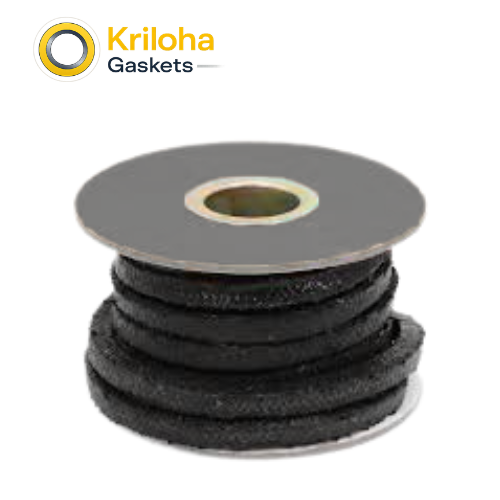
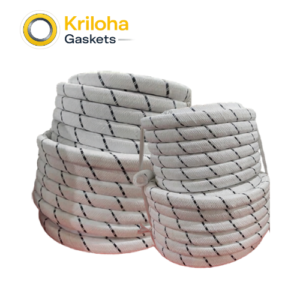
Carbonized Fiber Packing

Carbonized Fiber Packing

Core Features

  • Pre-Oxidized Carbon Matrix: Braided from high-quality polyacrylonitrile (PAN) fibers that have been thermally carbonized. This process creates a fiber that is significantly stronger than standard synthetic fibers while remaining more flexible and less brittle than pure crystalline carbon or graphite.
  • Superior Thermal Stability: Engineered to maintain structural integrity at high temperatures, resisting “cooking out” or becoming brittle in continuous service up to +280°C (+536°F) in oxidizing atmospheres and higher in steam.
  • Integrated Graphite & PTFE Treatment: Each strand is thoroughly impregnated with a high-purity Graphite dispersion and often finished with a PTFE coating. This dual-layer lubrication ensures low friction, prevents shaft scoring, and provides an immediate “bubble-tight” seal.
  • Excellent Chemical Resilience: Highly resistant to a wide array of industrial media, including mild acids, alkalis, oils, solvents, and various hydrocarbons (pH range 2–12).
  • High-Speed Cooling Efficiency: The carbonized base material possesses excellent thermal conductivity, rapidly dissipating frictional heat from the shaft interface to prevent “glazing” and thermal expansion issues.
  • Cost-Effective Performance: Offers a high-performance alternative to expensive pure graphite or aramid packings, providing a “middle-ground” of extreme durability and excellent sealability.

At Kriloha Ltd., we recognize that in the gap between “Standard Synthetic” and “High-End Graphite,” there is a need for a packing that is both tough and thermally agile. The Kriloha Carbonized Fiber Packing is our engineered answer for “Balanced-Duty” industrial service. As a premier global provider of industrial seals, Kriloha Gaskets has mastered the Multi-Stage Impregnation technology required to turn carbonized yarns into a self-lubricating sealing powerhouse.

The engineering of our Carbonized series is based on Structural Resilience. Unlike standard fibers that can melt or shrink under heat, carbonized fibers have already been “fire-tested” during manufacturing. At Kriloha, we utilize a vacuum-impregnation process to lock Micronized Graphite deep into the braid. This ensures that even as the packing wears over thousands of hours of operation, the self-lubricating properties remain consistent, protecting your expensive stainless steel shafts from wear.

Manufacturing this packing at Kriloha involves strict Fiber-Carbonization Calibration. We ensure the fibers are carbonized to the exact point where they offer maximum strength without losing the flexibility needed for a tight seal. Whether you are sealing a high-speed chemical transfer pump or a large-scale wastewater mixer, Kriloha Carbonized Fiber Packing provides the mechanical invincibility and thermal stamina your facility demands. By choosing Kriloha Ltd., you are investing in a “High-Value” technology that maximizes equipment uptime while remaining budget-conscious.
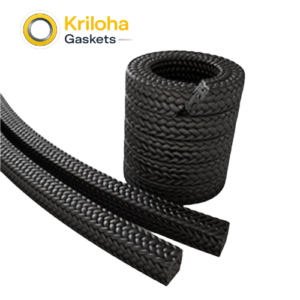
Primary Use Cases

  • Centrifugal & Rotary Pumps: The ideal choice for pumps handling hot water, mild chemicals, and solvents where shaft speeds are moderate to high.
  • Chemical Agitators & Mixers: Providing a long-life, low-maintenance seal for large-diameter shafts where slight vibration or “run-out” may occur.
  • Pulp & Paper Mills: Resisting the mechanical wear and chemical aggression of stock lines and “white liquor” processing.
  • Wastewater Treatment: Handling grit-loaded fluids and organic solids where a tough, lubricated fiber is required.
  • Boiler Feed Pumps: Capable of handling high-temperature condensate and feed water without losing volumetric stability.
  •  

FAQs

What is the difference between Carbonized Fiber and Carbon Fiber?

Carbonized Fiber: More flexible and economical; treated with lubricants for general pump/valve use.

Carbon Fiber: Higher carbon content, much stronger and more expensive; used for extreme high-pressure/high-temperature chemical service.

Is this packing “Shaft-Friendly”?

Yes. Because it is heavily impregnated with graphite and PTFE, it provides a smooth, lubricious interface. It is much kinder to shafts than Aramid (Kevlar®) packings but stronger than pure PTFE.

Can I use this for concentrated Nitric Acid?

It is resistant within the pH 2–12 range. For highly concentrated oxidizing acids (pH 0–1), Kriloha recommends our Pure White PTFE or Pure Carbon Fiber packings.

How much “leak-off” is required?

A slow, steady drip (approx. 10–12 drops per minute) is recommended to maintain cooling and lubrication at the shaft interface.

How do I install Carbonized Fiber Packing?

Cut the packing into rings with a 45° miter joint. Stagger the joints by 90°. During the initial “break-in,” adjust the gland slowly as the pump reaches operating temperature to allow the lubricants to establish a film.

This is the heading

Lorem ipsum dolor sit amet consectetur adipiscing elit dolor

Request a Quote

Enter your details here

Great! We’ve received your information.

We couldn’t process your submission. Please retry

Scroll to Top

Get a Quote

Great! We’ve received your information.

We couldn’t process your submission. Please retry