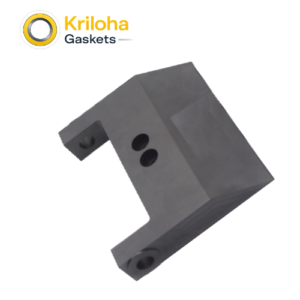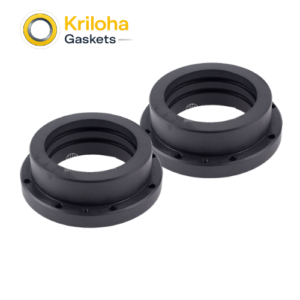
Customization of PEEK valve block

Customization of PEEK valve block

Core Features

  • Monolithic Flow Architectures: Specialized customization allows for the engineering of “Zero-Dead-Volume” internal flow paths, critical for preventing sample carryover in analytical systems.
  • Multi-Port Complex Geometries: Capability to machine intricate 3D manifolds and multi-way valve blocks that integrate multiple fluidic functions into a single, compact PEEK component.
  • Extreme Thermal Resilience: Custom-machined blocks maintain absolute dimensional stability and thread integrity in operating environments up to 250°C (482°F).
  • Absolute Chemical Immunity: Resistant to aggressive reagents, organic solvents, and acids, ensuring the internal channels do not pit or degrade over time.
  • High-Pressure Structural Integrity: Precision wall-thickness calibration ensures the customized block can withstand intense internal fluidic pressures without deformation or leakage.

At Kriloha Ltd., we understand that in advanced fluidics, the manifold is the heart of the system. Our Customization of PEEK Valve Blocks is our engineered answer for “Fluidic-Path-Optimization” and “Leak-Proof-Architecture.” As a premier manufacturer of high-performance polymer solutions, Kriloha has developed a specialized 5-axis CNC fabrication division dedicated to translating your most complex internal channel designs into reality.

The engineering of our valve block customization is founded on Internal-Geometry-Precision and Surface-Smoothness. Unlike standard molded blocks, our CNC process allows for the creation of cross-drilled channels, tapered ports, and integrated sensor seats with sub-millimeter accuracy. At Kriloha, we verify the internal bore finish of every bespoke block to ensure a low surface roughness (Ra), which is essential for maintaining laminar flow and preventing particulate accumulation.

Manufacturing these advanced polymer manifolds involves strict Pressure-Testing, Thermal-Calibration, and Purity Verification. We collaborate directly with your fluidics engineering teams to process bespoke configurations—including proprietary thread standards, integrated sealing ring grooves, and specialized mounting interfaces. By choosing Kriloha Ltd., you are investing in a “Future-Proof” manufacturing partnership that optimizes your system’s fluidic efficiency through superior material science.
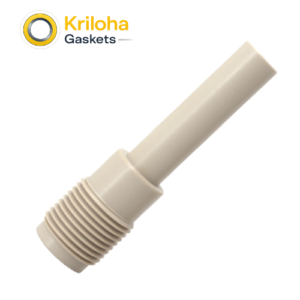
Primary Use Cases

  • Analytical & HPLC Manifolds: Custom fluidic blocks for liquid chromatography systems that require precise distribution of mobile phases.
  • Medical Diagnostic Instrumentation: Complex valve blocks for blood analyzers and diagnostic hardware that require high chemical purity and biocompatibility.
  • Semiconductor Chemical Delivery: Customized manifolds for the distribution of etching and cleaning chemicals where metallic contamination is prohibited.
  • Biotechnology Bioreactors: Specialized blocks for gas and liquid sparging systems that require frequent high-heat sterilization.
  • Aerospace Pneumatics: Lightweight, high-strength blocks designed to manage pressurized air or fuel in compact drone or satellite assemblies.

Frequently Asked Questions

Can Kriloha machine internal “T” or “Y” junctions with zero dead volume?

Yes. Our precision CNC technology allows us to machine intersecting internal flow paths with exact alignment, ensuring there are no pockets where fluid can be trapped, which is vital for high-purity analytical applications.

Is PEEK suitable for high-pressure valve blocks?

Absolutely. PEEK has a high mechanical modulus and tensile strength. We analyze your CAD designs to ensure that the wall thicknesses are optimized to handle your specific operating pressures.

Does Kriloha support customization for proprietary thread types?

Yes. Whether you require standard NPT, Metric, or a proprietary 1/4-28 flat-bottom port, we machine the threads directly into the block for a zero-leak mechanical fit.

Can the valve block be sterilized in an autoclave?

Yes. PEEK is highly resistant to hydrolysis. Our customized blocks maintain their dimensional accuracy and thread strength through thousands of high-pressure steam sterilization cycles.

What documentation is required to begin a custom valve block project?

We typically require a 3D CAD model (STEP or IGES) and a 2D drawing highlighting critical tolerances, thread specs, and the intended operating environment (temperature, pressure, and chemicals).

This is the heading

Lorem ipsum dolor sit amet consectetur adipiscing elit dolor

Request a Quote

Enter your details here

Great! We’ve received your information.

We couldn’t process your submission. Please retry

Scroll to Top

Get a Quote

Great! We’ve received your information.

We couldn’t process your submission. Please retry