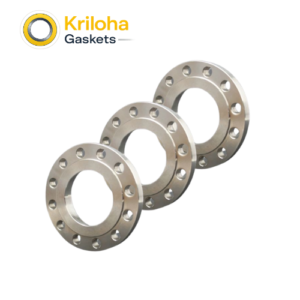
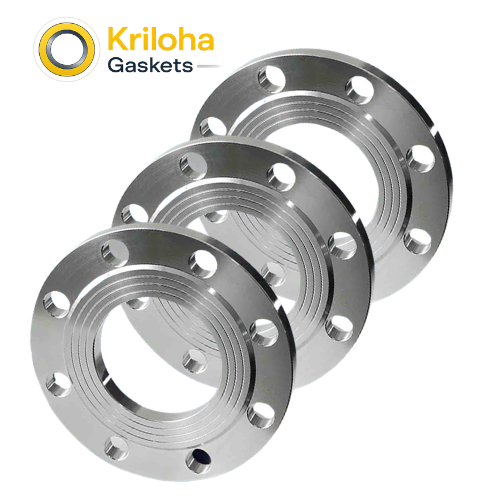
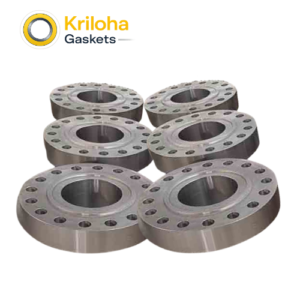
Ansi Plate Flange Stainless Steel 316L Flange

Ansi Plate Flange Stainless Steel 316L Flange

Core Features

  • Ultra-Low Carbon Stainless Steel (Grade 316L): Engineered with an ultra-low carbon content ($\le$ 0.03%) which prevents harmful carbide precipitation during the welding process. This eliminates the risk of intergranular corrosion along the heat-affected weld zone without requiring post-weld annealing.
  • American Standard Compliance (ANSI/ASME B16.5): Precision-machined in strict accordance with American National Standards Institute structural dimensions, guaranteeing absolute bolt-pattern and alignment interchangeability with standard Class 150 or Class 300 valves, fittings, and pressure vessels.
  • Molybdenum-Enhanced Alloy Matrix: Contains 2–3% added Molybdenum, providing exceptional resilience against localized chloride pitting, crevice corrosion, and heavy stress-cracking compared to standard 304/304L stainless steel.
  • Hubless, Space-Saving Geometry: The completely flat, collarless plate ring configuration slides directly over the pipe outer diameter, minimizing weight, lowering raw material costs, and slipping easily into tight physical layout configurations.
  • Double Fillet Weld Structural Integrity: Designed for permanent installation using both internal and external fillet welds, creating a robust, leak-proof mechanical joint that evenly distributes systemic strain along the pipeline.

At Kriloha Gaskets & Hardware, we recognize that severe chemical and marine environments demand components that eliminate metallurgical vulnerability. Our ANSI Stainless Steel 316L Plate Flanges represent our engineered answer for “Weld-Zone-Corrosion-Immunity” and “Zero-Bowing-Integrity.” As a leading manufacturer of high-grade industrial pipeline elements, Kriloha optimizes the low-carbon molybdenum matrix to deliver maximum structural lifetime within corrosive flow networks.

The engineering of our ANSI PL program is founded on Metallurgical-Traceability and Sharp-Geometric-Tolerance. By prioritizing hot-forging over lower-cost casting alternatives, our flanges retain the mechanical modulus required to handle intense bolt-torque demands across the ANSI bolt circle without flexing, warping, or relaxing over time. On our automated multi-axis CNC turning lines, we machine a completely uniform clearance bore that slides smoothly over your designated pipe schedule. At Kriloha, we precision-turn the sealing surface to an absolute flatness finish, creating a highly reliable interface that mechanically locks your choice of industrial gasket sheets into position to resist blowout under sudden system pressure spikes.

Manufacturing and provisioning these critical flow-control connection pieces involves strict Intergranular Corrosion Testing, Ultrasonic Flaw Detection, and Face Roughness ($R_a$) Calibration. We collaborate directly with your project engineering and facility procurement teams to supply precise internal bores tailored to standard pipe outer diameters and specific wall-thickness schedules (such as Schedule 10S or 40S matching). By choosing Kriloha Gaskets & Hardware, you are investing in a “Future-Proof” industrial partnership that prioritizes your system’s lifetime reliability through superior stainless metallurgy and micro-tolerance engineering.
Primary Use Cases

  • Marine & Offshore Processing: Critical fluid-carrying connections for seawater cooling systems, desalination skids, ballast networks, and offshore drilling platforms exposed to severe salt spray.
  • Chemical Production & Reagent Lines: Secure connection points for process pipelines transporting highly aggressive chemical fluids, organic solvents, industrial acids, and pickling liquors.
  • Pharmaceutical & Biotech Utilities: High-purity process loops where the ultra-low carbon matrix prevents metal leaching and cleanly survives aggressive clean-in-place (CIP) steam sterilization chemicals.
  • Food, Dairy & Beverage Bottling: Hygienic fluid transport lines where the non-porous, smooth surface of stainless steel stands up to regular washdowns and prevents bacterial accumulation.
  • Wastewater Treatment & Brine Lines: High-integrity flanged interfaces handling treated effluent, high-chloride brine concentrations, and municipal sewage filtration headers.

Frequently Asked Questions (FAQs)

What is the explicit advantage of the “L” designation in 316L stainless steel?

The “L” stands for Low Carbon. Standard 316 stainless steel contains up to 0.08% carbon, which can react with chromium during welding to cause “chromium depletion” along the weld seam, making the joint vulnerable to rusting. Because 316L limits carbon to 0.03% or less, it completely prevents this issue, allowing the flange to be welded safely without losing its anti-corrosive properties.

Why use a hubless “Plate Flange” instead of a traditional hubbed Slip-On flange for an ANSI system?

Because a plate flange completely lacks a raised collar or hub, it uses significantly less raw material during manufacturing. This makes it a highly compact, lightweight, and cost-effective alternative for standard process networks where the extra structural reinforcement of a tapered hub is not functionally required.

What specific welding configuration is required to install an ANSI 316L plate flange?

An ANSI plate welding flange requires a standard double fillet weld setup for proper installation: one robust fillet weld around the rear side where the plate meets the outer diameter of the pipe wall, and a secondary fillet weld along the inside bore face near the flat mating surface.

Can an ANSI 316L Flat Face (FF) plate flange be safely mated to a Raised Face (RF) valve?

It is standard industrial practice to mate like-face to like-face (Flat Face to Flat Face) to guarantee uniform gasket compression. If a flat plate flange must be bolted to a raised face component, care must be taken during bolt torquing to avoid uneven stress distributions that could warp or distort the flat flange plate, especially when working with plastic or cast iron equipment on the other side.

Are customized inner diameters or material test reports available?

At Kriloha Ltd., quality assurance is completely non-negotiable. Every shipment can be accompanied by certified Material Test Reports (MTRs) outlining full chemical composition, carbon verification logs, hardness values, and mechanical test data. Furthermore, our flexible CNC machining lines allow us to custom-bore the inner diameter to match your proprietary thin-wall tubes or unique structural layouts without manufacturing delays.

This is the heading

Lorem ipsum dolor sit amet consectetur adipiscing elit dolor

Request a Quote

Enter your details here

Great! We’ve received your information.

We couldn’t process your submission. Please retry

Scroll to Top

Get a Quote

Great! We’ve received your information.

We couldn’t process your submission. Please retry