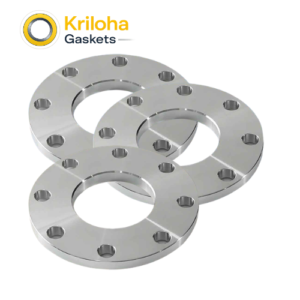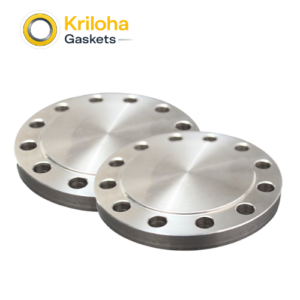
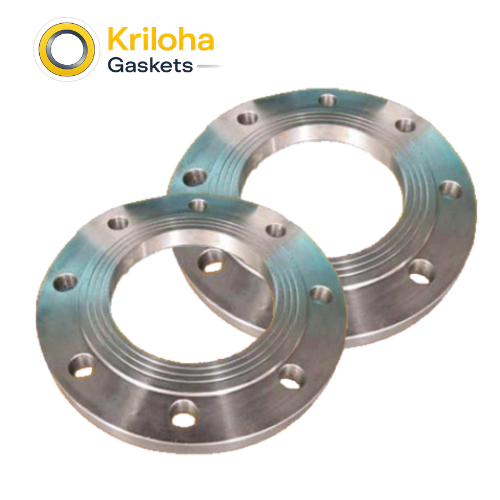
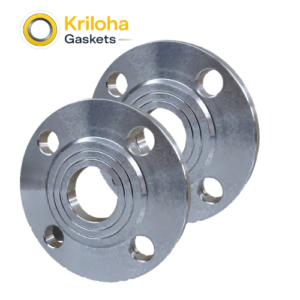
Pn16 316L Ansi B16.5 Plate Flange

Pn16 316L Ansi B16.5 Plate Flange

Core Features

  • Premium Low-Carbon Marine Metallurgy (Grade 316L): Hot-forged from premium stainless steel alloyed with 2–3% Molybdenum to deliver ultimate defense against chloride pitting, stress-corrosion cracking, and aggressive chemical acids. The ultra-low carbon chemistry ($\le 0.03\%$) strictly eliminates the risk of chromium carbide precipitation during field welding.
  • Dual Standard Layout Compatibility: Precision-machined to cross-align with both American ANSI/ASME B16.5 (Class 150) and European PN16 (EN 1092-1 / DIN) dimensional standards, providing universal bolt-hole, alignment, and pitch circle diameter (PCD) interchangeability across multinational networks.
  • Hubless, Structural Plate Geometry: Features a space-saving, completely flat collarless ring profile that slides directly over the end of the pipe or tube. This design minimizes raw material volume, slashes component weight, and optimizes tight spatial envelopes.
  • Double Fillet Weld Securement: Attached via both internal and external fillet welds, creating a robust, leak-proof mechanical joint that evenly distributes structural pipeline tension and effectively absorbs heavy systemic vibrations.
  • Precision CNC Flat Face Sealing: Turned on automated multi-axis CNC lathes to achieve parallel joint alignment. Finished with standardized micro-grooved phonographic serrations ($R_a$ finish) to ensure maximum gasket mechanical friction and prevent fluid blowout.

At Kriloha Gaskets & Hardware, we recognize that modern fluid processing networks require balancing strict metallurgical compliance with structural value. Our Dual-Standard PN16 / ANSI B16.5 Grade 316L Stainless Steel Flat Plate Flanges represent our engineered answer for “Zero-Leak-Security” and “Uncompromised-Weld-Zone-Integrity” across essential fluid handling arrays. As a leading premier manufacturer and supplier of integrated flow control elements and pipeline interfaces, Kriloha utilizes automated multi-axis production workflows to ensure that our hubless plate flanges provide superior mechanical longevity.

The engineering of our stainless plate flange program is founded on Metallurgical-Purity and Intergranular Corrosion Resistance. By forcing certified stainless steel stock through controlled forging paths rather than relying on lower-cost casting alternatives, we eliminate internal gas pockets, voids, and structural micro-cracks. The refined metal grain structure smoothly traces the flat geometry of the plate ring, providing the structural modulus required to withstand high bolt-torque demands across the bolt circle without warping or bowing over time. The ultra-low carbon chemistry eliminates the risk of chromium depletion along the heat-affected weld zone, ensuring the joint retains full corrosion resistance after field welding. At Kriloha, we meticulously finish the flat mating face with standardized concentric micro-serrations, creating an aggressive mechanical grip that anchors your chosen gasket sheet firmly in place to resist blowout under sudden system pressure surges.

Manufacturing and provisioning these critical flow-control connection pieces involves strict Dimensional Tolerance Checks, Volumetric Material Inspections, and Face Roughness ($R_a$) Calibration. We collaborate directly with your project engineering, procurement, and facility maintenance teams to supply precise internal bores tailored to standard pipe outer diameters or specific wall-thickness schedules (such as Schedule 10S or 40S matching). By choosing Kriloha Gaskets & Hardware, you are investing in a “Future-Proof” industrial partnership that prioritizes your system’s lifetime reliability through superior stainless metallurgy and micro-tolerance engineering.
Primary Industrial Applications

  • Chemical Processing & Reagent Transfer: Premium connection interfaces for high-purity chemical processing loops transporting volatile solvents, organic acids, industrial reagents, and corrosive chemical waste.
  • Marine & Offshore Utility Networks: Critical, lifetime rust-resistant joints for seawater cooling lines, desalination skids, reverse osmosis water purification blocks, and offshore ballast systems exposed to salt spray.
  • Hygienic Process Pipelines: Clean-utility loops in pharmaceutical manufacturing, cosmetics packaging, dairy bottling plants, and food/beverage processing where non-porous surfaces prevent fluid contamination and withstand clean-in-place (CIP) steam washdowns.
  • Commercial HVAC & High-Purity Utilities: Industrial condenser systems, large-scale heating loops, cooling tower headers, and commercial building chilled water risers where total structural reliability is required.
  • Modular OEM Machinery Skids: Space-saving, corrosion-resistant connection rings used to integrate prefabricated manifold piping directly to flat-faced valves, strainers, instruments, and storage tanks.

Frequently Asked Questions (FAQs)

How can a single plate flange comply with both ANSI B16.5 and metric PN16 standards?

While ANSI (American) and EN 1092-1/DIN (European) are entirely separate standards, certain nominal mid-bore piping sizes share nearly identical bolt counts, bolt-hole diameters, and pitch circle configurations. By precisely calibration-machining the tolerances, these specific flanges can be dual-certified to meet both standards seamlessly, allowing international operators to standardize their replacement inventories and cleanly connect cross-border equipment.

Why specify a hubless Flat Plate Flange instead of a traditional hubbed Slip-On flange?

Because a plate flange completely lacks a raised collar or hub, it uses significantly less raw material during manufacturing. This makes it a highly compact, lightweight, and cost-effective alternative for standard process networks and utility lines where the extra structural reinforcement of a heavy hub is not functionally required by the system design parameters.

What specific welding configuration is required to install this type of plate flange?

A plate welding flange requires a standard double fillet weld setup for proper installation: one robust fillet weld around the rear side where the plate meets the outer diameter of the pipe wall, and a secondary fillet weld along the inside bore face where the pipe end sits flush with the flat face. For thin-walled stainless steel tubes, high-strength TIG welding is recommended to prevent burn-through.

What is the functional advantage of Grade 316L over Grade 304 for this product?

Grade 304 is highly economical and excellent for freshwater and standard atmospheric applications. Grade 316L contains 2–3% added molybdenum and ultra-low carbon content, making it mandatory for harsher environments exposed to sea salt, brackish water, or chemical acids where pinhole pitting and weld-zone intergranular corrosion must be strictly avoided.

Are Material Test Reports (MTRs) provided with these plate flanges?

At Kriloha Ltd., quality assurance is completely non-negotiable. Every shipment from our facility can be accompanied by comprehensive Material Test Reports (MTRs) confirming exact chemical compositions (including precise Carbon, Chromium, Nickel, and Molybdenum content), hardness values, yield/tensile strength data, and explicit compliance with international industrial standards to guarantee complete industrial traceability.

This is the heading

Lorem ipsum dolor sit amet consectetur adipiscing elit dolor

Request a Quote

Enter your details here

Great! We’ve received your information.

We couldn’t process your submission. Please retry

Scroll to Top

Get a Quote

Great! We’ve received your information.

We couldn’t process your submission. Please retry