Slip On Flange Manufacturer

Slip On Flange Manufacturer

Core Manufacturing Capabilities

  • Advanced Forging Operations: Utilizing high-capacity hydraulic forging presses and precise closed-die systems to hammer and refine hot metal grain structures. This eliminates internal air pockets, porosities, and structural micro-voids, delivering an exceptionally high burst-pressure threshold.
  • High-Volume Multi-Axis CNC Machining: Precision-turning on automated multi-axis CNC lathes to achieve strict parallel joint alignment, exact bore clearances, and flawless pitch circle diameter (PCD) bolt-hole positioning.
  • Full-Scale Dimensional Matrix: Standard manufacturing setups covering 1/2-inch through 48-inch Nominal Pipe Sizes (NPS), seamlessly accommodating global industrial demands across American (ASME) and European (EN/DIN) dimensional layouts.
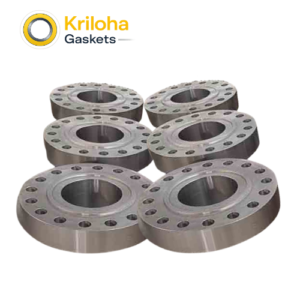
  • Engineered Face Profiles: Programmed to machine diverse mating face styles including Flat Face (FF) for brittle equipment connections, Raised Face (RF) for concentrated gasket compression, and Ring Type Joint (RTJ) groove profiles for high-pressure networks.
  • Strict Metallurgical Compliance: Maintaining a massive on-site stockpile of fully certified raw materials, specializing in Carbon Steel (ASTM A105) and premium low-carbon Stainless Steel (304/304L & 316/316L).

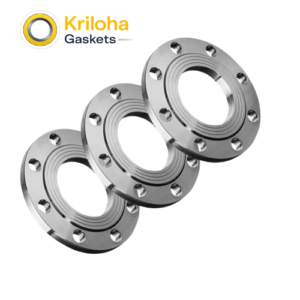
At Kriloha Gaskets & Hardware, we recognize that modern fluid networks demand components that seamlessly combine absolute structural rigidity with absolute dimensional compliance. As a trusted premier Slip-On Flange Manufacturer, our engineering program represents our commitment to “Zero-Defect-Manufacturing” and “Uncompromised-Joint-Alignment” across essential fluid processing arrays. Operating from our high-precision automated manufacturing hubs, Kriloha utilizes optimized multi-axis production workflows to ensure that our forged slip-on configurations provide superior mechanical longevity compared to unpredictable cast alternatives.

The engineering foundation of our manufacturing program relies strictly on Microstructural Uniformity and Deflection-Resistant Flatness. By forcing certified steel stock through controlled hot-forging paths rather than relying on lower-cost casting alternatives, we eliminate internal gas pockets, voids, and structural micro-cracks. The refined metal grain structure smoothly traces the contour of the flange ring and low-profile hub. This provides the high structural modulus needed to comfortably withstand extreme bolt-torque demands across the bolt circle without warping, bowing, or undergoing structural relaxation over time. To ensure an absolute, leak-proof joint matrix alongside your sealing gaskets, our automated turning stations finish the specified mating surface with controlled phonographic serrations ($R_a$ finish) that mechanically bite into the gasket to resist blowout under sudden system pressure surges.

When you partner with Kriloha Gaskets & Hardware as your manufacturing supplier, you gain access to an agile technical team capable of processing Customized Thicknesses, Bespoke Bores, and Non-Standard Bolt Layouts tailored to your proprietary CAD templates. We collaborate directly with your project engineering, wholesale procurement, and quality assurance teams to streamline documentation workflows, maintain competitive factory pricing, and eliminate the delivery delays of third-party middlemen. By choosing Kriloha, you are investing in a “Future-Proof” industrial alliance that prioritizes your system’s lifetime safety through elite material science and micro-tolerance engineering.
Primary Industrial Sectors Served

  • Oil, Gas & Petrochemical Infrastructure: Heavy-duty, high-integrity flanged interfaces for midstream gathering lines, crude oil transport headers, and complex refinery blending networks.
  • Municipal Water & Sewage Utilities: High-volume provisioning of space-saving connection joints for large-scale water treatment headers, municipal pump manifolds, and wastewater filtration networks.
  • Commercial HVAC & Utility Risers: Budget-efficient, high-strength connections for commercial facility heating lines, open/closed cooling towers, and chilled water distribution grids.
  • Hygienic Process Pipelines: Clean-utility loops in pharmaceutical manufacturing, cosmetics packaging, dairy bottling plants, and food/beverage processing where non-porous stainless steel prevents fluid contamination.
  • Modular Process Skid Fabricators: Supply-chain integration for original equipment manufacturers (OEMs) building prefabricated chemical dosing pods, hydraulic pack units, and custom filtration manifolds.

Frequently Asked Questions (FAQs)

What is the structural difference between a Slip-On (SO) flange and a standard Flat Plate flange?

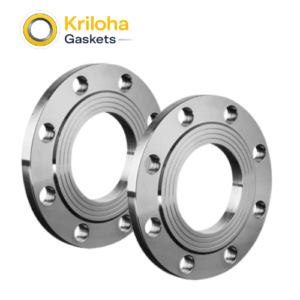
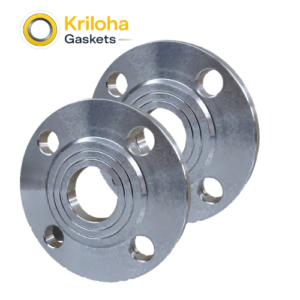
While both types slide over the pipe outer diameter and utilize double fillet welding, a standard plate flange is completely flat and collarless. A Slip-On flange features a low-profile raised hub or collar surrounding the center bore. This hub provides additional structural reinforcement at the weld zone, helping to distribute pipeline stresses and making it better suited for slightly higher mechanical loads, vibrations, or extreme thermal cycles.

Why choose a Slip-On flange over a Weld Neck flange from a manufacturing cost standpoint?

Slip-on flanges are highly cost-effective and heavily specified because they require less raw metal during production and demand less precise pipe-cut alignment prior to welding. While a Weld Neck flange is superior for extreme, ultra-high-pressure applications due to its tapered butt-weld hub, a Slip-On flange offers a much lower initial material cost and faster installation for moderate-pressure process networks.

What specific welding configuration is required to install a Slip-On flange?

A slip-on flange requires a standard double fillet weld configuration for proper code-compliant installation:

One robust fillet weld around the exterior where the hub neck meets the outer diameter of the pipe wall.

A secondary fillet weld inside the bore, where the pipe end is slid back slightly (typically equal to the pipe wall thickness plus 3mm) from the flange face to prevent damaging the sealing surface during field welding.

How does Kriloha protect carbon steel flanges against environmental rust during transit and storage?

Because carbon steel is vulnerable to atmospheric oxidation, our factory provides multiple protective surface treatment options depending on your long-term storage and field installation environment. Our standard protective finishes include a light yellow or black anti-rust lacquer, a rust-preventative oil finish, or heavy-duty hot-dip galvanization for outdoor, high-humidity, or municipal water utility installations.

Are Material Test Reports (MTRs) provided with all manufactured orders?

At Kriloha Ltd., quality assurance is completely non-negotiable. Every shipment dispatched from our facility is accompanied by comprehensive Material Test Reports (MTRs) confirming exact chemical compositions (including precise Carbon, Chromium, Nickel, or Molybdenum content where applicable), hardness values, yield/tensile strength data, and explicit compliance with international industrial standards to guarantee complete code traceability.

This is the heading

Lorem ipsum dolor sit amet consectetur adipiscing elit dolor

Request a Quote

Enter your details here

Great! We’ve received your information.

We couldn’t process your submission. Please retry

Scroll to Top

Get a Quote

Great! We’ve received your information.

We couldn’t process your submission. Please retry