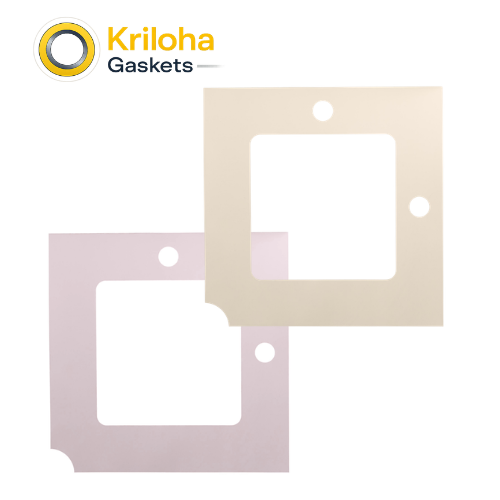
Solid Oxide Fuel Cell Sealing Gasket 2.0

Solid Oxide Fuel Cell Sealing Gasket 2.0

Core Features

  • Next-Generation Thermal Stability: Specifically engineered to withstand the extreme operating temperatures of SOFC stacks, typically ranging from +600°C to +1000°C, without degrading or losing seal tension.

  • Dual-Action Hydrogen Barrier: Features an advanced material matrix designed to prevent the permeation of hydrogen—the smallest known molecule—ensuring maximum fuel efficiency and preventing hazardous mixing with atmospheric oxygen.

  • Advanced Dielectric Isolation: Provides high-performance electrical insulation between individual fuel cell plates, preventing internal short circuits while maintaining a gas-tight interface.

  • Coefficient of Thermal Expansion (CTE) Matching: The 2.0 series utilizes precision-blended glass-ceramic or metallic-reinforced mica to match the thermal expansion of ceramic fuel cell components, reducing mechanical stress during rapid startup and shutdown cycles.

  • Redox Environment Resistance: Chemically formulated to remain stable in both the highly reducing environment of the fuel (hydrogen/hydrocarbons) and the oxidizing environment of the air side.

At Kriloha Ltd., we understand that the future of the hydrogen economy depends on the integrity of its containment. Our Solid Oxide Fuel Cell (SOFC) Sealing Gasket 2.0 is our engineered answer for “Ultra-High-Temperature-Containment” and “Molecular-Isolation.” As a premier global provider of advanced industrial seals, Kriloha has developed a hydrogen-specific barrier that balances mechanical invincibility with the thermal agility required for clean energy transition.

The engineering of our SOFC 2.0 series is based on Micro-Permeation Control. By utilizing a specialized glass-ceramic hybrid matrix, we create a seal that transitions into a semi-pliant state at operating temperatures, flowing into the microscopic imperfections of the fuel cell plates to create a “Hermetic-Standard” seal. At Kriloha, we verify that our gaskets remain non-reactive with the delicate catalysts and electrolyte materials used in the stack, ensuring that your fuel cell maintains peak voltage output over thousands of hours of service.

Manufacturing these gaskets involves strict Chemical Purity and CTE Calibration. We ensure that the material composition is optimized to survive the “Redox-Swing” (simultaneous exposure to fuel and air) without cracking or delaminating. Whether you are developing a next-generation hydrogen electrolyzer or a stationary power plant, Kriloha SOFC Sealing Gaskets provide the mechanical durability your facility demands. By choosing Kriloha Ltd., you are investing in a “Hydrogen-Ready” technology that secures the efficiency of your highest-value energy assets.
Primary Use Cases

  • Stationary Power Generation: Sealing large-scale SOFC stacks used for grid-support and decentralized green energy production.

  • Hydrogen Electrolyzers: Providing high-integrity containment for high-temperature steam electrolysis (HTSE) units.

  • Combined Heat and Power (CHP) Systems: Essential for residential or industrial units where the fuel cell provides both electricity and high-grade heat.

  • Marine Propulsion: Supporting the transition to hydrogen-powered shipping by providing durable seals for onboard fuel cell modules.

FAQ's

How does the 2.0 series differ from standard SOFC gaskets?
The 2.0 series features an improved CTE-matching formula and higher dielectric strength, specifically designed for the faster thermal cycling requirements of modern “Load-Following” fuel cells.

Is this gasket “Hermetic”?
When compressed at operational temperatures, the glass-ceramic components form a hermetic-style seal that prevents even microscopic hydrogen bypass.

Does the gasket require a “Run-In” or “Heat-Soak” period?
Yes. SOFC 2.0 gaskets typically require a specific initial heat-up cycle to allow the sealing materials to properly wet the surfaces and achieve their final gas-tight state.

Can it handle fuels other than pure hydrogen?
Absolutely. These gaskets are engineered to be stable in the presence of reformed natural gas, syngas, and ammonia, which are commonly used in SOFC systems.

What is the typical thickness available for these gaskets?
Kriloha provides SOFC gaskets in precision thicknesses ranging from 0.2mm to 1.5mm, depending on the stack design and tolerance requirements.

This is the heading

Lorem ipsum dolor sit amet consectetur adipiscing elit dolor

Request a Quote

Enter your details here

Great! We’ve received your information.

We couldn’t process your submission. Please retry

Scroll to Top

Get a Quote

Great! We’ve received your information.

We couldn’t process your submission. Please retry