Lens Ring Joint Gasket

Lens Ring Joint Gasket

Core Features

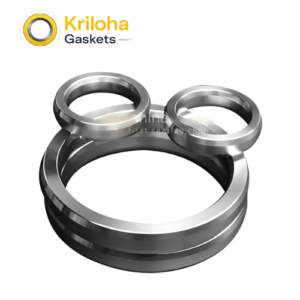
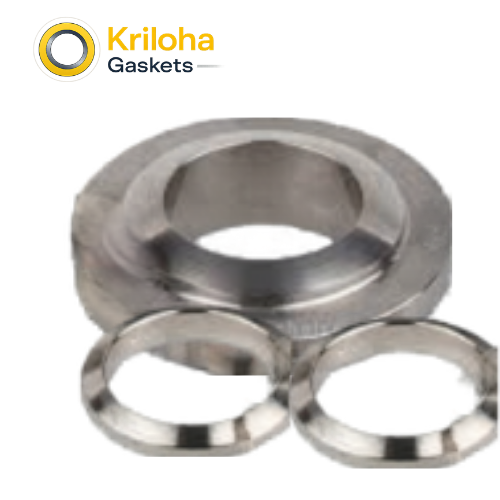
  • Spherical Sealing Surface: Features a unique double-sided convex (lens-shaped) geometry that creates a high-pressure line seal against the conical seats of the flanges.
  • Self-Centering Design: The spherical profile naturally aligns itself within the flange cone during assembly, compensating for minor flange misalignment that would cause other metal gaskets to fail.
  • Low Seating Stress: Due to the “line contact” nature of the spherical-to-conical interface, a gas-tight seal is achieved with significantly lower bolt loads than traditional flat or octagonal RTJs.
  • Pressure-Energized Performance: As internal process pressure increases, the “lens” is forced tighter against the flange seating surfaces, enhancing the seal’s integrity during operation.
  • High-Temperature Resilience: Capable of maintaining a leak-proof barrier in extreme thermal environments exceeding 500°C and pressures up to Class 2500.
  • Precision Metallurgy: Manufactured from forged and heat-treated alloys (316L, 347, or Chrome-Moly) to ensure the gasket is always slightly softer than the flange face.

At Kriloha Ltd., we recognize that in specialized high-pressure chemical synthesis, standard gaskets often fall short of the precision required. In the production of ammonia and synthetic fertilizers, where pressures and temperatures are extreme, the Lens Ring Joint Gasket is the definitive engineering choice. As a top supplier of high-performance rubber seals and gaskets, Kriloha Gaskets manufactures Lens Rings with the geometric exactness required for “Zero-Leakage” high-pressure service.

The Lens Ring Gasket is a masterclass in point-contact sealing. Unlike the R or BX series which use trapezoidal grooves, the Lens Ring sits between two flanges with 20° conical seats. The gasket itself is a solid metal disc with two convex (spherical) faces. When the flanges are tightened, the sphere makes “line contact” with the cone. This small contact area generates massive local stress, allowing the metal to deform slightly and create a molecular-level seal. Because the contact area is a circle, the gasket can “pivot” slightly within the cones, making it the most forgiving metal gasket for flanges that are not perfectly parallel.

One of the greatest technical advantages of the Kriloha Lens Ring is its thermal elasticity. In high-temperature synthesis loops, pipes expand and contract rapidly. Because the Lens Ring has a relatively small mass compared to the flanges, it can “breathe” with the system. At Kriloha, we utilize Vacuum Annealing to ensure our Lens Rings have the perfect hardness gradient. This ensures the gasket remains the sacrificial element, protecting the expensive conical flange seats from being “coined” or scratched during high-pressure cycles.

By choosing Kriloha Ltd., you are investing in a product that combines 19th-century mechanical principles with 21st-century metallurgical precision. Our Lens Rings are available in a variety of high-performance materials, including 316L Stainless Steel, 347 (Stabilized), and F5/F11 Alloy Steels. Whether you are managing a global ammonia plant or a high-pressure research vessel, Kriloha Lens Ring Joint Gaskets provide the mechanical flexibility and high-pressure stamina required to keep your most critical joints safely contained.
Primary Use Cases

  • High-Pressure Synthesis Loops: The industry standard for ammonia, urea, and methanol production plants.
  • Petrochemical Cracking Units: Reliable sealing for high-temperature, high-pressure hydrocarbon gas streams.
  • Power Generation: Used in high-pressure boiler feedwater systems and main steam valves.
  • Specialized Autoclaves: Providing a robust metal-to-metal seal for high-pressure chemical reactors.
  • Laboratory & Pilot Plants: Ideal for experimental high-pressure setups where frequent disassembly is required.

FAQs

What is the main advantage of a Lens Ring over an Octagonal RTJ?

The Lens Ring is self-centering and can tolerate slight flange misalignment. It also requires much less bolt torque to achieve a seal because it creates a “line seal” rather than a “surface seal.”

Can I use a Lens Ring in a standard RTJ groove?

No. Lens Rings require a specific 20-degree conical flange seat. They will not function correctly in the trapezoidal grooves used for R, RX, or BX gaskets.

Is the Lens Ring reusable?

While some engineers reuse them after re-polishing, Kriloha strongly recommends using a new gasket for every installation. The “line contact” involves plastic deformation of the metal, and a used ring may not reform a perfect seal.

Does the Lens Ring handle pressure surges well?

Yes. The Lens Ring is naturally pressure-energized. Internal pressure pushes the gasket outward against the conical seats, making the seal tighter as the pressure increases.

What surface finish is required for a Lens Ring?

To ensure a gas-tight fit, Kriloha machines the spherical faces to an ultra-fine finish of Ra 0.8 μm. The corresponding flange seat should also be maintained to a high degree of smoothness to prevent “leak paths.”

This is the heading

Lorem ipsum dolor sit amet consectetur adipiscing elit dolor

Request a Quote

Enter your details here

Great! We’ve received your information.

We couldn’t process your submission. Please retry

Scroll to Top

Get a Quote

Great! We’ve received your information.

We couldn’t process your submission. Please retry