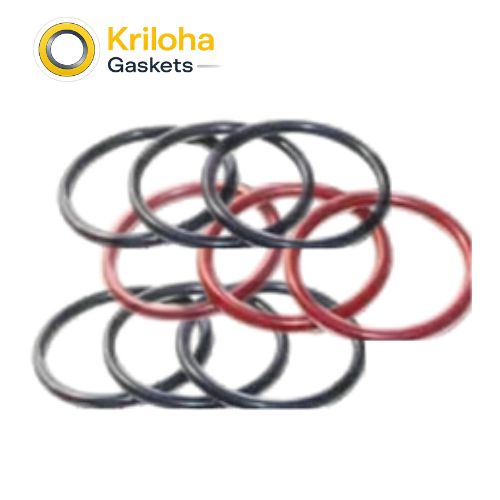
FEP Encapsulated O-Rings

FEP Encapsulated O-Rings

Core Features

  • Dual-Component Hybrid Construction: Features a seamless, high-integrity outer jacket of FEP (Fluorinated Ethylene Propylene) encapsulated over a resilient elastomeric core (typically Viton/FKM or Silicone).
  • Ultimate Chemical Invincibility: The FEP outer skin provides a near-universal 0–14 pH barrier, protecting the inner rubber core from aggressive solvents, acids, and corrosive chemicals that would normally destroy standard rubber.
  • Elastic Recovery with Plastic Shielding: Combines the “memory” and spring-back of a traditional O-ring with the chemical inertness of PTFE, solving the “cold flow” issues associated with solid plastic seals.
  • Low Coefficient of Friction: The naturally “slick” FEP surface reduces breakout torque and wear, making these ideal for slow-speed dynamic applications and easy installation.
  • High-Purity & FDA Compliant: The FEP jacket is non-contaminating and meets FDA 21 CFR 177.1550 and USP Class VI standards, ensuring safety for pharmaceutical and food-grade processes.
  • Wide Temperature Spectrum: Capable of maintaining a gas-tight seal from cryogenic levels (-60°C) up to continuous operating temperatures of +205°C (400°F) depending on the core material.

At Kriloha Ltd., we understand that in the most aggressive fluid environments, you shouldn’t have to choose between “Chemical Resistance” and “Sealing Memory.” A solid PTFE O-ring is chemically perfect but mechanically “dead”—it won’t spring back after compression. The Kriloha FEP Encapsulated O-Ring is our engineered solution for this paradox. As a premier global supplier of industrial seals, Kriloha Gaskets has mastered the Seamless Jacketing process required to protect your elastomeric cores in a fortress of fluoropolymer.

The engineering of an Encapsulated O-ring is centered on Functional Synergy. The Elastomeric Core (Silicone for extreme cold or Viton for high heat) acts as the “Engine,” providing the constant outward pressure required to maintain a seal. The FEP Jacket acts as the “Armor,” ensuring that the process media never actually touches the rubber. At Kriloha, we utilize a specialized heat-sealing technique to ensure the FEP jacket is completely seamless, eliminating the “leak paths” often found in lower-quality joined rings.

Manufacturing these seals at Kriloha involves strict Dimensional Calibration. Because the FEP jacket is less flexible than raw rubber, the “Squeeze” calculations for the gland must be precise to prevent jacket cracking. We offer these in standard AS-568 and metric sizes, as well as custom diameters for large-scale vessels. Whether you are sealing a high-pressure chromatography column or a bulk chemical transport tank, Kriloha FEP Encapsulated O-Rings provide the mechanical agility and chemical invincibility your system demands. By choosing Kriloha Ltd., you are investing in a “High-Integrity” seal that eliminates the frequent maintenance cycles caused by standard rubber failure.
Primary Use Cases

  • Chemical Pumps & Mixers: Providing a long-lasting, inert seal for mechanical seals and housings handling volatile organic compounds (VOCs).
  • Pharmaceutical Batch Reactors: Ideal for high-purity synthesis where zero-leaching and chemical resistance are mandatory.
  • Food & Beverage Filling Lines: Ensuring a sterile, non-absorbent seal for juices, oils, and dairy products that can withstand aggressive CIP (Clean-In-Place) chemicals.
  • Petrochemical Sampling Systems: Handling refined fuels, aromatics, and corrosive additives without swelling or degradation.
  • Vacuum Distillation Columns: The rubber core provides the necessary “bite” to maintain vacuum integrity, while the FEP jacket prevents chemical attack.
  •  

FAQs

Why use an Encapsulated O-ring instead of a solid Viton O-ring?

Standard Viton (FKM) will swell or degrade when exposed to certain solvents (like Ketones or Esters). The FEP jacket on an encapsulated ring is immune to these chemicals, allowing you to use a rubber-style seal in environments where rubber usually fails.

How do I choose between a Silicone or Viton core?

Silicone Core: Best for low-temperature applications and maximum flexibility.

Viton (FKM) Core: Best for higher-temperature applications and provides superior “compression set” resistance (better spring-back).

Are these suitable for high-speed rotary shafts?

No. Because the FEP jacket is a thin film, high-speed friction can cause heat buildup and premature wear. They are best suited for static applications or slow-speed reciprocating/oscillating movements.

Can the FEP jacket be damaged during installation?

Yes. Since FEP is less “stretchy” than rubber, care must be taken not to over-stretch the ring over sharp threads or edges. Kriloha recommends warming the rings in hot water (approx. 60°C) before installation to make the FEP more pliable.

What is the difference between FEP and PFA encapsulation?

FEP is the standard choice for most applications (up to 205°C). PFA encapsulation is used for even higher temperature extremes (up to 260°C) and offers slightly better mechanical toughness in high-cycle environments.

This is the heading

Lorem ipsum dolor sit amet consectetur adipiscing elit dolor

Request a Quote

Enter your details here

Great! We’ve received your information.

We couldn’t process your submission. Please retry

Scroll to Top

Get a Quote

Great! We’ve received your information.

We couldn’t process your submission. Please retry