Rod Cup Seals

Rod Cup Seals

Core Features

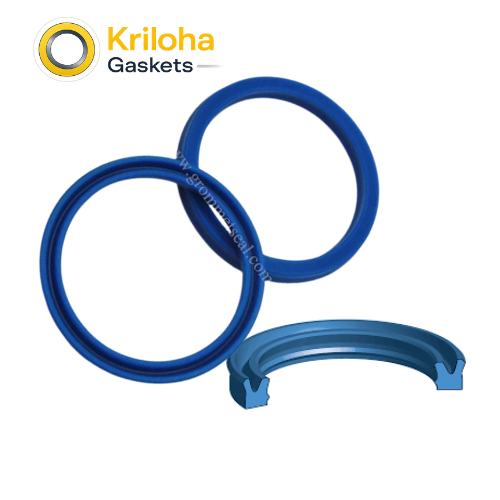
  • Single-Lip Dynamic Geometry: Features a flared “cup” profile designed specifically for radial sealing. The single sealing lip provides a high-integrity barrier while minimizing the contact surface area to reduce mechanical friction.
  • Pressure-Actuated Performance: The “Cup” is installed with the open flare facing the high-pressure side. As internal fluid or air pressure increases, it forces the flexible lip outward against the rod or cylinder wall, creating a self-energizing seal.
  • Heavy-Duty Elastomeric Compounds: Manufactured from high-tensile materials including Nitrile (NBR), Polyurethane (PU), and Fabric-Reinforced Rubber. Fabric reinforcement is often added to the base of the cup to prevent extrusion and “nibbling” under high-pressure spikes.
  • High-Low Pressure Versatility: Engineered to provide a bubble-tight seal at zero or low pressure due to the “pre-load” of the flared lip, while maintaining structural stability at pressures up to 250 Bar (3,600 PSI).
  • Wear-Resistant Lip Design: The sealing edge is precision-molded or machine-trimmed to a sharp “knife-edge” to ensure a clean wipe on every stroke, preventing fluid bypass and protecting internal components from contaminants.
  • Thermal & Chemical Stability: Available in various grades to handle temperatures from -30°C to +120°C, resisting degradation from hydraulic oils, water, and pneumatic lubricants.

At Kriloha Ltd., we understand that in reciprocating machinery, “Friction” is the enemy of efficiency. A seal that is too tight wastes energy; a seal that is too loose leaks. The Kriloha Rod Cup Seal is our engineered answer for “Balanced Friction” sealing. As a premier global provider of industrial seals, Kriloha Gaskets has mastered the Precision Compression Molding required to give these cups their “Snap-Back” memory.

The physics of a Kriloha Cup Seal is based on Radial Tension. Unlike a standard flat gasket, the cup seal utilizes its flared geometry to stay in constant contact with the cylinder wall. At Kriloha, we often utilize Fabric-Reinforced Nitrile for our heavy-duty cups. The internal fabric plies act as a structural “skeleton,” preventing the rubber from “rolling” or deforming under the intense shear forces of a high-speed stroke.

Manufacturing these seals at Kriloha involves strict Durometer Calibration. We offer these in a range of hardness levels, from soft 70 Shore A for air cylinders to a rigid 90 Shore A for high-pressure hydraulics. Whether you are sealing a small pneumatic actuator or a massive hydraulic ram, Kriloha Rod Cup Seals provide the mechanical agility and pressure-handling stamina your equipment demands. By choosing Kriloha Ltd., you are investing in a “High-Efficiency” seal technology that reduces wear and extends your equipment’s service life.
Primary Use Cases

  • Hydraulic Hand Pumps: The primary piston seal for manual jacks, hoists, and small-scale hydraulic presses.
  • Pneumatic Cylinders: Providing long-life, low-friction sealing for air-actuated industrial automation.
  • Water Pump Pistons: Ideal for reciprocating water pumps in agricultural and irrigation systems.
  • Brake & Clutch Master Cylinders: Essential for automotive and industrial braking systems where safety and reliability are paramount.
  • Grease Guns & Lubrication Tools: Ensuring high-pressure delivery of lubricants without internal bypass.
  •  

FAQs

Which way should the “Cup” face?

The open, flared part of the cup must always face the higher pressure source. This allows the pressure to push the lip outward against the sealing surface.

Why use a Cup Seal instead of an O-Ring?

Cup seals are significantly better at handling “Side-Loading” and worn or out-of-round cylinders. They also have a much longer service life in dynamic (moving) applications compared to standard O-rings.

Does the cup require a back-up plate?

Yes. In most applications, a Rod Cup is held in place by a Follower Plate or a piston head. This plate ensures the base of the cup remains flat and prevents the cup from collapsing or turning inside out.

Can I use these for high-speed applications?

Yes, but lubrication is critical. For high-speed reciprocating rods, Kriloha recommends our Polyurethane (PU) cups, which have naturally high lubricity and superior abrasion resistance.

How do I measure a Cup Seal for replacement?

You need three dimensions: the Outside Diameter (OD) of the flare, the Inside Diameter (ID) of the mounting hole, and the Height (H) from the base to the top of the lip.

This is the heading

Lorem ipsum dolor sit amet consectetur adipiscing elit dolor

Request a Quote

Enter your details here

Great! We’ve received your information.

We couldn’t process your submission. Please retry

Scroll to Top

Get a Quote

Great! We’ve received your information.

We couldn’t process your submission. Please retry