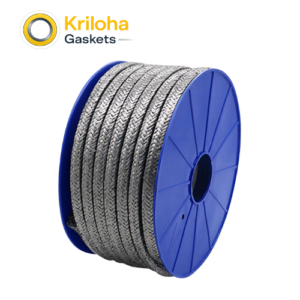
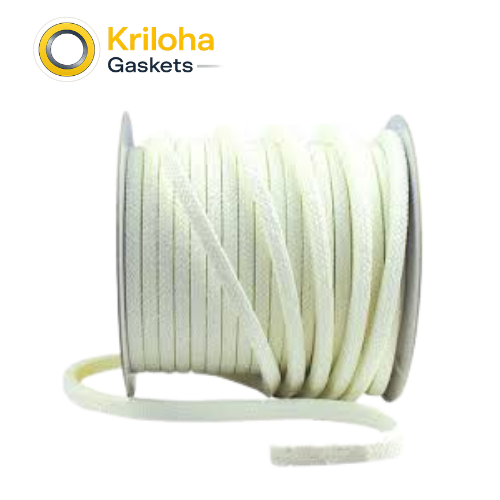
Acrylic Fiber Packing

Acrylic Fiber Packing

Core Features

  • High-Tenacity Synthetic Matrix: Braided from high-quality Acrylic (Polyacrylonitrile) fibers. These fibers serve as a modern, safe, and cost-effective alternative to asbestos, offering excellent tensile strength and mechanical durability.
  • Multi-Stage PTFE Impregnation: Each strand is vacuum-impregnated with a specialized PTFE dispersion. This fills the voids between the fibers, creating a dense, leak-proof barrier that remains chemically inert and low-friction.
  • Superior Lubricant Retention: The texturized nature of acrylic fiber allows it to hold a high volume of break-in lubricants and PTFE. This ensures a cool startup and prevents the packing from hardening or becoming brittle over time.
  • Non-Abrasive Hardware Protection: Acrylic is significantly “softer” than Aramid (Kevlar®). It provides a robust seal without the risk of scoring or wearing down stainless steel shafts, bronze sleeves, or chrome-plated hardware.
  • Good Chemical Resilience: Highly resistant to a wide array of industrial media, including oils, solvents, mild acids, alkalis, and wastewater (pH range 2–12).
  • Excellent Dimensional Stability: Resists shrinking and “cold flow,” maintaining a consistent square profile and sealing “bite” even under fluctuating pressures.

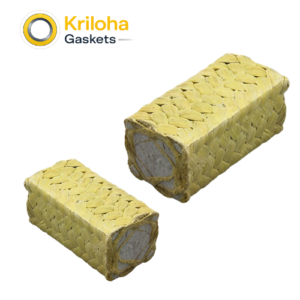
At Kriloha Ltd., we recognize that not every application requires the “ballistic” strength of Aramid or the “high-heat” stamina of Graphite. For the vast majority of industrial water and mild chemical tasks, you need a reliable, economical, and shaft-friendly solution. The Kriloha Acrylic Fiber Packing is our engineered answer for “Universal-Service” containment. As a premier global provider of industrial seals, Kriloha Gaskets has mastered the Square-Interlock Braid technology required to turn synthetic acrylic into a high-performance fluid barrier.

The engineering of our Acrylic series is based on Lubricity-Lock. While standard synthetic packings can lose their lubricants to “wash-out,” our vacuum-impregnation process ensures the PTFE is locked deep within the fiber core. At Kriloha, we treat the braid with a secondary high-temperature lubricant to ensure that during the initial “break-in” period, the packing generates minimal heat. This “Self-Lubricating Reservoir” is what allows Kriloha Acrylic packing to outperform generic synthetic fibers in both longevity and sealability.

Manufacturing this packing at Kriloha involves strict Fiber-Purity Calibration. We ensure our Acrylic yarns are free from low-grade fillers that could degrade or cause shaft wear. Whether you are sealing a municipal water pump or a chemical agitator, Kriloha Acrylic Fiber Packing provides the mechanical invincibility and chemical agility your facility demands. By choosing Kriloha Ltd., you are investing in a “High-Value” technology that maximizes your equipment uptime while remaining budget-conscious.
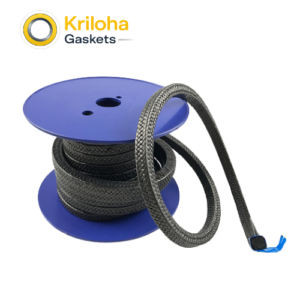
Primary Use Cases

  • General Purpose Centrifugal Pumps: The “workhorse” packing for municipal water, cooling water, and mild chemical transfer pumps.
  • Wastewater & Sewage Treatment: Handling grit-loaded fluids and organic solids where a tough, lubricated fiber is required to prevent leakage.
  • Paper & Pulp Mills: Ideal for stock lines and “white water” processing where chemical resistance and cost-efficiency are balanced.
  • Marine & Bilge Pumps: Providing a reliable, rot-resistant seal for salt water and oily water separators.
  • Mining & Slurry (Light Duty): Utilized in secondary pumping stages where extreme abrasion resistance isn’t required but a high-integrity seal is mandatory.
  •  

FAQs

How does Acrylic compare to Aramid (Kevlar®) packing?

Aramid: Stronger and better for heavy sand/slurry, but can score the shaft.

Acrylic: Softer and much kinder to the shaft, making it better for “cleaner” water and mild chemical applications where hardware protection is the priority.

Can I use this for concentrated Nitric Acid?

It is resistant within the pH 2–12 range. For highly concentrated oxidizing acids (pH 0–1), Kriloha recommends our Pure White PTFE Filament packing.

Is this packing “Rot-Proof”?

Yes. Unlike natural fibers (like Jute or Cotton), Acrylic is a synthetic polymer that is naturally resistant to rot, mildew, and bacterial growth, making it excellent for stagnant water or marine use.

Does it require a specific “leak-off” rate?

A steady drip (approx. 10–15 drops per minute) is recommended during operation to ensure the PTFE and lubricants can effectively dissipate frictional heat at the shaft interface.

How do I install Acrylic Fiber Packing?

Cut the packing into rings with a 45° miter joint. Stagger the joints by 90°. During startup, tighten the gland nuts finger-tight and adjust slowly as the pump reaches operating speed to ensure a cool “seating.”

This is the heading

Lorem ipsum dolor sit amet consectetur adipiscing elit dolor

Request a Quote

Enter your details here

Great! We’ve received your information.

We couldn’t process your submission. Please retry

Scroll to Top

Get a Quote

Great! We’ve received your information.

We couldn’t process your submission. Please retry