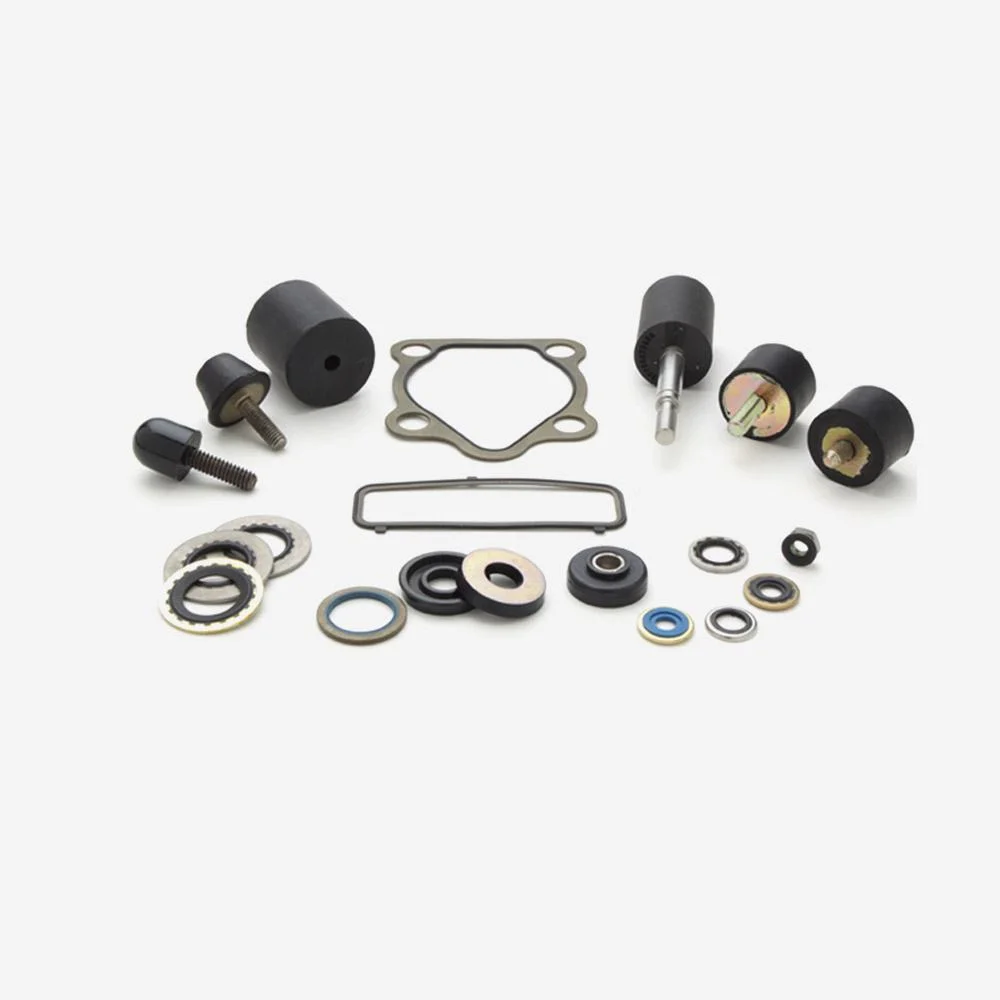
Metal Bonded Rubber Parts

Metal Bonded Rubber Parts

Core Features

  • Molecular Vulcanization Bond: Utilizes state-of-the-art chemical primers and heat-activated molding processes to create an indestructible, inseparable bond between the elastomer and the metal substrate.

  • Maximum Extrusion Resistance: The rigid metal carrier absorbs heavy compressive loads and high torque, preventing the rubber seal from being crushed, deformed, or blown out in high-pressure applications.

  • Heavy-Duty Load Bearing: Capable of withstanding extreme mechanical shear, heavy vibration, and dynamic physical shocks, making it ideal for structural mounts and isolators.

  • Substrate Versatility: Can be permanently bonded to a vast array of high-strength metals, including carbon steel, 304/316 stainless steel, aluminum, brass, and copper.

  • Unitized OEM Efficiency: Consolidates a metal bracket, washer, or housing and a rubber seal into a single, ready-to-install component, vastly accelerating assembly line production.

  • Vibration & Acoustic Dampening: Perfectly isolates metal-to-metal contact, absorbing kinetic energy to reduce equipment wear, metal fatigue, and operational noise.

Advanced Metal Bonded Rubber Parts by Kriloha Gaskets

In the most rigorous industrial, automotive, and heavy-duty engineering environments, standard freestanding rubber gaskets are frequently pushed beyond their physical limitations. When subjected to extreme mechanical shear, immense torque, high-pressure fluid dynamics, and heavy vibratory loads, traditional unsupported seals can deform, crush, or completely extrude from the flange gap. To overcome these critical mechanical challenges, Kriloha Gaskets manufactures premium Metal Bonded Rubber Parts. This highly specialized sealing and isolation solution flawlessly merges the unyielding structural integrity of solid metal alloys with the impermeable, dynamic flexibility of advanced industrial elastomers.

The Science of Rubber-to-Metal Vulcanization Achieving an indestructible bond between a flexible elastomer and a rigid metal substrate requires exacting chemical and manufacturing precision. At Kriloha Gaskets, we do not rely on standard commercial adhesives or surface-level glues, which are highly susceptible to failure under thermal shock or mechanical stress. Instead, we utilize a state-of-the-art chemical vulcanization process. The metal substrate is meticulously cleaned, treated, and coated with proprietary, heat-activated bonding agents. During the overmolding process, raw rubber is injected into the mold under extreme heat and pressure. This triggers a cross-linked chemical reaction, permanently fusing the elastomer to the metal at a molecular level. The resulting bond is so absolute that during destructive testing, the rubber will physically tear and rupture before the bond line ever fails.

Unmatched Extrusion Resistance and Structural Support The primary engineering advantage of a metal bonded part is its exceptional resistance to blowout and extrusion. By vulcanizing the rubber sealing lip directly to a high-strength metal carrier—such as a steel washer or aluminum housing—the metal absorbs the compressive load and mechanical torque. This ensures the rubber maintains its precise shape and optimal compression ratio without being crushed or forced out of the joint geometry. Furthermore, by eliminating the gap between a separate gasket and metal retainer, one of the primary micro-leak paths is completely eradicated, guaranteeing zero-leakage performance in high-pressure fluid, hydraulic, and pneumatic systems.

Vibration Dampening and Streamlined Assembly Beyond superior fluid containment, metal bonded parts are extensively utilized as structural isolators, engine mounts, and suspension bushings. The rubber acts as a critical shock absorber, dampening heavy machine vibration, reducing acoustic noise, and preventing metal fatigue in industrial equipment. On the OEM production line, these unitized components drastically reduce labor costs and assembly times. Consolidating two or more pieces into a single engineered part eliminates the risk of incorrect seal orientation, prevents the gasket from rolling or pinching during installation, and simplifies long-term inventory management.

Custom Engineered for Exacting Specifications Kriloha Gaskets operates as your dedicated manufacturing partner for highly complex sealing challenges. We work directly from your technical CAD drawings to engineer custom metal bonded solutions tailored specifically to your operational hazards. We expertly match the optimal metal substrate—including carbon steel, 304/316 stainless steel, aluminum, brass, or copper—with the precise high-performance elastomer required for your environment. Whether you need Nitrile for heavy oil resistance, FKM (Viton) for corrosive chemical exposure, or Silicone for extreme thermal stability, we ensure your components meet the strictest safety and performance tolerances in the industry.
Primary Use Cases

  • Hydraulics and Pneumatics: Essential for high-pressure fluid seals (such as Dowty seals and bonded washers) on threaded fittings and pipe junctions where pure rubber would extrude.

  • Heavy Machinery Mounts: Used as engine mounts, structural isolators, and suspension bushings to absorb heavy vibration and prevent metal-to-metal fatigue.

  • Oil & Gas Infrastructure: Deployed in high-pressure pumping stations, drilling equipment, and blowout preventers where parts face extreme mechanical shear and abrasive fluids.

  • Automotive and Aerospace: Integrated into critical chassis components, fluid reservoirs, and transmission seals requiring structural rigidity and high thermal resistance.

  • Industrial Pump and Valve Housings: Bonded directly onto valve plates, pump diaphragms, and metal gates to ensure absolute, zero-leakage internal fluid control.

FAQ

1. What is the difference between a metal bonded part and a plastic bonded part?

While both offer the benefits of a unitized structural seal, metal bonded parts are chosen when the application requires extreme mechanical load bearing, maximum torque tolerance, and ultra-high pressure resistance. Plastic bonded parts are generally chosen for weight reduction and complete corrosion resistance, but they cannot handle the same sheer physical force or high temperatures as solid metal alloys.

2. What types of metals can Kriloha Gaskets bond rubber to?

We can bond industrial elastomers to virtually any structural metal. Our most commonly requested substrates include carbon steel (often zinc-plated for rust resistance), 304 and 316 stainless steel (for sanitary or corrosive environments), aluminum (for lightweight structural parts), and brass or copper.

3. Will the rubber separate from the metal under heavy vibration?

No. Because our process utilizes chemical vulcanization rather than liquid glue, the rubber and the metal are molecularly fused together. This inseparable bond is designed specifically to endure heavy, continuous vibration without peeling, delaminating, or shifting.

4. What elastomers can be used in the metal bonding process?

We can match the rubber compound to your specific environmental hazards. Standard pairings include Nitrile (Buna-N) for petroleum and hydraulic fluid resistance, EPDM for outdoor and UV exposure, Silicone for extreme high and low temperatures, and FKM (Viton) for highly aggressive chemical and high-heat applications.

5. Do you manufacture standard bonded washers, or only custom parts?

We supply both. We offer standard bonded sealing washers (often referred to as Dowty seals) for common metric and imperial thread sizes. However, our primary expertise lies in manufacturing completely custom, application-specific metal bonded parts based on our clients’ proprietary CAD drawings and OEM engineering requirements.

This is the heading

Lorem ipsum dolor sit amet consectetur adipiscing elit dolor

Request a Quote

Enter your details here

Great! We’ve received your information.

Scroll to Top

Get a Quote

Great! We’ve received your information.