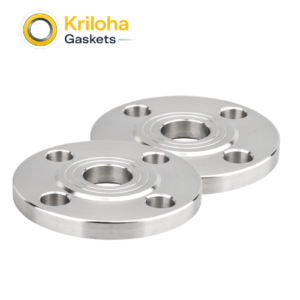
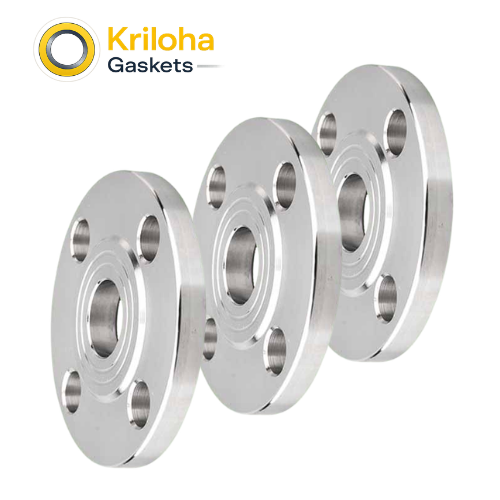
As 2129 Dn 150 Flange Carbon Steel Flat Plate Flange

As 2129 Dn 150 Flange Carbon Steel Flat Plate Flange

Core Features

  • Australian Standard Compliance (AS 2129): Precision-engineered in strict accordance with the AS 2129 specification, the historical benchmark standard for circular flanges used in Australian piping, valving, and pressure storage assets.
  • DN150 / 6-Inch Nominal Sizing: Configured with an internal clearance bore optimized to slide seamlessly over standard DN150 (6″ Nominal Pipe Size) steel conduits or metric tubing arrays.
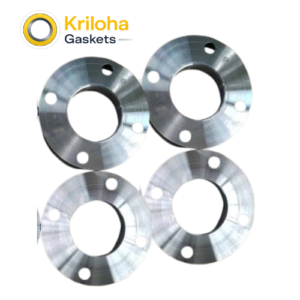
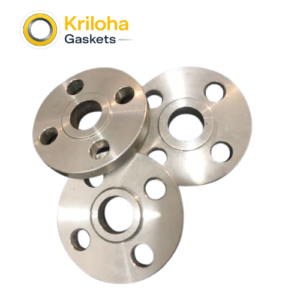
  • Hubless, Structural Plate Geometry: Completely flat, collarless profile that slips over the outer diameter of the pipe end. This configuration minimizes total weight, reduces raw material consumption, and optimizes space within tight structural footprints.
  • High-Strength Carbon Steel Substrate: Forged from certified industrial-grade carbon steel, delivering excellent yield strength and a highly economical alternative to stainless steel for non-corrosive media pathways.
  • Double Fillet Weld Securement: Attached using both internal and external fillet welds, creating a robust, leak-proof mechanical joint that evenly distributes structural strain and helps absorb systemic pipeline vibrations.

At Kriloha Gaskets & Hardware, we recognize that maintaining the mechanical integrity of cross-border and regional infrastructure requires absolute compliance with localized engineering protocols. Our AS 2129 DN150 Carbon Steel Flat Plate Flanges represent our engineered answer for “Australian-Standard-Precision” and “High-Density-Joint-Stability.” As a premier supplier of high-performance flow control and sealing interfaces, Kriloha utilizes automated multi-axis production workflows to ensure that our hubless plate flanges provide superior mechanical longevity.

The engineering of our AS 2129 plate program is founded on Structural-Uniformity and Deflection-Resistance. Forged from certified raw carbon steel billets rather than lower-grade cast alternatives, our flanges eliminate internal voids and stress pockets. The refined metal grain structure smoothly traces the flat geometry of the plate ring, providing the structural modulus required to withstand high bolt-torque demands across the standardized Table D, E, or F bolt configurations without bowing or warping. At Kriloha, we precision-machine the flat sealing surface on advanced CNC turning centers, finishing them with controlled phonographic serrations that mechanically grip the gasket matrix to resist blowout under sudden system pressure spikes.

Manufacturing and provisioning these critical flow-control connection pieces involves strict Dimensional Tolerance Checks, Volumetric Material Inspections, and Face Roughness ($R_a$) Calibration. We collaborate directly with your project engineering and facility maintenance teams to supply precise internal bores tailored to standard pipe outer diameters and specific wall-thickness schedules. By choosing Kriloha Gaskets & Hardware, you are investing in a “Future-Proof” industrial partnership that prioritizes your system’s lifetime reliability through superior metallurgy and micro-tolerance engineering.
Primary Use Cases

  • Australian Utility Infrastructure: Standard, high-reliability connection joints for municipal water mains, irrigation pipelines, and wastewater treatment assets across Australia.
  • Commercial Mining Fluid Networks: Economical, heavy-duty processing line connections for non-corrosive slurries, utility water feeds, and tailing lines.
  • HVAC Chilled Water Loops: Large-bore connections for institutional heating, mechanical ventilation, and cooling tower circuit pipelines.
  • Bulk Non-Corrosive Hydrocarbon Loops: Reliable connections for heavy industrial lubrication manifolds, fuel transfer lines, and diesel storage links.
  • Modular Industrial Utility Skids: Space-saving mechanical flanges used to connect prefabricated piping manifolds to flat-faced valves, strainers, and storage tanks.

Frequently Asked Questions (FAQs)

What do the designations like “Table D” or “Table E” mean under AS 2129?

Unlike American standards which use “Class” or European standards which use “PN,” the Australian AS 2129 standard uses letters to designate working pressure categories, commonly referred to as Tables (e.g., Table C, D, E, F, or H). Table D and Table E are the most common variants for standard utility configurations, each featuring distinct bolt counts, bolt-circle diameters, and plate thicknesses optimized for specific operational pressure thresholds.

Why choose a hubless “Plate Flange” instead of a Weld Neck or standard hubbed Slip-On flange for a DN150 line?

At a 6-inch scale (DN150), a hubbed or tapered weld neck flange becomes significantly heavy and expensive due to the massive volume of raw material required. A flat plate flange completely lacks a raised hub, making it a highly compact, lightweight, and cost-effective alternative for standard pressure infrastructures where extreme structural fatigue is not present.

What specific welding configuration is required to install an AS 2129 plate flange?

A plate welding flange requires a standard double fillet weld setup for proper installation: one robust fillet weld around the rear side where the plate meets the outer diameter of the pipe wall, and a secondary fillet weld along the inside bore face where the pipe end sits flush with the flange face.

How is this carbon steel plate flange protected against environmental rust during transit?

Because carbon steel is vulnerable to atmospheric oxidation, our flanges come standard with a protective surface treatment. This typically includes a light yellow or black anti-rust lacquer, a rust-preventative oil finish, or electro-galvanization depending on your long-term storage and installation environment requirements.

Are Material Test Reports (MTRs) provided with these Australian standard flanges?

At Kriloha Ltd., quality assurance is completely non-negotiable. Every shipment from our facility can be accompanied by comprehensive Material Test Reports (MTRs) confirming exact chemical compositions (Carbon, Manganese, Silicon content), hardness values, yield/tensile strength data, and explicit compliance with AS 2129 dimensional templates to guarantee complete industrial traceability.

This is the heading

Lorem ipsum dolor sit amet consectetur adipiscing elit dolor

Request a Quote

Enter your details here

Great! We’ve received your information.

We couldn’t process your submission. Please retry

Scroll to Top

Get a Quote

Great! We’ve received your information.

We couldn’t process your submission. Please retry