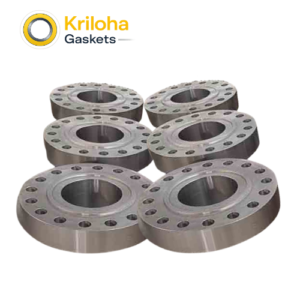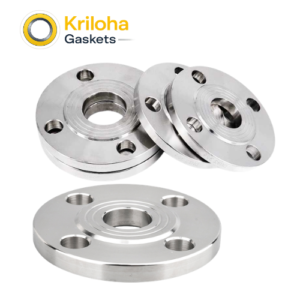
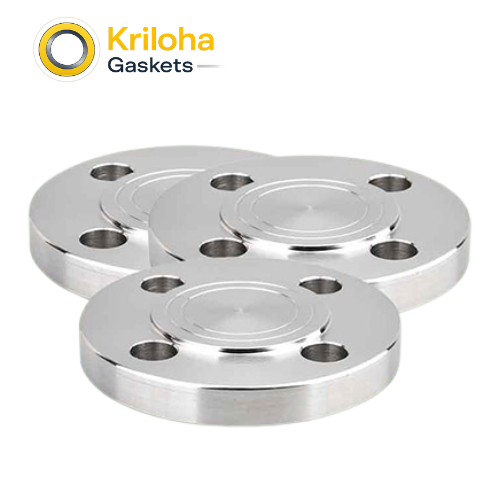
Asme B16.5 Class 150 Pn 16 Carbon Steel Plate Flange For Petroleum

Asme B16.5 Class 150 Pn 16 Carbon Steel Plate Flange For Petroleum

Core Features

  • Dual Standard Footprint Compliance: Precision-machined to cross-align with both American ASME/ANSI B16.5 (Class 150) and European PN16 (EN 1092-1 / DIN) dimensional standards, providing universal bolt-hole and alignment compatibility across global oil and gas infrastructure.
  • Premium Forged Carbon Steel Substrate: Hot-forged from fully killed carbon steel (such as ASTM A105) to eliminate internal voids, porosities, and gas pockets, delivering high structural density and superior yield strength.
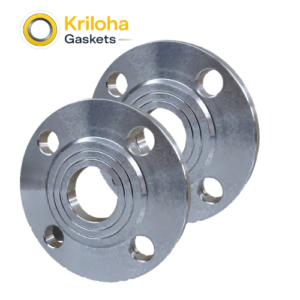
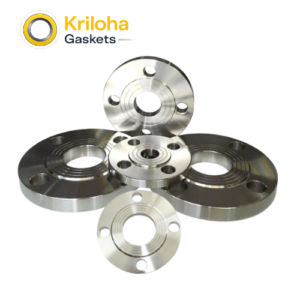
  • Hubless, Space-Saving Geometry: Features a completely flat, collarless plate ring configuration that slides directly over the pipe outer diameter, minimizing component weight, lowering raw material costs, and fitting easily into tight physical envelopes.
  • Double Fillet Weld Attachment: Attached via both internal and external fillet welds, creating a robust, leak-proof mechanical joint that evenly distributes structural strain and helps absorb intense systemic pipeline vibrations.
  • CNC Machined Phonographic Sealing Face: The flat mating face is precision-turned with micro-grooved phonographic or concentric serrations that mechanically grip the gasket matrix to resist blowout under sudden system pressure surges.

At Kriloha Gaskets & Hardware, we recognize that the harsh demands of the petroleum and hydrocarbon processing sector leave absolutely no room for joint vulnerability. Our ASME B16.5 Class 150 / PN16 Petroleum-Grade Carbon Steel Plate Flanges represent our engineered answer for “High-Density-Joint-Security” and “Zero-Flexing-Integrity” across midstream and downstream fluid handling arrays. As a premier manufacturer of high-performance flow control elements and pipeline interfaces, Kriloha utilizes automated multi-axis production workflows to ensure that our hubless plate rings provide superior mechanical longevity compared to unpredictable cast alternatives.

The engineering of our petroleum plate flange program is founded on Metallurgical-Traceability and Deflection-Resistant Flatness. By forcing the steel’s internal grain structure to trace the flat contour of the plate ring via controlled forging, our components offer exceptional tensile strength. This ensures the flange comfortably withstands high bolt-torque demands across its bolt circle without warping, bowing, or relaxing under pressure over time. At Kriloha, we precision-machine the flat sealing surface on advanced CNC turning centers, finishing them with micro-grooved phonographic serrations ($R_a$ finish) that mechanically lock your choice of gasket sheets into position to prevent hazardous hydrocarbon leaks.

Manufacturing and provisioning these critical flow-control connection pieces involves strict Dimensional Tolerance Checks, Volumetric Material Inspections, and Face Roughness Calibration. We collaborate directly with your project engineering, procurement, and facility maintenance teams to supply precise internal bores tailored to standard pipe outer diameters and unique wall-thickness schedules (such as Schedule 40 or Schedule 80 matching). By choosing Kriloha Gaskets & Hardware, you are investing in a “Future-Proof” industrial partnership that prioritizes your system’s lifetime reliability through superior carbon metallurgy and micro-tolerance engineering.
Primary Petroleum & Hydrocarbon Applications

  • Midstream Oil & Gas Transport: Reliable connection joints for non-corrosive crude oil transport lines, gathering manifolds, and trunk pipeline stations.
  • Refinery Utility & Offsite Lines: Ideal for secondary utility loops within petrochemical facilities, handling industrial cooling water, fuel gas networks, and low-pressure steam lines.
  • Fuel Storage & Terminal Manifolds: Standard space-saving piping interfaces for tank farm terminal links, fuel oil blending systems, and diesel loading bays.
  • Lubrication & Hydraulic Subsystems: Economical connection joints for heavy machinery lubrication manifolds, hydraulic power unit return paths, and compressor skid connections.
  • Modular Process Skids: Compact structural flanges used to join prefabricated piping manifolds directly to flat-faced valves, strainers, filtration pods, and storage vessels.

Frequently Asked Questions (FAQs)

How does a single plate flange comply with both ASME Class 150 and metric PN16 standards?

While ASME B16.5 (American) and EN 1092-1 (European) are separate standards, certain mid-bore sizes share identical or highly similar bolt-circle diameters, bolt counts, and bolt-hole spacing. Flanges can be dual-certified or multi-drilled to seamlessly bridge both specifications, allowing international petroleum operators to standardize their replacement inventories.

Why specify a hubless “Plate Flange” instead of a traditional hubbed Slip-On flange for a petroleum line?

Because a plate flange completely lacks a raised collar or hub, it uses significantly less raw material during manufacturing. This makes it a highly compact, lightweight, and cost-effective alternative for standard process networks, utility lines, and low-to-medium pressure hydrocarbon transfer loops where the extra structural reinforcement of a heavy hub is not functionally required.

What specific welding configuration is required to install this carbon steel plate flange?

A plate welding flange requires a standard double fillet weld setup for proper installation: one robust fillet weld around the rear side where the plate meets the outer diameter of the pipe wall, and a secondary fillet weld along the inside bore face where the pipe end sits flush with the flange face.

How is this carbon steel flange protected against environmental rust and petroleum corrosion?

Because carbon steel is vulnerable to atmospheric oxidation, our petroleum-grade flanges come standard with a protective surface treatment. This typically includes a heavy black anti-rust lacquer, a rust-preventative oil finish, or hot-dip galvanization depending on your long-term storage and field installation environment requirements.

Are Material Test Reports (MTRs) provided with these petroleum plate flanges?

At Kriloha Ltd., quality assurance is completely non-negotiable. Every shipment from our facility can be accompanied by comprehensive Material Test Reports (MTRs) confirming exact chemical compositions (Carbon, Manganese, Silicon content), hardness values, yield/tensile strength data, and explicit compliance with international industrial standards to guarantee complete code traceability.

This is the heading

Lorem ipsum dolor sit amet consectetur adipiscing elit dolor

Request a Quote

Enter your details here

Great! We’ve received your information.

We couldn’t process your submission. Please retry

Scroll to Top

Get a Quote

Great! We’ve received your information.

We couldn’t process your submission. Please retry