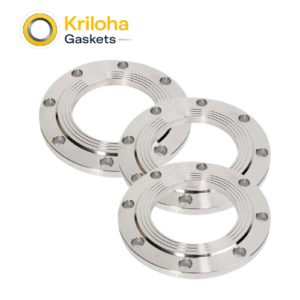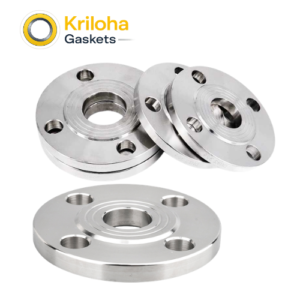

Sa182 F51 2 Slip On Flange Ss Slip On Flange Companion Flange

Sa182 F51 2 Slip On Flange Ss Slip On Flange Companion Flange

Duplex Stainless Steel 2205 (NPS 2) Forged Slip-On Companion Flange

Category: Flanges | Sub-Category: Slip-On Flange / Duplex severe-Service Family

Core Features

  • Premium Duplex 2205 Metallurgy (ASTM/ASME SA182 F51): Forged from a specialized mixed austenitic-ferritic chromium-nickel-molybdenum stainless steel alloy. This optimized dual-phase microstructure delivers nearly double the mechanical tensile strength of standard Grade 316 stainless steel, alongside exceptional resistance to localized chloride pitting, crevice corrosion, and stress-corrosion cracking (SCC).
  • NPS 2 / 2-Inch Nominal Standard Sizing: Precision-machined with a center clearance internal bore engineered to slide seamlessly over standard 2-inch nominal outer diameter (60.3 mm) piping networks, severe-service headers, or processing skids.
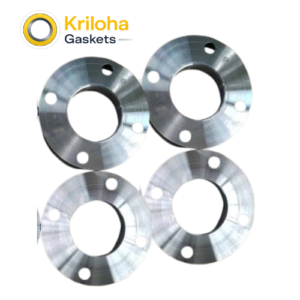
  • Versatile Companion Flange Architecture: Machined to serve as a precise structural “companion” to standard flanged valves, vessel nozzles, pumps, or alternative inline fitting assets. This enables immediate bolt-up integration on international process lines without pressure boundary discrepancies.
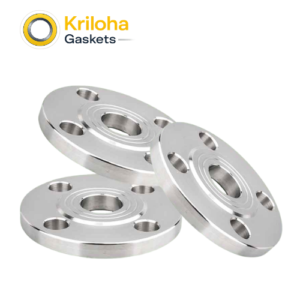
  • Low-Profile Slip-On (SO) Hub Geometry: Features a low-profile raised hub or collar surrounding the center bore. This architecture distributes intense pipeline mechanical loads, structural weight, and thermal stresses far more effectively than a completely hubless plate ring.
  • Double Fillet Weld Joint Security: Attached to the pipeline by sliding directly over the outer diameter of the 2-inch pipe. The joint is permanently secured via a robust double fillet weld matrix—one external weld tracking the perimeter of the hub neck and a secondary weld inside the bore.

At Kriloha Gaskets & Hardware, we recognize that severe industrial environments require a masterful combination of advanced material chemistry and precise dimensional execution. Our ASME SA182 F51 Duplex 2205 2-Inch Slip-On (SO) Companion Flanges represent our engineered answer for “High-Yield-Joint-Security” and “Zero-Flexing-Integrity” across highly corrosive, high-stress processing networks. Operating from our advanced automated fabrication hubs, Kriloha utilizes multi-axis CNC vertical turning lattices and automated drilling stations to ensure that our duplex configurations provide superior mechanical longevity compared to unpredictable cast alternatives.

The engineering of our SA182 F51 duplex program is founded on Microstructural Uniformity and Deflection-Resistant Flatness. Because these 2-inch components must handle intense structural line loads and aggressive process media, Kriloha completely bypasses lower-grade, unpredictable casting techniques that leave hidden internal air pockets or structural micro-cracks. Instead, we utilize fully certified, high-density hot-forged duplex steel stock. The forging process refines the internal grain flow to follow the structural contour of the low-profile hub and plate ring, giving it the structural modulus required to easily handle intense bolt-torque demands across the standardized 4-bolt or 8-bolt circle without warping, bowing, or undergoing mechanical relaxation over time. At Kriloha, we precision-machine the Raised Face (RF) sealing surfaces, adding controlled concentric phonographic micro-serrations ( finish) that firmly anchor your chosen high-performance gasket to eliminate fluid bypass or blowout risks.

Manufacturing and provisioning these critical high-grade components involves strict Dimensional Tolerance Checks, Volumetric Material Inspections, and Surface Roughness Calibration. We collaborate directly with your project engineering, quality assurance, and procurement teams to supply precise internal bores tailored to standard pipe outer diameters and unique wall-thickness schedules (such as Schedule 40S or Schedule 80S matching). By choosing Kriloha Gaskets & Hardware, you are investing in a “Future-Proof” industrial partnership that prioritizes your system’s lifetime reliability through superior duplex metallurgy and micro-tolerance engineering.
Primary Industrial Applications

  • Offshore Oil & Gas Production: High-strength, corrosion-resistant connections for topside process piping, seawater injection manifolds, subsea manifold connections, and ballast water circuits exposed to harsh marine splash zones.
  • Chemical Processing & Aggressive Acid Transfer: Critical connection joints for industrial processing loops transporting highly concentrated chlorides, volatile organic solvents, phosphoric acid, and nitric acid arrays.
  • Desalination & Reverse Osmosis Plants: High-durability piping joints for seawater intake pipelines, high-pressure reverse osmosis (RO) filtration blocks, and brine disposal headers.
  • Pulp & Paper Bleaching Systems: Secure pipeline connections for aggressive chemical wash stages, chlorine dioxide bleaching lines, and high-heat liquor recycling loops.
  • Geothermal Utility Manifolds: Heavy-duty connections for high-salinity geothermal brine extraction lines and thermal utility lines exposed to intense underground mineral deposits.

Frequently Asked Questions (FAQs)

What exactly is a “Companion Flange”?

A companion flange is simply a flange designed to connect, or “mate,” with another flange already fixed onto an online component like a valve, pump, strainer, or pressure vessel nozzle. It features a matching bolt hole circle, diameter, and pressure-rating configuration, ensuring a complete, leak-proof flanged joint assembly when bolted together.

What is the fundamental operational advantage of Duplex SA182 F51 over Grade 316L stainless steel?

While Grade 316L is excellent for general corrosion resistance, it can fail due to stress-corrosion cracking (SCC) in high-temperature chloride environments. Duplex F51 (2205) features a balanced 50/50 austenitic-ferritic microstructure that provides roughly twice the mechanical yield strength of 316L, alongside vastly superior resistance to chloride localized pitting, crevice corrosion, and stress-corrosion cracking, making it ideal for severe marine and chemical applications.

What specific welding configuration is required to install an ASME F51 Slip-On flange?

A slip-on flange requires a standard double fillet weld configuration for proper code-compliant installation:

One robust fillet weld around the exterior where the hub neck meets the outer diameter of the pipe wall.

A secondary fillet weld inside the bore, where the pipe end is slid back slightly (typically equal to the pipe wall thickness plus 3mm) from the flange face to protect the raised sealing face from weld spatter and heat distortion during field welding.

Can an F51 Duplex flange be welded directly to standard austenitic stainless steel pipes?

Yes, it can be welded to standard stainless steel (such as 316L) or carbon steel using specialized over-alloyed filler materials, most commonly ER2209 welding wire or rods. This ensures that the weld joint itself retains the correct balance of ferrite and austenite phases to preserve optimal corrosion resistance and strength.

Are Material Test Reports (MTRs) provided with these forged flanges from Kriloha?

At Kriloha Ltd., quality assurance is completely non-negotiable. Every shipment from our facility is accompanied by comprehensive Material Test Reports (MTRs) confirming exact chemical compositions (including Carbon, Chromium, Nickel, Molybdenum, and Nitrogen fractions), structural hardness values, yield/tensile strength data, and explicit compliance with international industrial standards to guarantee complete code traceability.

This is the heading

Lorem ipsum dolor sit amet consectetur adipiscing elit dolor

Request a Quote

Enter your details here

Great! We’ve received your information.

We couldn’t process your submission. Please retry

Scroll to Top

Get a Quote

Great! We’ve received your information.

We couldn’t process your submission. Please retry