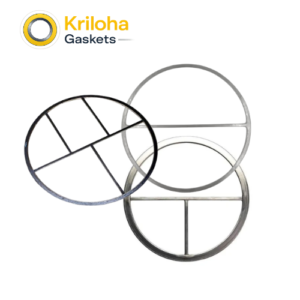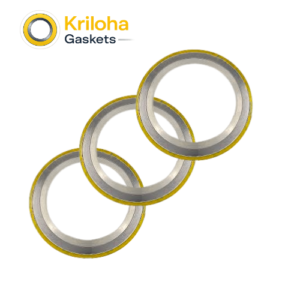
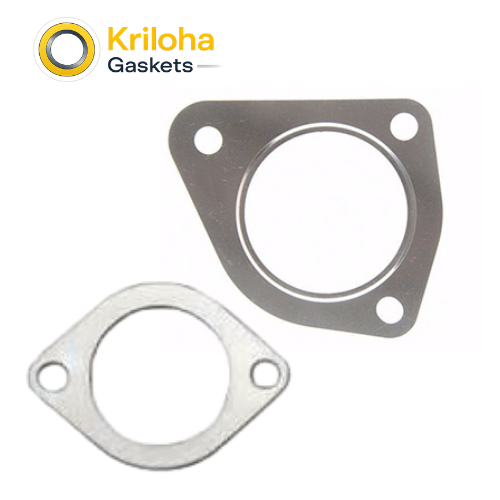
Exhaust Spiral Wound Gaskets

Exhaust Spiral Wound Gaskets

Core Features

  • High-Temperature Metallurgy: Utilizes specialized alloys like Stainless Steel 321 or 310, which are stabilized with titanium or high chromium to prevent intergranular corrosion and oxidation at extreme exhaust temperatures.
  • Vibration-Damping Construction: Engineered with a reinforced winding density to withstand the constant high-frequency harmonic vibrations found in engine manifolds and turbine housings.
  • Anti-Oxidation Fillers: Features Kriloha’s proprietary Mica-Graphite or Vermiculite blends that remain structurally sound up to 1000°C (1832°F), preventing “filler burnout” common in standard gaskets.
  • Telescoping Resistance: Specialized spot-welding at the inner and outer plies ensures the gasket does not “unravel” or telescope under the high-velocity pulses of exhaust gases.
  • Thermal Fatigue Resilience: Designed to “breathe” with the manifold, maintaining a seal during rapid heat-up and cool-down cycles without losing bolt tension.
  • Custom Geometric Profiles: Available in circular, oval, or rectangular shapes to match specific OEM exhaust port configurations.

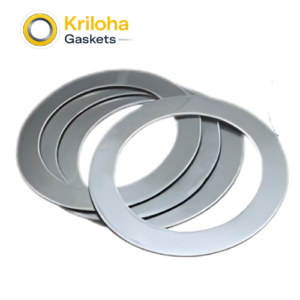
At Kriloha Ltd., we recognize that the exhaust system is one of the most punishing environments for any sealing component. It is a world defined by searing heat, corrosive combustion byproducts, and relentless vibration. The Kriloha Exhaust Spiral Wound Gasket is engineered specifically to thrive in these conditions. As a leading supplier of high-performance rubber seals and gaskets, our Kriloha Gaskets division has developed this product to exceed the lifespan of standard OEM seals.

The primary failure mode in exhaust gaskets is oxidation. At temperatures typical of a gas turbine or a heavy-duty diesel engine, standard 304 stainless steel and even some graphite fillers begin to oxidize, turning to ash and leaving a leak path. Kriloha addresses this by utilizing 321 or 310 Stainless Steel for the metallic windings. These alloys are specifically designed for high-temperature service. Furthermore, we replace or shield standard graphite with Phlogopite Mica or Vermiculite. These mineral-based fillers are chemically inert and thermally stable, ensuring that the “seal” stays in place even when the exhaust manifold is glowing red.

Another critical factor is “Mechanical Fatigue.” Exhaust systems vibrate at high frequencies, which can cause the windings of a standard gasket to loosen over time. Kriloha utilizes a High-Density Anchor (HDA) winding technique. We increase the number of “dry” metallic wraps at the start and end of the spiral and apply multi-point structural welds. This creates a rigid frame that prevents the gasket from “telescoping”—a common failure where the internal windings are sucked into the exhaust stream or pushed out by pressure pulses.

By choosing Kriloha, you are opting for a “Dry-Seal” technology that requires no messy liquid sealants or pastes. Our gaskets provide the necessary compressibility to conform to warped manifold surfaces, which are common in older engines, while providing the “spring-back” recovery to stay tight as the metal expands and contracts. Whether you are maintaining a fleet of marine vessels or a field of power-gen turbines, Kriloha Exhaust SWGs provide the thermal and mechanical stamina required to keep your emissions routed correctly and your downtime at a minimum.
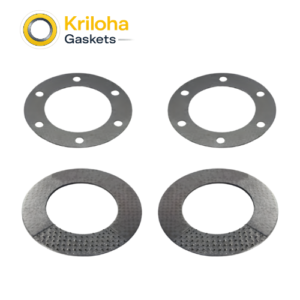
Primary Use Cases

  • Marine Diesel Engines: Sealing turbocharger inlets and exhaust manifolds in large shipping vessels and tugboats.
  • Gas Turbines: High-integrity sealing for exhaust transition ducts and expansion joints in power plants.
  • Heavy Construction Machinery: Durable seals for Earth-moving equipment operating under continuous high load.
  • Industrial Generators: Providing long-term reliability for backup power systems in hospitals and data centers.
  • Locomotive Engines: High-vibration resistance for rail transport exhaust stacks.

FAQs

Why can’t I use a standard pipe-flange SWG for my engine exhaust?

Standard gaskets often use 304SS and graphite, which oxidize and fail at the 600°C+ temperatures found in exhausts. Kriloha Exhaust gaskets use 321SS and specialized minerals to prevent this “burnout.”

How does this gasket handle engine vibration?

We use a higher winding density and reinforced welding on the inner and outer diameters to ensure the spiral remains physically locked together, even under constant high-frequency oscillation.

Will this gasket seal on a warped or pitted exhaust manifold?

Yes. The spiral wound design is inherently more conformable than solid metal gaskets. The Kriloha “V-shape” winding acts as a spring that fills in surface irregularities to create a gas-tight seal.

Is it necessary to use a sealant with these gaskets?

No. Kriloha Exhaust SWGs are designed for dry installation. Using RTV or other sealants can actually interfere with the gasket’s ability to “breathe” during thermal expansion.

What is the maximum temperature these gaskets can handle?

When configured with Inconel windings and Vermiculite filler, Kriloha Exhaust gaskets can reliably operate in environments up to 1000°C (1832°F).

This is the heading

Lorem ipsum dolor sit amet consectetur adipiscing elit dolor

Request a Quote

Enter your details here

Great! We’ve received your information.

We couldn’t process your submission. Please retry

Scroll to Top

Get a Quote

Great! We’ve received your information.

We couldn’t process your submission. Please retry