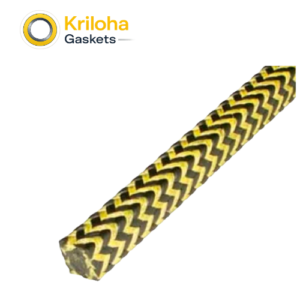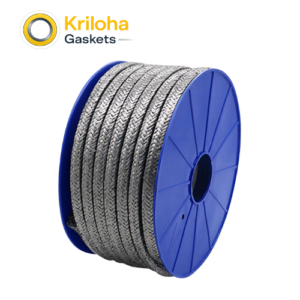
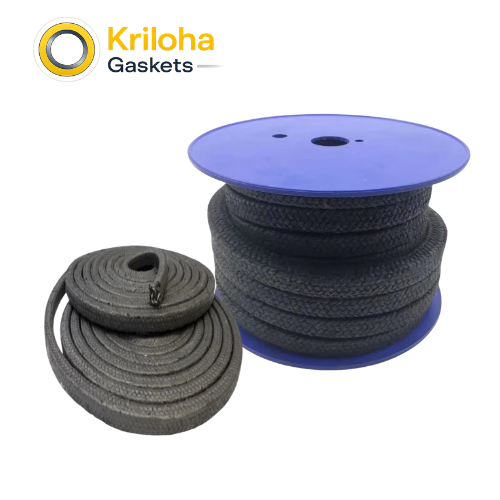
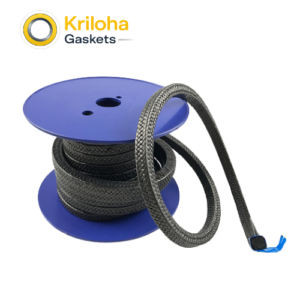
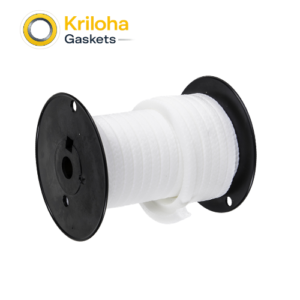
Graphite-Treated Acrylic Fiber Packing

Graphite-Treated Acrylic Fiber Packing

Core Features

  • High-Tenacity Synthetic Matrix: Braided from high-quality Acrylic (Polyacrylonitrile) fibers, serving as a modern, high-strength alternative to traditional vegetable fibers and asbestos.
  • Deep-Soak Graphite Impregnation: Each individual strand is vacuum-impregnated with high-purity micronized graphite. This ensures the lubricant is present throughout the entire cross-section of the packing, not just as a surface coating.
  • Superior Thermal Conductivity: The integrated graphite helps dissipate frictional heat away from the shaft interface far more effectively than “dry” synthetic fibers, preventing localized hotspots and “glazing.”
  • Low-Friction Sealing: Features a naturally low coefficient of friction. The graphite acts as a permanent dry lubricant, ensuring smooth shaft rotation and reducing power consumption.
  • Non-Abrasive Hardware Protection: Acrylic is significantly “softer” than Aramid (Kevlar®). It provides a robust, high-pressure seal without the risk of scoring or wearing down stainless steel shafts or bronze sleeves.
  • Excellent Dimensional Stability: Resists shrinking and “cold flow,” maintaining a consistent square profile and sealing “bite” even under fluctuating pressures.

At Kriloha Ltd., we recognize that in standard water and chemical service, “Heat Management” is the key to longevity. A dry synthetic fiber will eventually harden and leak. The Kriloha Graphite-Treated Acrylic Packing is our engineered answer for “Cool-Running” universal service. As a premier global provider of industrial seals, Kriloha Gaskets has mastered the Symmetric-Interlock Braid technology required to turn lubricated synthetic yarns into a high-performance fluid barrier.

The engineering of our Graphite-Acrylic series is based on Lubricant Density. By saturating the acrylic fibers with graphite before and during the braiding process, we create an internal “Lubricant Reservoir.” This ensures that as the packing wears over months of service, a fresh layer of graphite is always available at the shaft interface. At Kriloha, we utilize a specialized graphite dispersion that fills the microscopic voids between the braided yarns, creating a dense, leak-proof barrier that remains soft and pliable.

Manufacturing this packing at Kriloha involves strict Fiber-Purity Calibration. We ensure our Acrylic yarns are free from low-grade fillers that could degrade or cause shaft wear. Whether you are sealing a high-speed water pump or a chemical agitator, Kriloha Graphite-Treated Acrylic Fiber Packing provides the mechanical invincibility and thermal stamina your facility demands. By choosing Kriloha Ltd., you are investing in a “High-Value” technology that maximizes your equipment uptime while protecting your expensive rotating assets.
Primary Use Cases

  • General Purpose Centrifugal Pumps: The “workhorse” packing for municipal water, cooling water, and mild chemical transfer where heat dissipation is a factor.
  • Wastewater & Sewage Treatment: Handling grit-loaded fluids and organic solids where a lubricated, tough fiber is required to prevent leakage.
  • Paper & Pulp Mills: Ideal for stock lines and “white water” processing where a combination of chemical resistance and cost-efficiency is needed.
  • Agitators & Mixers: Providing a long-life, low-maintenance seal for large-diameter shafts handling viscous or abrasive media.
  • Marine & Bilge Pumps: Resisting rot and bacterial degradation in salt water and oily water environments.
  •  

FAQs

What is the benefit of Graphite over PTFE-treated Acrylic?

While PTFE is excellent for chemicals, Graphite offers superior heat dissipation. If your pump runs at higher speeds or experiences thermal surges, the graphite-treated version will stay cooler and last longer.

Will this packing score my pump shaft?

No. Acrylic is a non-abrasive fiber, and the heavy graphite loading provides a smooth, “slippery” interface that protects stainless steel and bronze hardware from wear.

Can I use this for concentrated Nitric Acid?

It is resistant within the pH 2–12 range. For highly concentrated oxidizing acids (pH 0–1), Kriloha recommends our Pure White PTFE Filament packing.

Does it require a specific “leak-off” rate?

A slow, steady drip (approx. 10–12 drops per minute) is recommended to ensure the graphite can effectively transfer heat and maintain a lubricating film at the shaft.

How do I install Graphite-Treated Acrylic Packing?

Cut the packing into rings with a 45° miter joint. Stagger the joints by 90°. During startup, tighten the gland nuts finger-tight and adjust slowly as the pump reaches operating speed to ensure a cool “seating.”

This is the heading

Lorem ipsum dolor sit amet consectetur adipiscing elit dolor

Request a Quote

Enter your details here

Great! We’ve received your information.

We couldn’t process your submission. Please retry

Scroll to Top

Get a Quote

Great! We’ve received your information.

We couldn’t process your submission. Please retry