Aisi 304 Stainless Steel Flange Sanitary

Aisi 304 Stainless Steel Flange Sanitary

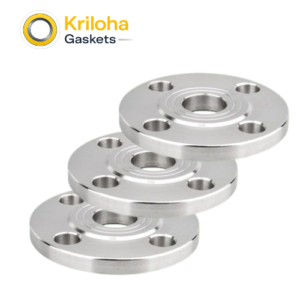
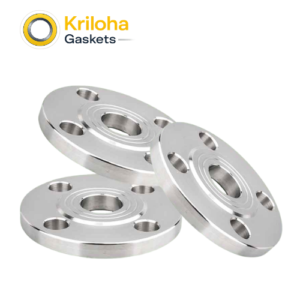
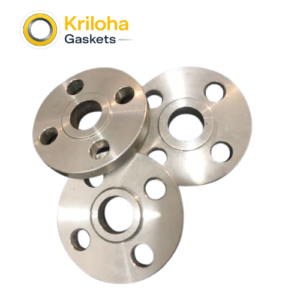
AISI 304 Stainless Steel Sanitary Slip-On Flange

Category: Flanges | Sub-Category: Slip-On Flange / Hygienic Hubbed Family

Core Features

  • Hygienic AISI 304 Austenitic Stainless Steel Core: Forged from high-grade 304 stainless steel, offering outstanding resistance to atmospheric rust, organic acids, and oxidizing process solutions. The material composition provides excellent durability and structural integrity required for sanitary fluid processing loops.
  • Sanitary Interior Surface Refinement: Precision-machined and finished with a smooth, non-porous interior bore ( or better). This highly polished surface minimizes product adherence, prevents biological accumulation, and ensures compatibility with high-velocity clean-in-place (CIP) liquid flushing cycles.
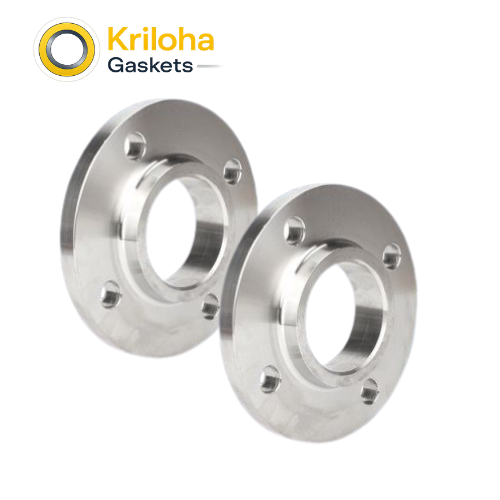
  • Low-Profile Slip-On (SO) Hub Profile: Features an integrated, low-profile raised hub or collar surrounding the center clearance bore. This architecture distributes mechanical line strains, pipe-weight loads, and thermal expansion loops far more effectively than a standard hubless plate ring.
  • Double Fillet Weld Joint Security: Designed to slide completely over the outside diameter of standard sanitary process piping. The joint is permanently secured via a robust double fillet weld matrix—one external weld tracking the perimeter of the raised hub neck and a secondary weld inside the bore.
  • Precision CNC Mating Face Flatness: Turned on automated vertical lathes to achieve parallel joint alignment. The sealing surface is finished to provide a secure grip on food-grade elastomeric gaskets (such as EPDM, Silicone, or PTFE matrices), preventing crevices and eliminating fluid bypass or blowout risks.

At Kriloha Gaskets & Hardware, we recognize that sanitary process networks require an exceptional combination of high metallurgical purity and strict geometric execution. Our AISI 304 Stainless Steel Forged Sanitary Slip-On Flanges represent our engineered answer for “Contamination-Free-Joint-Security” and “Zero-Flexing-Integrity” across essential hygienic arrays. Operating from our advanced automated fabrication hubs, Kriloha utilizes multi-axis CNC vertical turning lathes and automated drilling stations to ensure that our sanitary configurations provide superior mechanical longevity compared to unpredictable cast alternatives.

The engineering of our sanitary slip-on program is founded on Microstructural Uniformity and Deflection-Resistant Flatness. Because these components must handle intense structural line loads alongside aggressive cleaning cycles, Kriloha completely bypasses lower-grade casting techniques that leave hidden internal air pockets or structural micro-cracks. Instead, we utilize fully certified, high-density hot-forged AISI 304 steel stock. The forging process refines the internal grain flow to follow the structural contour of the low-profile hub and plate ring, giving it the structural modulus required to easily handle intense bolt-torque demands without warping, bowing, or undergoing mechanical relaxation over time. The interior bore is precision-polished to prevent product entrapment or bacterial nesting. At Kriloha, we precision-machine the sealing surfaces, creating a perfectly aligned interface that firmly compresses your chosen sanitary gasket to eliminate fluid bypass or blowout risks during sudden system pressure cycles.

Manufacturing and provisioning these critical high-grade components involves strict Dimensional Tolerance Checks, Volumetric Material Inspections, and Surface Roughness Calibration. We collaborate directly with your project engineering, quality assurance, and procurement teams to supply precise internal bores tailored to standard sanitary pipe outer diameters and unique wall-thickness schedules (such as Schedule 10S or sanitary tubing matching). By choosing Kriloha Gaskets & Hardware, you are investing in a “Future-Proof” industrial partnership that prioritizes your system’s lifetime reliability through superior stainless metallurgy and micro-tolerance engineering.
Primary Sanitary Industrial Applications

  • Food & Dairy Processing Lines: The industry-standard choice for primary production networks routing fluid milk, cheese cultures, process ingredients, juices, and liquid condiments where product purity is paramount.
  • Beverage Bottling & Industrial Breweries: High-reliability connection joints for high-volume beer transfer manifolds, soft drink blending lines, spirits distillation blocks, and clean factory utility headers.
  • Pharmaceutical & Cosmetics Utilities: Clean-utility networks distributing raw ingredients, purified process water, cosmetic lotions, and topical ointments under strict structural hygiene parameters.
  • Biotechnology & Fermentation Loops: Secure structural joints for bioreactor utility lines, media feeding loops, and harvest lines requiring strict cleanability.
  • Clean Water & Filtration Modules: High-density connection interfaces for reverse osmosis (RO) purification assemblies, ultrafiltration blocks, and sanitary pump discharge loops.

Frequently Asked Questions (FAQs)

What makes a slip-on flange “Sanitary” compared to a standard industrial slip-on flange?

A standard industrial slip-on flange focuses primarily on structural pressure retention, often leaving raw machined surfaces. A Sanitary slip-on flange features specialized processing, including a precision-polished internal bore, a smooth, crevice-free design profile, and a high-purity face finish designed to match sanitary tubing sizes. This prevents product stagnation, bacteria accumulation, and allows complete cleaning during automated clean-in-place (CIP) washdowns.

What is the structural difference between a Slip-On (SO) flange and a standard Flat Plate flange?

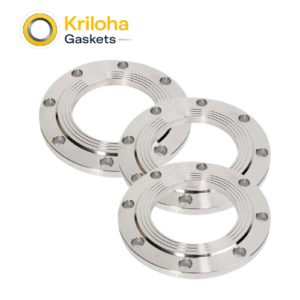
While both types slide over the pipe outer diameter and utilize double fillet welding, a standard plate flange is completely flat and collarless. A Slip-On flange features a low-profile raised hub or collar surrounding the center bore. This hub provides additional structural reinforcement at the weld zone, helping to distribute pipeline stresses and making it better suited for slightly higher mechanical loads, heavy vibrations, or extreme thermal expansion cycles.

What specific welding configuration is required to install a Sanitary Slip-On flange?

A sanitary slip-on flange requires a standard double fillet weld configuration for proper installation:

One robust fillet weld around the exterior where the hub neck meets the outer diameter of the pipe wall.

A secondary fillet weld inside the bore, where the pipe end is slid back slightly from the flange face. For sanitary applications, this internal weld must be completely smooth and ground flush/polished to eliminate any internal crevices where bacteria could breed.

When should I upgrade from AISI 304 to AISI 316L for a sanitary application?

AISI 304 is highly economical and excellent for standard food products, dairy applications, fresh juices, and general brewery lines. If your process loop handles highly acidic media (like citrus juices or tomato products), aggressive chemical cleaning agents, or products with high chloride/salt concentrations, upgrading to AISI 316L (which contains molybdenum) is recommended to prevent pitting corrosion.

Are Material Test Reports (MTRs) provided with these forged flanges from Kriloha?

At Kriloha Ltd., quality assurance is completely non-negotiable. Every shipment dispatched from our facility can be accompanied by comprehensive Material Test Reports (MTRs) confirming exact chemical compositions (including precise Carbon, Chromium, and Nickel fractions), structural hardness values, yield/tensile strength data, and explicit compliance with international industrial standards to guarantee complete industrial traceability.

This is the heading

Lorem ipsum dolor sit amet consectetur adipiscing elit dolor

Request a Quote

Enter your details here

Great! We’ve received your information.

We couldn’t process your submission. Please retry

Scroll to Top

Get a Quote

Great! We’ve received your information.

We couldn’t process your submission. Please retry