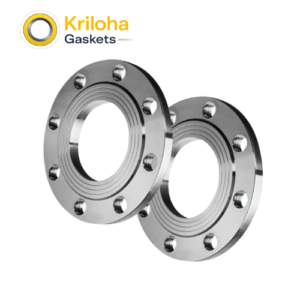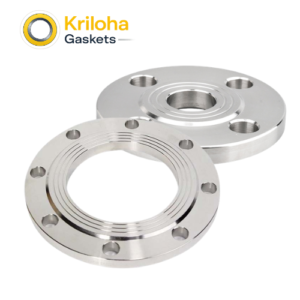
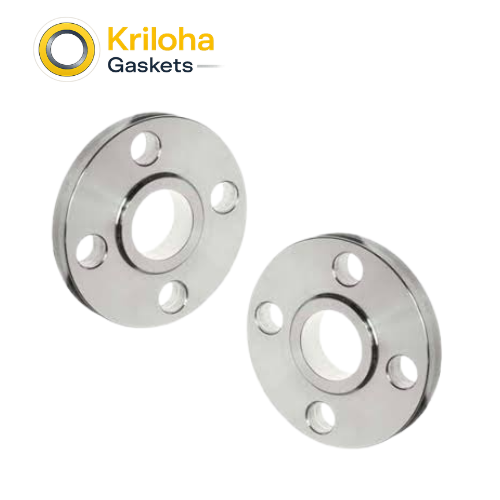
Ansi Class 150 Slip On Pipe Flanges Class 300 Class 600 Sch 80 En1092-1 Ff Rf Rtj 12 Inch

Ansi Class 150 Slip On Pipe Flanges Class 300 Class 600 Sch 80 En1092-1 Ff Rf Rtj 12 Inch

Core Features

  • Universal Multi-Standard Compliance: Precision-machined to accommodate diverse international pipeline designs. Available in American configurations conforming to ASME/ANSI B16.5 (spanning Class 150, Class 300, and Class 600 pressure tiers) as well as European metrics conforming to the EN 1092-1 type framework.
  • 12-Inch Large-Bore Sizing (NPS 12 / DN300): Engineered with a precision clearance internal bore optimized to slide seamlessly over standard 12-inch nominal outer diameter heavy process piping or structural headers.
  • Schedule 80 (Extra Strong) Bore Alignment: Custom-machined with a heavy-wall clearance internal bore designed specifically to step-align with Schedule 80 thick-walled piping. This ensures a smooth interior joint profile and matches the structural rigidity of extra-strong wall conduits.
  • Versatile Sealing Face Options (FF / RF / RTJ): Manufactured to meet your exact system isolation layout requirements:
    • Flat Face (FF): For low-stress connections to brittle cast-iron equipment.
    • Raised Face (RF): For concentrated gasket loading in standard process networks.
    • Ring Type Joint (RTJ): Features a precision-grooved face to accept a solid metallic ring gasket for critical high-pressure Class 600 lines.
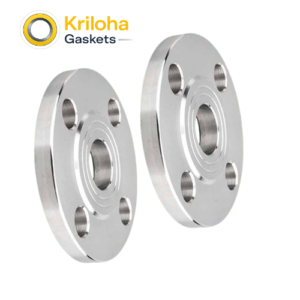
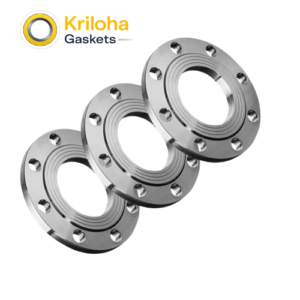
  • Reinforced Forged Slip-On (SO) Profile: Features a low-profile hub that guides the heavy-wall pipe into position. This structure distributes mechanical and thermal stress more effectively than a standard hubless plate ring, making it highly resilient under high-vibration conditions.

At Kriloha Gaskets & Hardware, we recognize that large-bore, high-pressure fluid networks demand specialized engineering solutions that generic commercial components cannot safely satisfy. Our ASME & EN Standard 12-Inch Heavy-Wall Slip-On (SO) Flanges represent our engineered answer for “Ultra-High-Structural-Rigidity” and “Zero-Flexing-Integrity.” Operating from our advanced automated fabrication facilities, Kriloha utilizes multi-axis CNC tooling to machine exact inner diameter tolerances, ensuring a seamless interface with Schedule 80 thick-walled pipeline systems.

The engineering of our 12-inch heavy-service slip-on program is founded on Microstructural Density and Deflection-Resistant Flatness. Because these components connect large-diameter piping under elevated pressure tiers (Class 150 to Class 600), Kriloha completely bypasses lower-grade, cast alternatives prone to internal air pockets or micro-fissures. Instead, we utilize fully certified, high-density ASTM A105 Forged Carbon Steel or ASTM A182 Forged Stainless Steel (304L/316L) billets. The mechanical forging process refines the grain structure to follow the flange contour, giving it the structural modulus required to easily handle intense bolt-torque demands across the 12-inch ANSI or EN bolt circle without warping or undergoing structural relaxation over time. On our automated turning stations, we meticulously finish the specified mating surface—whether Flat Face, Raised Face, or Ring Type Joint ($RTJ$)—to mechanically anchor the gasket matrix and eliminate blowout risks during sudden system pressure spikes.

Manufacturing and provisioning these critical high-grade components involves strict Volumetric Material Inspections, Ultrasonic Integrity Checking, and Face Roughness Verification. We collaborate directly with your project engineering, quality assurance, and procurement teams to supply components backed by complete chemical and physical traceability. By choosing Kriloha Gaskets & Hardware as your manufacturing partner, you are investing in a “Future-Proof” industrial alliance that prioritizes your system’s lifetime safety through advanced material science and micro-tolerance engineering.
Primary Industrial Applications

  • High-Pressure Hydrocarbon & Refinery Piping: Reliable connection joints for downstream processing loops, crude oil transport headers, and heavy fuel distribution manifolds operating under Class 300 or Class 600 parameters.
  • Heavy-Duty Utility Steam & Boiler Feeds: Robust flanged connections for primary high-pressure steam distribution headers, boiler mainlines, and thermal fluid condensate lines.
  • High-Head Pump & Compressor Manifolds: Heavy-duty, space-saving connection interfaces designed to withstand severe mechanical vibration and fluid pulsations from large-scale industrial pumps and compressors.
  • Municipal Water & Waste Utilities: Standard space-saving connection joints for large-scale water treatment headers, heavy sewage drainage networks, and high-volume municipal pumping manifolds.
  • Modular Heavy-Duty Process Skids: Compact structural mounting flanges used to securely link prefabricated heavy-wall manifolds directly to valves, strainers, and high-pressure storage vessels.

Frequently Asked Questions (FAQs)

What is the structural difference between a Slip-On (SO) flange and a standard hubless Flat Plate flange?

While both flange types slide over the outer diameter of the pipe, a standard plate flange is completely flat and collarless. A Slip-On flange features a low-profile raised hub or collar surrounding the center bore. This hub provides additional structural reinforcement at the weld zone, helping to distribute pipeline stresses and making it better suited for higher mechanical loads, vibrations, or heavy thermal expansion cycles.

When should I select an RTJ face profile over an RF profile for a 12-inch flange?

A Raised Face (RF) profile is ideal for low-to-medium pressure applications (Class 150 and Class 300) using composition or elastomeric gaskets. A Ring Type Joint (RTJ) profile features a deep, precision-machined V-groove designed to crush a solid metallic ring gasket under high bolt torque. RTJ configurations are highly recommended for high-pressure, high-temperature, or critical-service pipelines running under Class 600 parameters where an absolute metal-to-metal seal is required.

What specific welding configuration is required to install an ASME B16.5 Slip-On flange?

A slip-on flange requires a standard double fillet weld setup for a code-compliant installation:

One robust fillet weld around the exterior where the hub neck meets the outer diameter of the pipe wall.

A secondary fillet weld inside the bore, where the pipe end is slid back slightly (typically equal to the pipe wall thickness plus 3mm) from the flange face to protect the sealing surface from weld spatter during field welding.

Why is the Schedule 80 designation critical when ordering a 12-inch slip-on flange?

The “Schedule” dictates the wall thickness of the pipe. A 12-inch Schedule 80 pipe has a significantly thicker wall (and therefore a smaller inner diameter) than a standard Schedule 40 pipe, though the outer diameter remains the same. Ordering a slip-on flange specified for Schedule 80 ensures that the internal bore and hub clearance are properly proportioned to slide onto the pipe while perfectly matching its structural characteristics at the weld zone.

Are Material Test Reports (MTRs) provided by Kriloha for Class 300 and Class 600 components?

At Kriloha Ltd., quality assurance is completely non-negotiable. Every high-pressure, heavy-duty shipment from our warehouse is accompanied by comprehensive Material Test Reports (MTRs) confirming exact chemical compositions, hardness values, yield/tensile strength data, and explicit compliance with international industrial standards (ASME B16.5 / EN 1092-1) to guarantee complete industrial traceability.

This is the heading

Lorem ipsum dolor sit amet consectetur adipiscing elit dolor

Request a Quote

Enter your details here

Great! We’ve received your information.

We couldn’t process your submission. Please retry

Scroll to Top

Get a Quote

Great! We’ve received your information.

We couldn’t process your submission. Please retry