Carbon Fiber Packing

Carbon Fiber Packing

Core Features

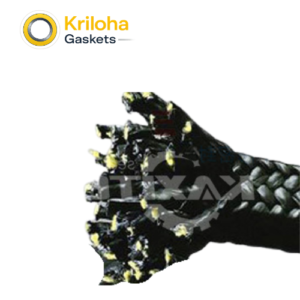
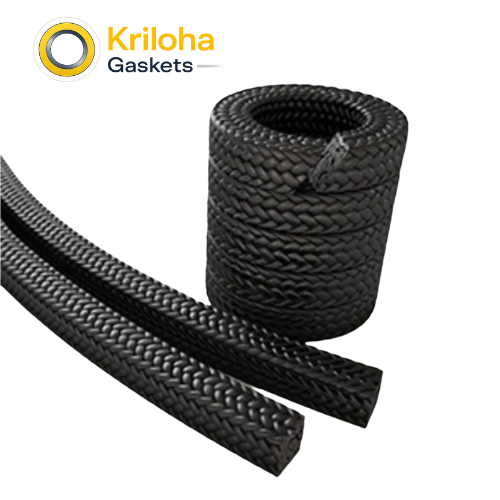
  • High-Purity Carbon Matrix: Braided from continuous, high-strength carbon filaments. These fibers offer a unique combination of extreme thermal stability and mechanical toughness, far exceeding standard synthetic or vegetable fibers.
  • Superior Thermal Conductivity: Carbon is one of the most efficient heat conductors available in sealing technology. This packing rapidly pulls frictional heat away from the shaft interface, preventing thermal expansion and “glazing” of the packing rings.
  • Low Coefficient of Thermal Expansion: Unlike PTFE or Aramids, carbon fiber does not significantly expand or contract with temperature changes. this ensures a constant sealing pressure and reduces the need for frequent gland adjustments.
  • Extreme Pressure Resistance: The high tensile strength of carbon filaments makes this packing virtually immune to extrusion and “cold flow,” even in high-pressure valve and reciprocating pump applications.
  • Inert Graphite & PTFE Treatment: Each strand is vacuum-impregnated with high-purity Graphite dispersion and treated with a high-temperature lubricant. This reduces breakout torque and ensures the packing remains soft and conformable.
  • Universal Chemical Resilience: Offers near-total immunity to almost all industrial chemicals across the 0–14 pH range, with the exception of strong, concentrated oxidizing agents.

At Kriloha Ltd., we recognize that in the “Critical-Service” zone—where pressures are high and temperatures are extreme—compromise is not an option. A standard packing will brittle and fail under these loads. The Kriloha Carbon Fiber Packing is our engineered answer for “Extreme-Duty” industrial containment. As a premier global provider of high-performance seals, Kriloha Gaskets has mastered the Structural-Plait Braid technology required to turn aerospace-grade carbon filaments into a rugged industrial barrier.

The engineering of our Carbon Fiber series is based on Thermal Transparency. By utilizing high-purity carbon yarns, we ensure that the stuffing box remains a cool environment. At Kriloha, we utilize a specialized “Passive-Corrosion” inhibitor in our graphite treatment. This protects stainless steel valve stems and pump shafts from galvanic pitting, a common issue with lower-grade carbon products. Our packing is designed to be “Hardware-Kind” while remaining “Process-Tough.”

Manufacturing this packing at Kriloha involves strict Filament-Integrity Verification. We ensure that the braid is dense enough to prevent gas-phase leakage (VOC emissions) but flexible enough to seat with standard gland torque. Whether you are sealing a high-pressure steam valve in a power plant or a high-speed chemical reactor, Kriloha Carbon Fiber Packing provides the mechanical invincibility and thermal stamina your facility demands. By choosing Kriloha Ltd., you are investing in a “Zero-Failure” technology that maximizes your plant safety and operational uptime.
Primary Use Cases

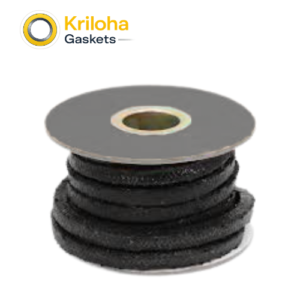
  • High-Temperature Valve Stems: The premier choice for steam valves, heaters, and soot blowers where temperatures exceed the limits of PTFE.
  • High-Pressure Reciprocating Pumps: Providing a rigid yet lubricated seal for boiler feed water, hydrocarbons, and aggressive chemical dosing.
  • Chemical Agitators & Mixers: Handling large-diameter shafts where high-speed rotation and chemical aggression are present simultaneously.
  • Petrochemical Refining: Sealing pumps and valves handling hot oils, heat transfer fluids, and volatile organic compounds (VOCs).
  • Power Generation: Widely used in power plants for high-pressure condensate and steam service due to its long service life and thermal stamina.
  •  

FAQs

What is the difference between Carbon Fiber and Graphite Packing?

Carbon fiber is much stronger and more mechanically “rugged,” making it better for high-pressure pumps and valves with mechanical movement. Pure Graphite is softer and more conformable, often used for static seals or lower-pressure steam.

Will Carbon Fiber score my pump shaft?

While carbon is strong, our heavy Graphite and PTFE impregnation provides a lubricious barrier. However, for maximum longevity, Kriloha recommends using this packing on shafts with a surface hardness of at least 45 Rockwell C.

Can I use this for concentrated Nitric Acid?

Carbon fiber has excellent chemical resistance but can be oxidized by strong concentrated acids (like fuming nitric). For those specific applications, Kriloha recommends our Pure White PTFE filament packing.

Does it require a “break-in” period?

Yes. Carbon fiber does not shrink or expand much, but it does need to “seat.” Kriloha recommends a slow initial startup with a steady leak-off to allow the graphite film to transfer to the shaft surface.

How do I install Carbon Fiber Packing?

Cut the packing into rings with a 45° miter joint. Stagger the joints by 90°. Tighten the gland nuts to seat the rings, then back off and retighten to “finger-tight plus half-turn” before starting the equipment.

This is the heading

Lorem ipsum dolor sit amet consectetur adipiscing elit dolor

Request a Quote

Enter your details here

Great! We’ve received your information.

We couldn’t process your submission. Please retry

Scroll to Top

Get a Quote

Great! We’ve received your information.

We couldn’t process your submission. Please retry