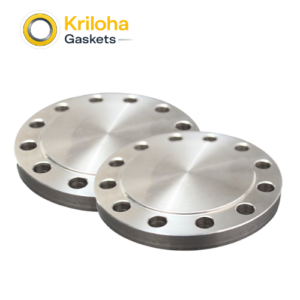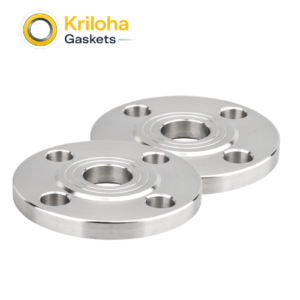
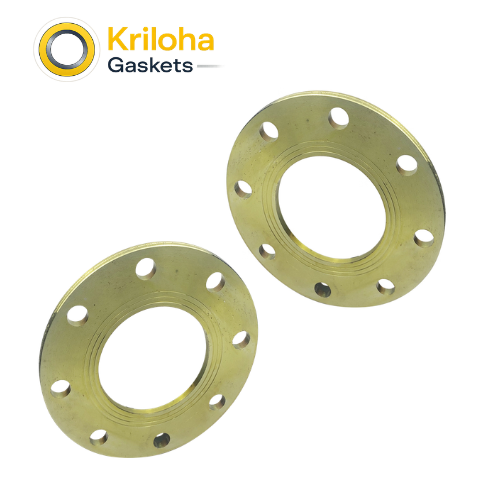
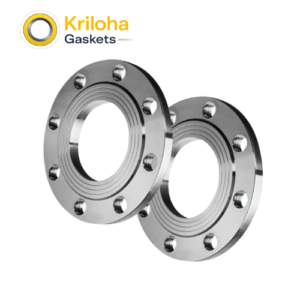
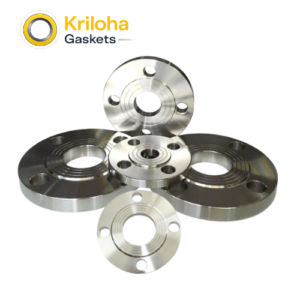
Dn80 Asme B16.48 3 Slip On Flange Carbon Steel Forged So Flanges

Dn80 Asme B16.48 3 Slip On Flange Carbon Steel Forged So Flanges

Core Features

  • Dual Engineering Standard Alignment (ASME B16.5 & B16.48): Precision-machined to conform strictly to global standard dimensions. While ASME B16.5 dictates the standard structural dimensions and bolt patterns for standard Class 150/300 connections, compliance with ASME B16.48 ensures precise compatibility and space-allocation for interlocking line blanks, spacers, or spectacle blind configurations within the same piping run.
  • DN80 / 3-Inch Nominal Standard Sizing: Engineered with a precision-machined clearance internal bore optimized to slide seamlessly over standard DN80 (3-Inch Nominal Pipe Size) steel conduits or industrial process loops.
  • Forged Structural Density (ASTM A105): Hot-forged from premium, fully killed carbon steel under strict temperature controls. This process refines the internal grain matrix and completely eliminates casting porosities, internal air pockets, and micro-voids, providing an exceptionally high burst-pressure threshold under continuous operation.
  • Low-Profile Slip-On (SO) Geometry: Features a low-profile hub design that guides the pipe into the flange bore before securement. This architecture distributes mechanical stress more effectively than a standard hubless plate ring while remaining highly compact and easy to align in the field.
  • Double Fillet Weld Joint Security: Designed to be secured using both an external fillet weld around the hub neck and an internal fillet weld along the inside bore face where the pipe end sits slightly stepped back from the mating surface, ensuring a robust, leak-proof mechanical joint.

At Kriloha Gaskets & Hardware, we recognize that mid-bore process networks require components that seamlessly balance robust mechanical security with standardized line flexibility. Our DN80 (3-Inch) ASME Forged Carbon Steel Slip-On (SO) Flanges represent our engineered answer for “High-Load-Joint-Security” and “Zero-Flexing-Integrity” across essential fluid processing arrays. As a leading premier supplier of integrated flow control elements and high-performance hardware, Kriloha utilizes automated multi-axis production workflows to ensure that our forged slip-on configurations provide superior mechanical longevity compared to unpredictable cast alternatives.

The engineering of our DN80 slip-on program is founded on Microstructural Uniformity and Deflection-Resistant Flatness. By prioritizing high-density hot-forging over lower-tier casting alternatives, the metal grain structure smoothly traces the contour of the flange ring and low-profile hub. This provides the structural modulus required to withstand intense bolt-torque demands across the 4-bolt or 8-bolt ANSI circle (depending on Class rating) without bowing, warping, or undergoing structural relaxation over time. At Kriloha, we precision-machine the flat sealing surface on advanced CNC turning centers, finishing them with controlled phonographic serrations ($R_a$ finish) that mechanically grip the gasket matrix to resist blowout under sudden system pressure cycles.

Manufacturing and provisioning these critical high-grade components involves strict Dimensional Tolerance Checks, Volumetric Material Inspections, and Surface Roughness Calibration. We collaborate directly with your project engineering, procurement, and facility maintenance teams to supply precise internal bores tailored to standard pipe outer diameters and unique wall-thickness schedules (such as Schedule 40 or Schedule 80 matching). By choosing Kriloha Gaskets & Hardware, you are investing in a “Future-Proof” industrial partnership that prioritizes your system’s lifetime reliability through superior metallurgy and micro-tolerance engineering.
Primary Industrial Applications

  • Petrochemical & Refinery Piping Loops: High-reliability joint connections for downstream processing lines handling non-corrosive hydrocarbons, heavy fuel oils, lubricants, and oil-water slops.
  • Moderate-Pressure Plant Utilities: Ideal for primary factory utility lines distributing high-pressure industrial water, cooling tower loops, factory compressed air networks, and inert gas loops.
  • Steam & Condensate Networks: Reliable connection joints for secondary steam utility pipelines, boiler feed lines, and thermal fluid transport lines exposed to elevated thermal cycles.
  • Municipal Water & Wastewater Distribution: Standard space-saving connection joints for large-scale water treatment headers, municipal pump manifolds, and wastewater filtration networks.
  • Modular Industrial Process Skids: Compact structural flanges used to join prefabricated piping manifolds directly to flat-faced or raised-face valves, strainers, filtration pods, and storage vessels.

Frequently Asked Questions (FAQs)

What is the structural difference between a Slip-On (SO) flange and a standard Flat Plate flange?

While both types slide over the pipe outer diameter and utilize double fillet welding, a Slip-On flange features a low-profile raised hub or collar surrounding the center bore. This hub provides additional structural reinforcement at the weld zone, helping to distribute pipeline stresses and making it better suited for slightly higher mechanical loads or vibration profiles compared to a completely flat, hubless plate flange.

Why does the product description reference both ASME B16.5 and ASME B16.48 standards?

ASME B16.5 is the primary standard for steel pipe flanges, governing the bolt circles, thicknesses, and pressures for standard pipeline joints.

ASME B16.48 is the specific standard governing Line Blanks (such as spectacle blinds, spades, and spacers). A DN80 slip-on flange engineered with B16.48 cross-compatibility ensures that the flange assembly has the exact layout and mating surface compatibility to cleanly clamp these isolation blanks without leakage.

What specific welding configuration is required to install an ASME Slip-On flange?

A slip-on flange requires a double fillet weld configuration for proper code-compliant installation:

One robust fillet weld around the exterior where the hub neck meets the outer diameter of the pipe wall.

A secondary fillet weld inside the bore, where the pipe end is slid back slightly (typically equal to the pipe wall thickness plus 3mm) from the flange face to prevent damaging the sealing surface during welding.

How is this carbon steel flange protected against environmental rust during transit and storage?

Because carbon steel is vulnerable to atmospheric oxidation, our high-quality A105 flanges come standard with a protective surface treatment. This typically includes a light yellow or black anti-rust lacquer, a rust-preventative oil finish, or hot-dip galvanization depending on your long-term storage and field installation environment requirements.

Are Material Test Reports (MTRs) provided with these forged 3-inch flanges?

At Kriloha Ltd., quality assurance is completely non-negotiable. Every shipment from our facility can be accompanied by comprehensive Material Test Reports (MTRs) confirming exact chemical compositions (Carbon, Manganese, Silicon content), hardness values, yield/tensile strength data, and explicit compliance with international industrial standards to guarantee complete code traceability.

This is the heading

Lorem ipsum dolor sit amet consectetur adipiscing elit dolor

Request a Quote

Enter your details here

Great! We’ve received your information.

We couldn’t process your submission. Please retry

Scroll to Top

Get a Quote

Great! We’ve received your information.

We couldn’t process your submission. Please retry