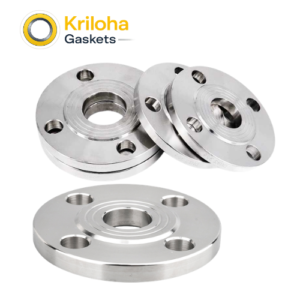
What is the fundamental definition of a “Plain Welding Plate Flange”?
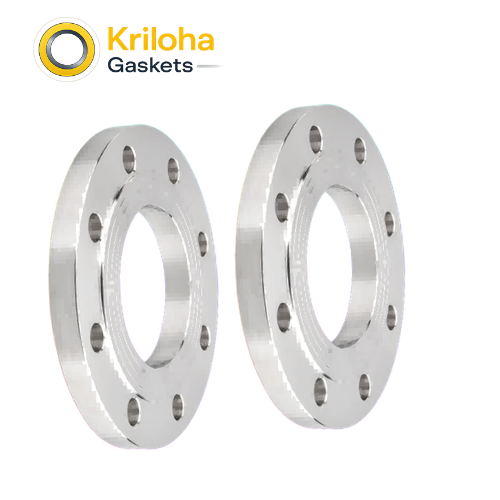
A plain welding plate flange (often designated as an EN 1092-1 Type 01 or a slip-on plate ring) is a completely flat circular disk with no extended collar, raised hub, or tapered welding neck. It functions by sliding directly over the outer diameter of the pipe and is secured to the pipeline using a double fillet weld configuration, making it the most compact and economical flange design available.
Why specify a hubless “Plate Flange” instead of a traditional hubbed Slip-On flange?
Because a plate flange completely lacks a raised collar or hub, it uses significantly less raw material during manufacturing. This makes it a highly compact, lightweight, and cost-effective alternative for standard process networks and utility lines where the extra structural reinforcement of a heavy hub is not functionally required.
What specific welding configuration is required to install this type of plate flange?
A plate welding flange requires a standard double fillet weld setup for proper installation: one robust fillet weld around the rear side where the plate meets the outer diameter of the pipe wall, and a secondary fillet weld along the inside bore face where the pipe end sits flush with the flat face.
How is this carbon steel plate flange protected against environmental rust during storage?
Because carbon steel is vulnerable to atmospheric oxidation, our high-quality plate flanges come standard with a protective surface treatment. This typically includes a light yellow or black anti-rust lacquer, a rust-preventative oil finish, or electro-galvanization depending on your long-term storage and field installation environment requirements.
Are Material Test Reports (MTRs) provided with these plate flanges from Kriloha?
At Kriloha Ltd., quality assurance is completely non-negotiable. Every shipment from our facility can be accompanied by comprehensive Material Test Reports (MTRs) confirming exact chemical compositions (Carbon, Manganese, Silicon content), hardness values, yield/tensile strength data, and explicit compliance with international dimensional standards to guarantee complete industrial traceability.
Frequently Asked Questions (FAQs)
What is the fundamental definition of a “Plain Welding Plate Flange”?
A plain welding plate flange (often designated as an EN 1092-1 Type 01 or a slip-on plate ring) is a completely flat circular disk with no extended collar, raised hub, or tapered welding neck. It functions by sliding directly over the outer diameter of the pipe and is secured to the pipeline using a double fillet weld configuration, making it the most compact and economical flange design available.
Why specify a hubless “Plate Flange” instead of a traditional hubbed Slip-On flange?
Because a plate flange completely lacks a raised collar or hub, it uses significantly less raw material during manufacturing. This makes it a highly compact, lightweight, and cost-effective alternative for standard process networks and utility lines where the extra structural reinforcement of a heavy hub is not functionally required.
What specific welding configuration is required to install this type of plate flange?
A plate welding flange requires a standard double fillet weld setup for proper installation: one robust fillet weld around the rear side where the plate meets the outer diameter of the pipe wall, and a secondary fillet weld along the inside bore face where the pipe end sits flush with the flat face.
How is this carbon steel plate flange protected against environmental rust during storage?
Because carbon steel is vulnerable to atmospheric oxidation, our high-quality plate flanges come standard with a protective surface treatment. This typically includes a light yellow or black anti-rust lacquer, a rust-preventative oil finish, or electro-galvanization depending on your long-term storage and field installation environment requirements.
Are Material Test Reports (MTRs) provided with these plate flanges from Kriloha?
At Kriloha Ltd., quality assurance is completely non-negotiable. Every shipment from our facility can be accompanied by comprehensive Material Test Reports (MTRs) confirming exact chemical compositions (Carbon, Manganese, Silicon content), hardness values, yield/tensile strength data, and explicit compliance with international dimensional standards to guarantee complete industrial traceability.