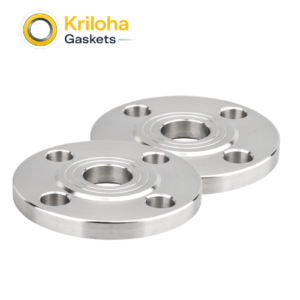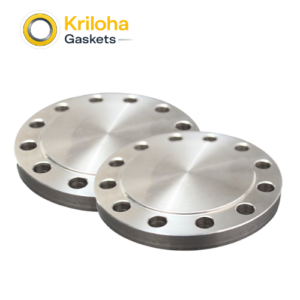

Jis Standard Forged Slip On Connection Technics Blind Flange

Jis Standard Forged Slip On Connection Technics Blind Flange

JIS Standard Forged Blind Flange (Cross-Standard Plate Family)

Category: Flanges | Sub-Category: Blind Flange / Piping Termination Family

Core Features

  • Japanese Industrial Standard Blueprint Compliance (JIS B2220): Precision-machined to conform strictly to Japanese metric standards (typically available in 5K, 10K, 16K, or 20K pressure classes). This ensures 100% bolt-pattern alignment, thickness parameters, and pitch circle diameter (PCD) interchangeability across Japanese-spec marine machinery, factory skids, and industrial equipment loops.
  • Solid Bore-Less Termination Matrix: Engineered without a center fluid bore. The solid steel block acts as a permanent structural wall or barrier, safely containing high fluid volumes, pressure spikes, and system line forces at the end of the pipeline.
  • Universal Slip-On Footprint Matching: Designed with the exact outer ring shape, bolt counts, and alignment profiles of standard JIS Slip-On connections. This lets engineers bolt the blind plate directly to a slip-on pipeline end without needing custom adapters or matching sets.
  • High-Density Forged Structural Integrity: Hot-forged from fully certified steel billets under strict thermal phases. This process refines the internal grain orientation and completely eliminates casting porosities, internal air pockets, and micro-voids, delivering an exceptionally high burst-pressure threshold compared to unpredictable cast alternatives.
  • Precision CNC Mating Surface Finish: Machined on automated vertical turning lathes to ensure flat joint alignment. Available in Flat Face (FF) or Raised Face (RF) executions, finished with standardized concentric micro-grooves that mechanically anchor the gasket to eliminate fluid bypass or blowout risks.

At Kriloha Gaskets & Hardware, we recognize that modern fluid networks demand piping termination elements that deliver uncompromised safety and absolute structural strength under intense system loads. Our JIS Standard Forged Blind Flanges represent our engineered answer for “High-Load-End-Security” and “Zero-Defing-Integrity” across primary processing arrays. Sourced from our advanced automated fabrication facilities, Kriloha bridges the gap between raw material science and precise international dimensional standards, ensuring that every blind plate integrates flawlessly alongside your high-performance sealing gaskets.

The engineering of our JIS blind program is founded on Microstructural Uniformity and Deflection-Resistant Flatness. Because these solid components absorb the full internal pressure of the system alongside the mechanical forces of tightened bolts, Kriloha completely bypasses lower-grade casting techniques that can hide structural micro-cracks or internal air pockets. Instead, we utilize fully certified, high-density hot-forged steel stock. The internal metal grain orientation smoothly tracks the geometry of the solid ring, providing the high structural modulus required to withstand intense pressure spikes across the metric bolt circle without warping or undergoing mechanical relaxation over time.

We manufacture this configuration across specialized metallurgy streams to fit your exact line environment:

  • Carbon Steel (ASTM A105 / JIS SF440A): Sourced with an anti-rust lacquer or heavy hot-dip galvanization for robust, non-corrosive plant utilities, secondary steam loops, and marine bilge piping.
  • Austenitic Stainless Steel (ASTM A182 F304L/F316L): Precision-turned with low-carbon thresholds to resist atmospheric corrosion, severe acid handling loops, or high-salinity marine brine networks.

At Kriloha, we precision-machine the specified mating surfaces on advanced CNC turning centers, adding controlled concentric phonographic micro-serrations ( finish) that firmly anchor your chosen gasket matrix to eliminate fluid bypass or blowout risks during sudden system pressure cycles. By choosing Kriloha Gaskets & Hardware, you are investing in a “Future-Proof” industrial partnership that prioritizes your system’s lifetime reliability through superior metallurgy and micro-tolerance engineering.
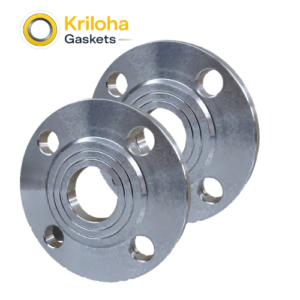
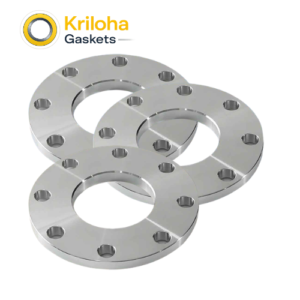
Primary Pipeline Terminal Applications

  • System Line Maintenance & Isolations: The industry-standard choice for safely capping off live fluid loops or capping header segments during plant expansions, system cleanouts, or routine maintenance operations.
  • Marine Infrastructure & Shipbuilding Skids: High-volume provisioning for Japanese-spec marine engine utility loops, ballast water distribution manifolds, fuel oil transport arrays, and offshore equipment modules.
  • Prefabricated Pressure Vessel Access Ports: Secure, removable inspection covers bolted onto clean-out nozzles, storage tank entry ports, and shell-and-tube heat exchanger chambers.
  • Modular Industrial Process Skids: Low-profile termination blocks used by equipment manufacturers to cap off unused testing manifolds or bypass connection circuits within compact structural frames.
  • Hygienic Clean-Utility Networks (Stainless Execution): Clean-utility isolation points in food/beverage processing, large-scale breweries, and pharmaceutical plants where non-porous stainless steel prevents fluid contamination and survives clean-in-place (CIP) steam washdowns.

💡 Engineering Dimensional Note

There is a structural mismatch in this product description string. Slip-On (SO) and Blind (BL) represent two completely opposite engineering styles. A Slip-On flange is precision-machined with an open internal clearance bore designed to slide over a pipe to allow fluid flow. A Blind Flange is manufactured as a completely solid steel disk with no center bore, engineered specifically to seal off the end of a pipeline array.

Because this component serves to terminate fluid blocks within the broader ‘Flanges’ category, it is manufactured as a solid plate that shares the exact external dimensions, bolt circle diameters, and alignment footprints of standard JIS Slip-On connections for a perfect mechanical match.

Frequently Asked Questions (FAQs)

What is the operational difference between a Slip-On flange and a Blind flange?

A Slip-On flange features a precision-machined center bore that slides over the outside diameter of a pipe, serving as an open connection path to allow continuous fluid flow. A Blind flange is completely solid across its center face with no bore hole. It functions exclusively to cap off or close the end of a pipeline array, blocking fluid flow past that point.

What do the terms “5K”, “10K”, and “20K” represent under the JIS B2220 standard?

Under the Japanese Industrial Standard (JIS) framework, the “K” designation represents the metric pressure class rating of the component (similar to Class 150/300 in American standards). A 5K flange is designed for low-pressure systems up to 5 kgf/cm², a 10K flange handles standard industrial applications up to 10 kgf/cm² (approximately 10 bar or 145 PSI), and 20K flanges are engineered for heavy-duty, high-pressure processing lines.

Why do Blind flanges require a thicker structural profile compared to Slip-On flanges?

Unlike open slip-on flanges that distribute fluid pressure evenly down the pipe wall, a blind flange bears the full mechanical force and impact of the oncoming fluid pressure across its entire center face. Because this generates significant bending stress at the center of the disk, international standards require blind flanges to be manufactured with equal or greater thickness profiles to prevent warping under high-load clamping conditions.

Can a JIS 10K blind flange be bolted directly to an ANSI Class 150 slip-on flange?

As a general engineering rule, JIS metric bolt patterns do not align perfectly with imperial ANSI/ASME bolt configurations. Outer diameters, bolt count spacing, and pitch circle diameters (PCD) differ between the two standards for most nominal pipe sizes. For safe installations, cross-standard adaptations require multi-drilled flanges or specialized conversion fittings to ensure proper alignment and bolt torque.

Are Material Test Reports (MTRs) provided with these forged flanges from Kriloha?

At Kriloha Ltd., quality assurance is completely non-negotiable. Every shipment from our facility can be accompanied by comprehensive Material Test Reports (MTRs) confirming exact chemical compositions, structural hardness values, yield/tensile strength data, heat treatment records, and explicit compliance with international industrial standards to guarantee complete code traceability.

This is the heading

Lorem ipsum dolor sit amet consectetur adipiscing elit dolor

Request a Quote

Enter your details here

Great! We’ve received your information.

We couldn’t process your submission. Please retry

Scroll to Top

Get a Quote

Great! We’ve received your information.

We couldn’t process your submission. Please retry