Radial C-Rings

Radial C-Rings

Core Features

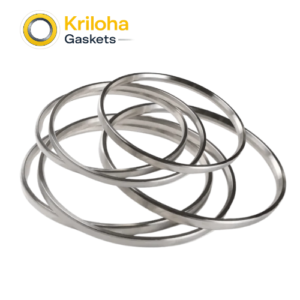
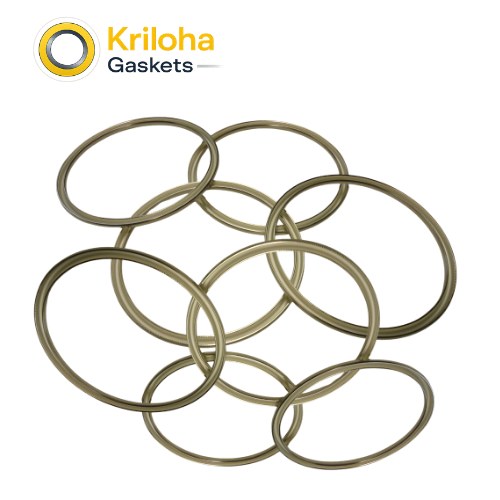
  • Engineered Radial Resilience: Unlike standard face-sealing C-rings, the Radial C-Ring is designed to seal on the Inside Diameter (ID) or Outside Diameter (OD). The “C” profile acts as a high-tension circumferential spring.
  • Internal Pressure-Actuated Sealing: The open side of the “C” is oriented toward the system pressure. As pressure increases, it forces the radial lips outward against the shaft or housing, naturally increasing the sealing integrity.
  • Extreme Thermal & Cryogenic Stability: Manufactured from high-strength alloys like Inconel 718, allowing the seal to remain elastic and energized from -250°C to +800°C.
  • Low Friction & High Durability: Available with Silver, Gold, or PTFE coatings. These ductile layers provide a microscopic “soft” interface that fills machining marks on the shaft or bore while reducing the force required for assembly.
  • Superior “Spring-Back” Recovery: Optimized to compensate for radial clearances and hardware “out-of-roundness” caused by extreme thermal expansion or mechanical loading.
  • Zero Outgassing & Hermetic Integrity: Constructed entirely of inorganic materials, making them the premier choice for ultra-high vacuum (UHV) and high-purity gas systems.

At Kriloha Ltd., we recognize that radial sealing in extreme environments is one of the most difficult engineering challenges. When a shaft expands or a bore distorts due to intense heat, a standard O-ring will lose contact and leak. The Kriloha Radial C-Ring is our engineered solution for “Dynamic Diameter” sealing. As a premier global provider of advanced seals, Kriloha Gaskets has perfected the Precision Radial Forming and heat-treating processes required to give these rings their “memory.”

The engineering of a Kriloha Radial C-Ring is based on Circumferential Energization. The ring is designed with a specific “interference fit” against the mating bore or shaft. At Kriloha, we utilize Precipitation-Hardened Inconel to ensure the seal doesn’t “relax” or lose its radial tension at high temperatures. We then apply a Soft Metallic Plating (typically Silver) which acts as a solid-state gasket, filling the microscopic tool marks on the hardware to ensure a gas-tight, hermetic barrier.

Manufacturing these seals at Kriloha involves strict Radial Load Calibration. We ensure the “Squeeze” is perfectly balanced to provide a seal without causing excessive wear on the mating hardware. We offer these in two primary configurations: Internal Radial (Seals on the OD) and External Radial (Seals on the ID). Whether you are sealing a high-altitude aerospace actuator or a high-pressure sub-sea connector, Kriloha Radial C-Rings provide the mechanical agility and chemical permanence your most ambitious projects demand. By choosing Kriloha Ltd., you are investing in a “High-Stamina” radial seal that thrives where polymers fail.
Primary Use Cases

  • Gas Turbine Shafts: Providing a high-temperature radial seal for turbine rotor assemblies and bearing housings.
  • Aerospace Fuel Systems: Critical sealing for fuel line couplings and telescopic joints where thermal expansion is significant.
  • Nuclear Control Rods: Ensuring a permanent, radiation-resistant radial seal for reactor instrumentation and control mechanisms.
  • Cryogenic Couplings: Maintaining a leak-proof radial connection in liquid hydrogen and oxygen transfer lines.
  • High-Pressure Downhole Tools: Used in oil and gas exploration where elastomeric radial seals would fail due to chemical attack or rapid gas decompression.
  •  

FAQs

What is the difference between a Radial C-Ring and a standard C-Ring?

A standard C-ring seals on its flat faces (axial seal), while a Radial C-ring is designed to seal on its curved surfaces (ID or OD) against a shaft or inside a cylinder bore.

Which way should the “Open Side” of the C-ring face?

In a radial application, the open side of the “C” must face the higher pressure source. This allows the pressure to enter the ring and push the radial sealing lips harder against the mating surfaces.

Does the hardware require a specific finish?

Yes. Because metal-to-metal radial sealing is sensitive, Kriloha recommends a bore/shaft finish of 16 to 32 RMS (0.4 to 0.8 µm Ra). A polished surface ensures the soft plating can create a hermetic seal.

How is a Radial C-Ring installed?

They are typically installed into a machined groove on a shaft or inside a housing. Because they are metal, they have limited “stretch,” so the hardware is often designed with a two-piece “split” housing or a stepped shaft for easier assembly.

Is this seal “Fire-Safe”?

Absolutely. Since it is constructed entirely of high-performance alloys and metallic platings, the Radial C-ring is inherently non-combustible and will maintain its sealing integrity during and after a fire event.


This is the heading

Lorem ipsum dolor sit amet consectetur adipiscing elit dolor

Request a Quote

Enter your details here

Great! We’ve received your information.

We couldn’t process your submission. Please retry

Scroll to Top

Get a Quote

Great! We’ve received your information.

We couldn’t process your submission. Please retry