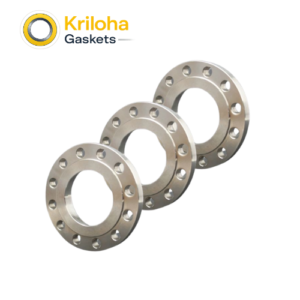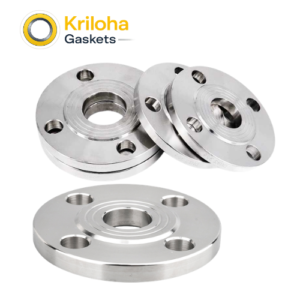
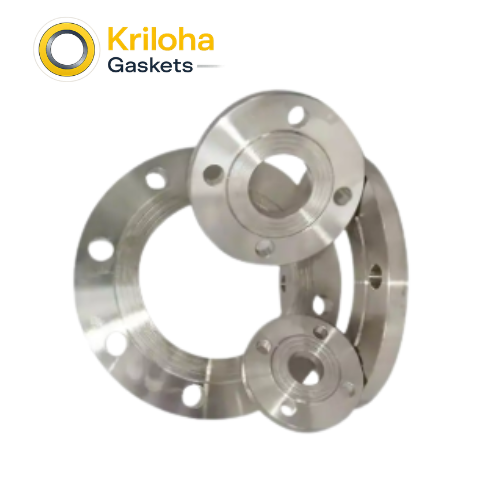
Astm A105N Pn10 Flange Carbon Steel Forged Slip On Flange

Astm A105N Pn10 Flange Carbon Steel Forged Slip On Flange

Core Features

  • Normalized Metallurgical Structure (ASTM A105N): Hot-forged from premium, fully killed carbon steel and subjected to a strict post-forging normalization heat treatment. Normalizing refines the grain matrix, eliminates internal cooling stresses, and significantly enhances low-temperature impact toughness and yield ductility.
  • Metric Pressure Rating Compliance (PN10): Precision-machined to conform strictly to European DIN / EN 1092-1 (Type 01 or Type 12) dimensions for 10-bar pressure execution. This guarantees perfect alignment, bolt-hole spacing, and pitch circle diameter (PCD) interchangeability across international utility lines.
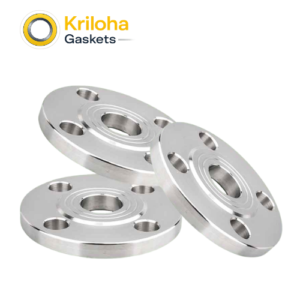
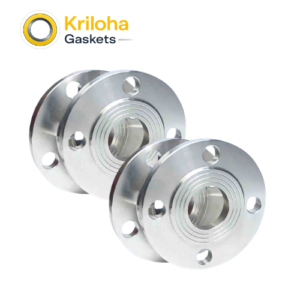
  • Low-Profile Slip-On (SO) Hub Profile: Features a low-profile raised hub or collar surrounding the center bore. This collar reinforces the weld zone, helping to distribute structural pipeline stresses and vibration loops far more effectively than a completely hubless flat plate ring.
  • Double Fillet Weld Joint Security: Designed to slide seamlessly over the outside diameter of standard process piping. The joint is secured using a robust double fillet weld setup—one tracking the exterior hub neck and a secondary weld inside the bore—creating a leak-proof structural connection.
  • Precision CNC Face Sealing: Turned on automated multi-axis CNC lathes to achieve parallel joint alignment. Finished with standardized micro-grooved phonographic or concentric serrations ( finish) to ensure maximum gasket mechanical friction and prevent fluid blowout under pressure surges.

At Kriloha Gaskets & Hardware, we recognize that modern fluid processing networks require balancing strict metallurgical compliance with structural value. Our PN10 Forged Carbon Steel ASTM A105N Slip-On (SO) Flanges represent our engineered answer for “High-Load-Joint-Security” and “Zero-Flexing-Integrity” across essential processing arrays. As a leading premier manufacturer and supplier of integrated flow control elements and pipeline hardware, Kriloha utilizes automated multi-axis production workflows to ensure that our forged slip-on configurations provide superior mechanical longevity compared to unpredictable cast alternatives.

The engineering of our ASTM A105N slip-on program is founded on Microstructural Uniformity and Deflection-Resistant Flatness. By forcing certified carbon steel stock through controlled hot-forging paths rather than relying on lower-cost casting alternatives, we eliminate internal gas pockets, voids, and structural micro-cracks. Suffixing the material with the “N” designation signifies that our flanges undergo a comprehensive normalizing thermal phase (heating above the transformation range followed by cooling in still air). This thermal refinement ensures uniform hardness and exceptional mechanical toughness under cyclical line stress. At Kriloha, we precision-machine the sealing surfaces on advanced CNC vertical turning lathes, adding controlled concentric phonographic micro-serrations ( finish) that firmly anchor your chosen gasket matrix to eliminate fluid bypass or blowout risks.

Manufacturing and provisioning these critical flow-control connection pieces involves strict Dimensional Tolerance Checks, Volumetric Material Inspections, and Face Roughness Calibration. We collaborate directly with your project engineering, procurement, and facility maintenance teams to supply precise internal bores tailored to standard pipe outer diameters and unique wall-thickness schedules. By choosing Kriloha Gaskets & Hardware, you are investing in a “Future-Proof” industrial partnership that prioritizes your system’s lifetime reliability through superior metallurgy and micro-tolerance engineering.
Primary Industrial Applications

  • Low-to-Medium Pressure Plant Utilities: Ideal for main factory utility headers distributing industrial water, low-pressure steam, compressed air loop arrays, cooling tower circuits, and inert gas pipelines operating under PN10 parameters.
  • Midstream Hydrocarbon Lines: Economical connection joints for crude oil transport manifolds, storage terminal trunk lines, and heavy fuel distribution networks where fluid corrosion risks are minimal.
  • Municipal Water & Wastewater Distribution: High-volume provisioning for large-scale filtration headers, municipal sewage pumping stations, water storage tanks, and environmental drainage manifolds.
  • Commercial HVAC & Utility Risers: Space-saving connections for commercial facility heating lines, chilled water distribution grids, and condenser loops in restricted service shafts.
  • Modular Industrial Process Skids: Compact structural mounting flanges used to securely link prefabricated piping manifolds directly to valves, strainers, inline instruments, and pressure vessels.

Frequently Asked Questions (FAQs)

What does the “N” suffix mean in ASTM A105N, and why is it important?

The “N” stands for Normalized. Normalizing is a post-forging heat treatment process where the steel is heated to a high temperature and cooled in open air to refine its grain structure. This process makes the metal much more uniform, improves its structural ductility, and significantly boosts its impact toughness—especially in low-temperature environments—compared to standard, untreated ASTM A105 carbon steel.

What is the structural difference between a Slip-On (SO) flange and a standard Flat Plate flange?

While both types slide over the pipe outer diameter and utilize double fillet welding, a standard plate flange is completely flat and collarless. A Slip-On flange features a low-profile raised hub or collar surrounding the center bore. This hub provides additional structural reinforcement at the weld zone, helping to distribute pipeline stresses and making it better suited for slightly higher mechanical loads or vibration profiles.

What specific welding configuration is required to install an ASTM A105N Slip-On flange?

A slip-on flange requires a standard double fillet weld setup for proper code-compliant installation:

One robust fillet weld around the exterior where the hub neck meets the outer diameter of the pipe wall.

A secondary fillet weld inside the bore, where the pipe end is slid back slightly (typically equal to the pipe wall thickness plus 3mm) from the flange face to prevent heat or weld spatter from damaging the machined sealing face.

Can a carbon steel Raised Face (RF) flange be safely bolted to a Flat Face (FF) Cast Iron valve?

It is highly recommended not to mate a Raised Face steel flange directly to a Flat Face cast iron component. Because cast iron is brittle, the concentrated clamping force generated by the raised face inside the bolt circle creates a bending moment that can crack or fracture the expensive cast iron valve body when bolt torque is applied. Like-to-like face configurations are best engineering practice.

Are Material Test Reports (MTRs) provided with these forged flanges from Kriloha?

At Kriloha Ltd., quality assurance is completely non-negotiable. Every shipment from our facility can be accompanied by comprehensive Material Test Reports (MTRs) confirming exact chemical compositions (Carbon, Manganese, Silicon content), thermal heat treatment history (Normalizing parameters), hardness values, yield/tensile strength data, and explicit compliance with international industrial standards to guarantee complete code traceability.

This is the heading

Lorem ipsum dolor sit amet consectetur adipiscing elit dolor

Request a Quote

Enter your details here

Great! We’ve received your information.

We couldn’t process your submission. Please retry

Scroll to Top

Get a Quote

Great! We’ve received your information.

We couldn’t process your submission. Please retry