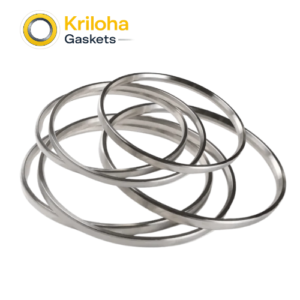
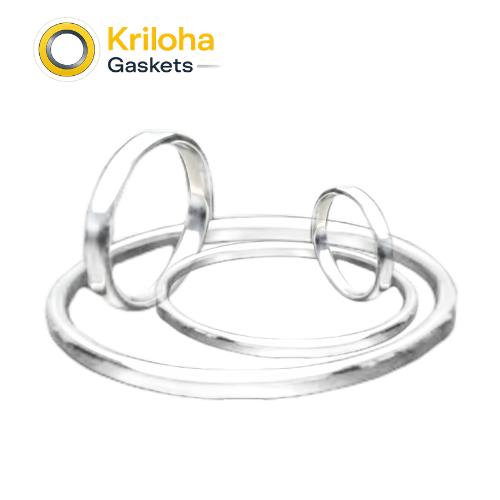
Oval Ring Joint Gasket (RTJ)

Oval Ring Joint Gasket (RTJ)

Core Features

  • Solid Metal Construction: Precision-machined from a single block of high-quality forged metal, ensuring zero porosity and maximum structural integrity.
  • Dual-Sealing Surface: The oval cross-section provides a curved contact area that seals against both the bottom and the angled sidewalls of the flange groove.
  • High-Pressure Mastery: Engineered specifically for extreme pressure environments, effectively sealing up to 15,000 psi (103 MPa) and beyond in specialized API 6A applications.
  • Self-Energizing Potential: As internal pressure increases, the gasket is forced tighter into the flange groove, naturally enhancing the seal during operation.
  • Exceptional Surface Finish: Machined to a surface roughness of Ra 1.6 μm (63 micro-inches) or smoother to ensure a gas-tight, metal-to-metal interference fit.
  • Metallurgical Versatility: Available in Soft Iron, Low Carbon Steel, 304/316L Stainless Steel, and exotic alloys like Inconel 625 or Monel for corrosive service

At Kriloha Ltd., we understand that when pressures reach thousands of pounds per square inch, soft gaskets are no longer an option. In the most demanding sectors of the energy industry, the Oval Ring Joint Gasket (RTJ) is the undisputed king of high-pressure containment. As a premier global supplier of heavy-duty sealing solutions, Kriloha Gaskets manufactures our Ring Type Joints to the exacting standards of API 6A and ASME B16.20, ensuring they perform flawlessly in the world’s most hostile environments.

The Oval RTJ is a masterclass in mechanical interference sealing. Unlike flat gaskets that rely on surface compression, the Oval Ring Joint utilizes a “wedge” effect. The gasket is placed into a precision-machined trapezoidal groove in the flange face. As the bolts are tightened, the curved “oval” surface of the gasket is compressed into the angled sides of the groove. This creates a high-stress, metal-to-metal line seal. Because the oval shape has a radius on both the top and bottom, it is capable of sealing in both older “round-bottom” grooves and modern “flat-bottom” grooves, making it a highly versatile choice for maintenance and brownfield projects.

Manufacturing a Kriloha Oval RTJ requires extreme metallurgical precision. We begin with high-quality forgings that are heat-treated to ensure the gasket is always softer than the flange material. This is critical: the gasket must deform slightly to create the seal, preventing expensive damage to the flange grooves. Every Kriloha gasket undergoes rigorous hardness testing and dimensional inspection to ensure it meets the strict tolerances required for high-pressure service.

By choosing Kriloha Ltd., you are investing in a product designed for the “Zero Leakage” era. Our Oval RTJs are often supplied with specialized coatings, such as silver or tin plating, to reduce friction during installation and improve sealability on slightly worn flange surfaces. Whether you are operating a deepwater subsea manifold or a high-pressure refinery reactor, Kriloha Oval Ring Joint Gaskets provide the mechanical stamina and metallurgical integrity required to keep your high-stakes operations running safely and efficiently.
Primary Use Cases

  • Upstream Oil & Gas: The standard seal for wellheads, Christmas trees, and high-pressure manifold systems.
  • Petrochemical Refineries: Critical sealing for high-pressure hydrogen, hydrocracking, and catalytic reforming units.
  • Offshore Drilling: Reliable performance in subsea blowout preventers (BOPs) and riser connections.
  • High-Pressure Steam Turbines: Providing a robust metal-to-metal seal for power generation main steam lines.
  • Gas Processing Plants: Ensuring zero-leakage containment of high-pressure natural gas and NGLs.

FAQs

What is the difference between an Oval and an Octagonal RTJ?

The Oval gasket has a curved sealing surface, while the Octagonal has flat angled faces. Oval gaskets can be used in both round-bottom and flat-bottom grooves, whereas Octagonal gaskets are generally restricted to modern flat-bottom grooves.

Can I reuse a Kriloha Oval Ring Joint Gasket?

No. Like all RTJs, the Oval gasket relies on plastic deformation of the metal to create a seal. Once compressed, the metal “work-hardens,” and attempting to reuse it will likely damage the flange groove or result in a leak.

Why must the gasket be softer than the flange?

The gasket is designed to be the sacrificial element. By ensuring the gasket is 30-40 Brinell hardness points softer than the flange, we ensure the gasket deforms to create the seal rather than the flange groove itself.

What does the “R” number mean on an RTJ?

The “R” number (e.g., R-24, R-57) refers to the standardized dimensional size of the ring according to API or ASME specifications, ensuring it matches the corresponding flange size and pressure class.

Does Kriloha offer RTJs for corrosive sour gas (H2S) service?

Absolutely. For NACE MR0175/ISO 15156 compliant environments, we manufacture RTJs from specialized alloys like Inconel 625 or 316L Stainless Steel with strictly controlled hardness levels to prevent stress corrosion cracking.

This is the heading

Lorem ipsum dolor sit amet consectetur adipiscing elit dolor

Request a Quote

Enter your details here

Great! We’ve received your information.

We couldn’t process your submission. Please retry

Scroll to Top

Get a Quote

Great! We’ve received your information.

We couldn’t process your submission. Please retry