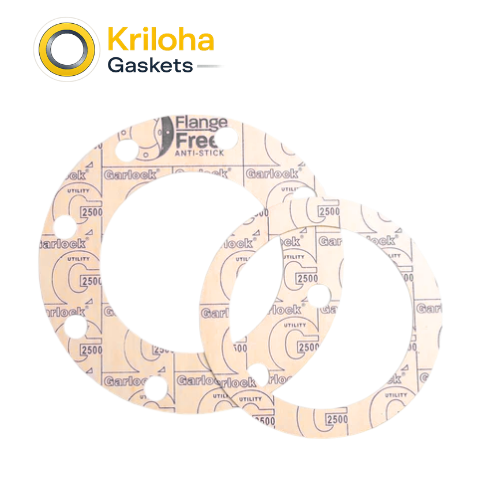
Synthetic Fiber Rubber Gasket

Synthetic Fiber Rubber Gasket

Core Features

  • Advanced Composite Structure: Manufactured from a high-density blend of high-performance Synthetic Fibers (such as Aramid or Kevlar) bonded with specialized Nitrile (NBR) or EPDM elastomers.
  • Non-Asbestos Security: Engineered as a safe, high-performance alternative to traditional asbestos gaskets, providing superior environmental compliance without compromising on mechanical strength.
  • High Tensile & Tear Resistance: The interlocking synthetic fiber matrix provides exceptional structural integrity, preventing the gasket from “pinching” or tearing during high-pressure installations.
  • Controlled Swell Properties: Formulated to exhibit minimal swelling when in contact with oils and fuels, ensuring the gasket maintains a tight mechanical “bite” on the flange faces over time.
  • Anti-Stick Coating: Typically supplied with a specialized factory-applied release agent on both surfaces to prevent the gasket from bonding to the flange, significantly reducing maintenance cleanup time.
  • Broad Media Compatibility: Highly versatile and resistant to water, low-pressure steam, gases, oils, and a wide range of general industrial chemicals.

At Kriloha Ltd., we recognize that the backbone of industrial maintenance is the “General Purpose” gasket. However, in our view, there is no such thing as a “basic” application. Every joint is a critical point of containment. The Kriloha Synthetic Fiber Rubber Gasket is engineered to provide the mechanical stamina and chemical versatility required for modern facility management. As a premier global supplier of industrial seals, Kriloha Gaskets has refined the “Calendering” process to ensure our fiber sheets have the most uniform density in the industry.

The engineering of a Synthetic Fiber gasket is a balance of Strength and Compressibility. While the Aramid fibers provide the “skeleton” that handles the internal pressure and prevents blowout, the Rubber Binder provides the “flesh” that flows into the flange imperfections. At Kriloha, we utilize a high-pressure Hot-Calendering process to fuse these materials into a dense, non-porous sheet. This prevents “wicking,” a common failure in lower-quality fiber gaskets where fluids seep through the fibers over time.

Manufacturing these gaskets at Kriloha involves strict adherence to dimensional standards (ASME B16.21 and DIN). We offer these in various grades, including Oil-Resistant (NBR Bonded) and Steam-Grade (Wire-Reinforced) variations. Whether you are sealing a massive municipal water main or a delicate hydraulic pump, Kriloha Synthetic Fiber Rubber Gaskets provide the reliability and “Fit-and-Forget” performance your maintenance team expects. By choosing Kriloha Ltd., you are investing in a safe, asbestos-free technology that prioritizes both operational uptime and environmental responsibility.
Primary Use Cases

  • General Industrial Piping: The standard “workhorse” gasket for water distribution, cooling loops, and low-pressure utility lines.
  • Automotive & Engine Components: Providing a reliable seal for oil pans, water pumps, and gearbox housings where oil and heat resistance are required.
  • Compressors & Pumps: Ideal for sealing high-vibration equipment where a resilient, fiber-reinforced material is needed to absorb mechanical stress.
  • HVAC Systems: Ensuring leak-proof joints in large-scale heating and air conditioning ductwork and piping.
  • Refinery Utility Services: Used in non-critical “off-site” piping for air, nitrogen, and industrial water transport.
  •  

FAQs

Is this a direct replacement for old asbestos gaskets?

Yes. Synthetic fiber (Aramid) gaskets were developed specifically to replace asbestos. While they are slightly less “forgiving” of uneven flanges than asbestos, they offer much higher chemical consistency and are completely safe to handle.

Does this gasket require “Re-Torquing” after installation?

For systems with high thermal cycling, a “Hot Torque” check is recommended. Like all fiber-based materials, the rubber binder can slightly relax after the first heat cycle.

What is the maximum temperature for Synthetic Fiber gaskets?

Standard grades are generally rated for a continuous operating temperature of +200°C to +250°C. For higher temperatures or high-pressure steam, we recommend our Graphite-faced or Wire-mesh reinforced versions.

Can I use these on plastic or PVC flanges?

Because fiber gaskets are relatively stiff, they require more bolt load to seal than soft rubber. For plastic or FRP flanges, we generally recommend our PTFE Bonded EPDM or Expanded PTFE gaskets to avoid cracking the flange.

How do I identify the different grades?

Kriloha follows industry-standard color coding (typically Green, Blue, or Red depending on the binder and fiber type). Our engineering team can help you select the specific “Style Number” based on your pressure and media requirements.

This is the heading

Lorem ipsum dolor sit amet consectetur adipiscing elit dolor

Request a Quote

Enter your details here

Great! We’ve received your information.

We couldn’t process your submission. Please retry

Scroll to Top

Get a Quote

Great! We’ve received your information.

We couldn’t process your submission. Please retry