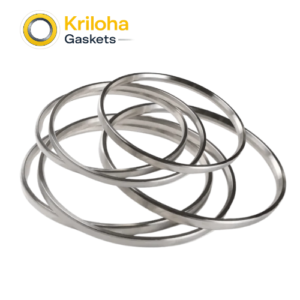
Metal O-Rings

Metal O-Rings

Core Features

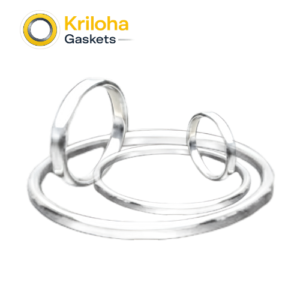
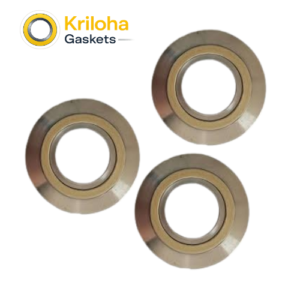
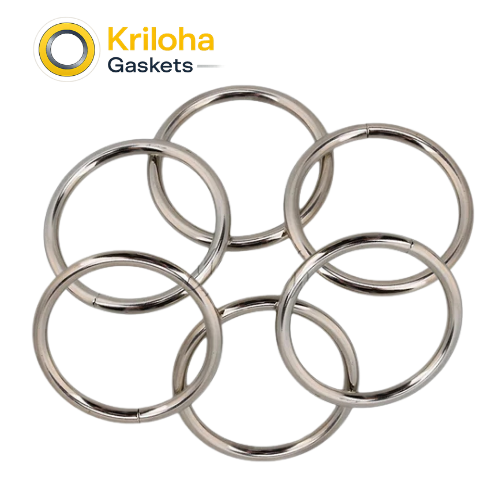
  • Metallic Structural Integrity: Manufactured from high-strength tubing or wire, typically SS304, SS316L, or Inconel 718, providing a rigid, non-permeable barrier that outlasts elastomers in extreme conditions.
  • Extreme Temperature Resilience: Engineered to maintain a hermetic seal in environments ranging from cryogenic levels (-250°C) up to intense heat (+800°C), far exceeding the limits of rubber or plastic.
  • High-Pressure & Vacuum Capability: Capable of sealing internal pressures up to 700 Bar (10,000 PSI) and maintaining ultra-high vacuum integrity, making them the standard for critical aerospace and nuclear applications.
  • Specialized Plating & Coatings: Available with soft metal coatings such as Silver, Gold, Nickel, or PTFE. These coatings flow into the microscopic flange imperfections under load to ensure a gas-tight, bubble-free seal.
  • Self-Energizing Options: Available in “Vented” or “Pressure-Actuated” designs where internal system pressure enters the O-ring tube, forcing the walls outward to increase sealing force as pressure rises.
  • Zero Outgassing: Unlike elastomeric seals, metal O-rings do not release volatile organic compounds, ensuring a clean environment for semiconductor and laboratory processes.

At Kriloha Ltd., we understand that in “Mission-Critical” engineering, there is no room for the degradation inherent in rubber. When a seal must last for decades or survive a rocket launch, metal is the only answer. The Kriloha Metal O-Ring is our pinnacle sealing solution for high-stress environments. As a premier global provider of advanced seals, Kriloha Gaskets has perfected the Precision Welding and Heat-Treating required to turn thin-walled tubing into a high-tension spring.

The physics of a Kriloha Metal O-Ring is based on Elastic Recovery. When the flange is bolted down, the O-ring is compressed to a predetermined “squeeze” (usually 15-20% of its tube diameter). This compression creates a high-unit load at the contact points. At Kriloha, we often apply a Soft Silver Plating to the ring. Under bolt load, this silver acts as a solid lubricant, “smearing” into the machine marks of the flange to eliminate leak paths.

Manufacturing these seals at Kriloha involves state-of-the-art Induction Welding. We ensure the weld joint is as strong as the parent metal and polished to a seamless finish to prevent stress concentrations. We offer these in three primary styles: Plain (Hollow), Self-Energizing (Vented), and Pressure-Filled (Gas-Charged). Whether you are sealing a sub-sea manifold or a high-altitude sensor, Kriloha Metal O-Rings provide the mechanical invincibility and chemical permanence your most ambitious projects demand. By choosing Kriloha Ltd., you are investing in a “Permanent Seal” technology that thrives where others perish.
Primary Use Cases

  • Aerospace Propulsion: Sealing fuel injectors, combustion chambers, and turbine housings where heat and pressure are extreme.
  • Nuclear Power Plants: Critical sealing for reactor pressure vessels and cooling systems where radiation and longevity are primary concerns.
  • Oil & Gas Exploration: Used in downhole tools and high-pressure wellhead equipment where standard seals would fail due to “Rapid Gas Decompression” (RGD).
  • Semiconductor Manufacturing: Providing ultra-clean, high-vacuum seals for wafer processing chambers.
  • Plastic Extrusion Dies: Resisting the high temperatures and abrasive forces of molten polymer flow.
  •  

FAQs

Why use a Metal O-Ring instead of a standard Rubber O-Ring?

Rubber O-rings melt, harden, or chemically degrade over time. Metal O-rings are used when the temperature exceeds 250°C, when the pressure is extremely high, or when the seal must be “Fire-Safe” and last for the entire life of the equipment.

Can I reuse a Metal O-Ring?

Generally, no. During the initial tightening, the O-ring (and its soft plating) undergoes permanent deformation to match the flange face. Reusing a metal O-ring significantly increases the risk of a leak.

What is the purpose of “Silver Plating”?

Because metal-to-metal contact is rarely 100% perfect, the silver plating acts as a “gasket” on the O-ring itself. It is soft enough to flow into microscopic scratches on the flange, ensuring a gas-tight seal.

What flange finish is required for Metal O-Rings?

Metal O-rings require a much finer surface finish than rubber gaskets. Kriloha recommends a finish of 32 RMS (0.8 µm Ra) or better to ensure the soft plating can effectively seal the surface.

How do I prevent the O-ring from being “Crushed” too far?

Metal O-rings are almost always installed in a machined groove (gland). The depth of the groove acts as a natural “compression stop,” ensuring the O-ring is squeezed exactly the right amount without being flattened.


This is the heading

Lorem ipsum dolor sit amet consectetur adipiscing elit dolor

Request a Quote

Enter your details here

Great! We’ve received your information.

We couldn’t process your submission. Please retry

Scroll to Top

Get a Quote

Great! We’ve received your information.

We couldn’t process your submission. Please retry