Octagonal Ring Joint Gasket (RTJ)

Octagonal Ring Joint Gasket (RTJ)

Core Features

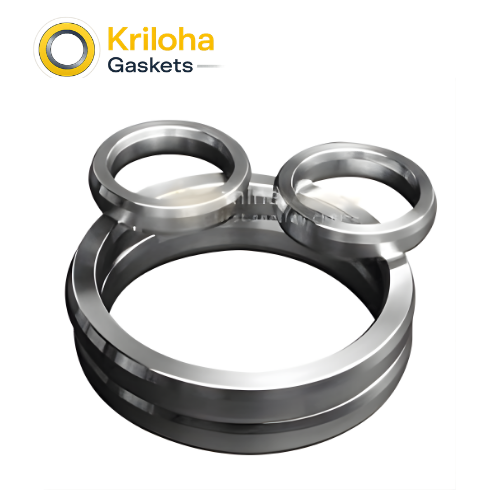
  • Precision-Angled Sealing Faces: Features an octagonal cross-section with flat, angled surfaces designed to provide a high-pressure interference fit against the flange groove.
  • Superior Sealing Efficiency: The flat-on-flat contact between the gasket and the flange sidewall offers a higher degree of sealing efficiency compared to the oval design in modern equipment.
  • Extreme Pressure Performance: Engineered to withstand the most demanding pressure ratings, from Class 1500 to Class 2500 and up to 15,000 psi in API 6A high-pressure wellhead applications.
  • Torque-Efficient Design: Requires lower initial bolt torque to achieve a gas-tight seal compared to oval joints, as the flat faces align more naturally with modern trapezoidal grooves.
  • Surface Integrity: Machined to an ultra-fine surface finish of Ra 1.6 μm (63 micro-inches) to ensure a molecular-level metal-to-metal seal.
  • Strict Hardness Control: Every gasket is heat-treated to ensure it remains significantly softer than the flange, protecting the expensive groove from deformation.

At Kriloha Ltd., we understand that in high-pressure engineering, precision is the only path to safety. While the industry has used ring joints for decades, the Octagonal Ring Joint Gasket (RTJ) represents the modern evolution of metal-to-metal sealing. As a top supplier of rubber seals and gaskets, Kriloha Gaskets manufactures these components with the metallurgical expertise required to handle the most volatile fluids on the planet.

The Octagonal RTJ is specifically designed for modern “flat-bottom” trapezoidal grooves. Unlike the oval gasket, which has a curved profile, the Octagonal gasket features flat, angled faces that match the slope of the flange groove exactly. When the bolts are tightened, the gasket is wedged into the groove, creating a massive amount of surface pressure. This flat-on-flat contact provides a more stable and robust seal, especially in systems prone to vibration or rapid pressure fluctuations.

A Kriloha Octagonal RTJ is a product of rigorous quality control. We utilize high-quality forgings—never bar stock—to ensure a uniform grain structure that can resist the immense radial stresses of high-pressure service. One of the critical technical advantages of the Kriloha design is our Hardness Gradient Calibration. We ensure the gasket is always 30-40 Brinell hardness points lower than the flange material. This ensures the gasket “gives” and flows into the groove imperfections without scratching or “coining” the flange, which would otherwise lead to costly resurfacing repairs.

By choosing Kriloha Ltd., you are choosing a partner dedicated to the “Zero Leakage” standard. Our gaskets are available in a wide range of materials, from Soft Iron and Low Carbon Steel to 316L Stainless Steel and exotic Super-Alloys like Inconel 625. For aggressive “sour gas” service, we ensure all materials are fully compliant with NACE MR0175/ISO 15156. Whether you are sealing a high-pressure refinery reactor or a subsea manifold, Kriloha Octagonal Ring Joint Gaskets provide the ultimate mechanical security and peace of mind.
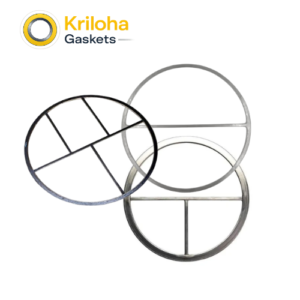
Primary Use Cases

  • High-Pressure Refineries: The standard for hydrocracking, coking, and high-pressure steam distribution systems.
  • Upstream Oil & Gas Wellheads: Reliable sealing for high-pressure valves, manifolds, and Christmas tree assemblies.
  • Petrochemical Reactors: Critical for maintaining containment in high-temperature and high-pressure chemical synthesis.
  • Offshore Subsea Infrastructure: Used in deepwater blowout preventers (BOPs) where failure is not an option.
  • Power Generation: Sealing main steam and feedwater lines in supercritical power plants.

FAQs

Can I use an Octagonal gasket in a round-bottom groove?

No. Octagonal gaskets are only designed for use in modern flat-bottom grooves. For older equipment with round-bottom grooves, you must use an Oval Ring Joint Gasket.

What is the benefit of an Octagonal gasket over an Oval one?

Octagonal gaskets generally provide a higher sealing efficiency and a more stable seal in modern flanges because of the flat-on-flat contact surface. They also typically require less bolt torque to seat initially.

Why does Kriloha emphasize “Soft Iron” for many RTJs?

Soft Iron is an excellent material for RTJs because it is highly ductile and easy to compress into a seal. It is also more cost-effective than stainless steel for non-corrosive, high-pressure service.

Are these gaskets fire-safe?

Yes. Being solid metal, they are inherently fire-safe and can maintain their sealing integrity even during extreme temperature events where soft gaskets would fail completely.

How do I identify a Kriloha Octagonal RTJ in the field?

Every Kriloha gasket is precision-etched with its “R” number (size), material grade, heat number for traceability, and our brand logo, ensuring you can verify the specs after installation.

This is the heading

Lorem ipsum dolor sit amet consectetur adipiscing elit dolor

Request a Quote

Enter your details here

Great! We’ve received your information.

We couldn’t process your submission. Please retry

Scroll to Top

Get a Quote

Great! We’ve received your information.

We couldn’t process your submission. Please retry